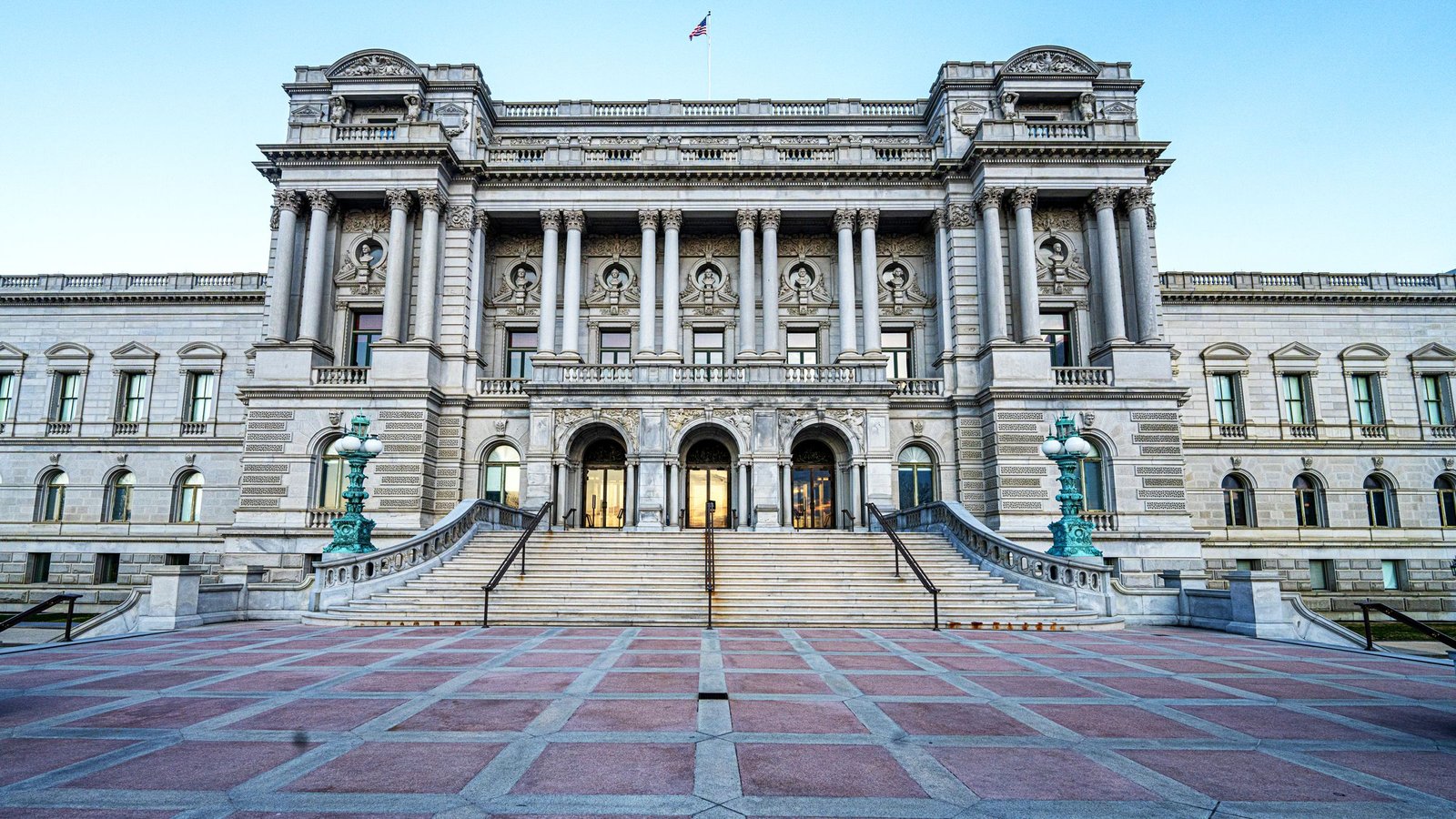
Two Trump administration appointees were denied entry to the U.S. Copyright Office on Monday after attempting to assume leadership roles, sparking a high-stakes legal and administrative standoff over the agency’s control. Brian Nieves and Paul Perkins arrived at the facility presenting documentation that identified them as the new Deputy Librarian and Acting Director/Register of Copyrights, respectively. Despite their claims of White House authorization, security personnel prevented the men from accessing the offices.
Conflicting Accounts of the Security Standoff
The Department of Justice (DOJ) later confirmed that Nieves and Perkins—both currently high-ranking DOJ officials—were indeed appointed to lead the Copyright Office. However, the circumstances of their attempted entry remain disputed. While sources indicate that Capitol Police intervened to block their access, a spokesperson for the law enforcement agency denied that officers had physically escorted anyone from the premises or officially denied them entry. The White House has not yet issued a formal response regarding the incident.
Legal Battle Over Appointment Authority
The confrontation follows the recent dismissal of Carla Hayden, the first woman and first Black person to serve as Librarian of Congress. This personnel shift is legally significant because the U.S. Copyright Office operates under the Library of Congress, meaning the Librarian, rather than the executive branch, holds the statutory authority to appoint the Register of Copyrights.
Legal experts and critics argue that the White House lacks the jurisdiction to unilaterally replace the head of the Copyright Office. Meredith Rose, legal counsel for the intellectual property nonprofit Public Knowledge, emphasized this limitation, stating that the president possesses no more legal power to fire the Register of Copyrights than a private citizen. The administration’s documentation also named Todd Blanche, a former personal defense attorney for Donald Trump, as the acting Librarian of Congress to replace Hayden. White House Press Secretary Karoline Leavitt justified Hayden’s removal by citing concerns over her implementation of Diversity, Equity, and Inclusion (DEI) initiatives.
Internal Resistance and Leadership Confusion
The transition has been further complicated by internal pushback within the Library of Congress. Prior to Blanche’s naming, Hayden’s former deputy, Robert Newlen, had already assumed the role of acting Librarian. In a Monday memorandum sent to staff, Newlen explicitly disputed the validity of the White House’s personnel changes, noting that Congress had not yet provided direction on how to proceed. Newlen continued to sign official communications as the “acting Librarian of Congress,” signaling a direct challenge to the administration’s appointments.
The AI Report: A Potential Catalyst for Ousters
The sudden termination of former Register Shira Perlmutter has led lawmakers to speculate that her removal was politically motivated, specifically regarding the office’s stance on Artificial Intelligence. Representative Joe Morelle, the ranking Democrat on the committee overseeing the Library of Congress, characterized the move as a “brazen, unprecedented power grab.” Morelle suggested the firing was linked to Perlmutter’s refusal to facilitate Elon Musk’s efforts to utilize copyrighted works for training AI models.
The friction centers on a 108-page “pre-publication” report released by the Copyright Office. The document addresses the “fair use” doctrine, a legal defense frequently cited by tech giants to justify training AI on protected intellectual property without compensation. The report suggests that using massive troves of copyrighted material to create commercial content that competes with original creators may exceed established fair use boundaries—a position that directly conflicts with the interests of major AI developers.
High-Stakes Litigation in Silicon Valley
The Copyright Office’s findings arrive as the tech industry faces a wave of litigation. Companies like OpenAI are currently embroiled in lawsuits, including a high-profile case brought by The New York Times, which alleges that using its journalism to train tools like ChatGPT constitutes infringement. While the Copyright Office report acknowledges that fair use may protect some applications, its cautious stance represents a significant hurdle for companies seeking a “rubber-stamp” for AI data mining practices.