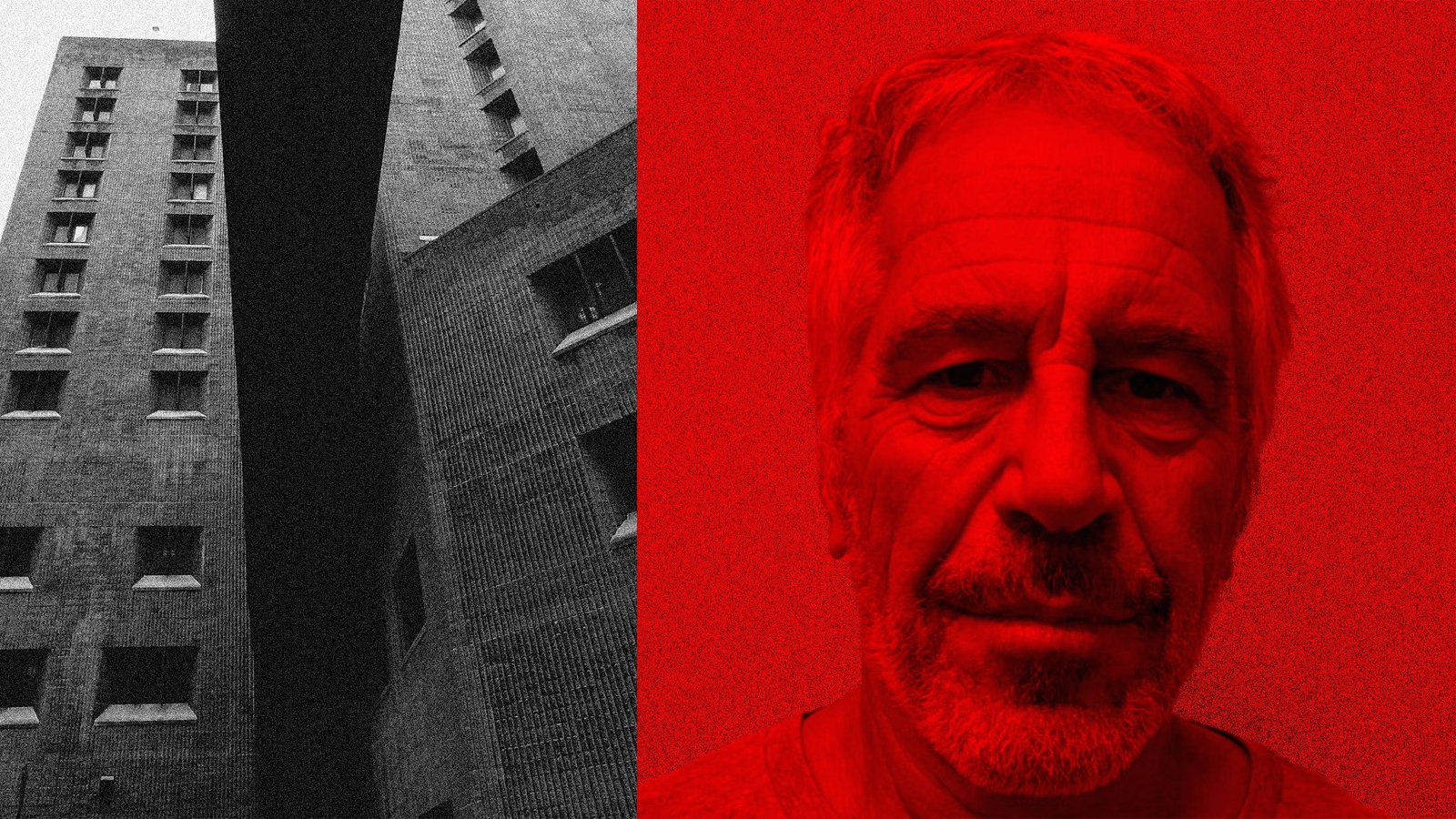
Forensic analysis of metadata within the “raw” surveillance footage of Jeffrey Epstein’s final hours reveals the FBI processed the files using professional editing software, contradicting the Department of Justice’s (DOJ) claims of an unaltered release. Digital forensics experts and investigators discovered that the 21-gigabyte files, presented as direct exports from the Metropolitan Correctional Center (MCC), contain traces of Adobe Premiere Pro—a professional-grade video editing suite—raising significant questions regarding the chain of custody of this critical evidence.
Forensic Traces Challenge the “Raw” Footage Narrative
While the DOJ and FBI published a joint memo on July 14, 2025, asserting that Epstein’s death was a suicide, the accompanying video evidence suggests a more complex processing history. Metadata embedded in the files, analyzed by WIRED and independent specialists, indicates the footage was assembled from at least two distinct source clips. These findings complicate the government’s narrative in a case already defined by intense public skepticism.
The technical data, specifically Exchangeable Image File Format (EXIF) and Extensible Metadata Platform (XMP) logs, shows the file was saved multiple times over several hours on May 23, 2025. The edits were performed under a Windows user account identified as “MJCOLE~1.” According to experts, Adobe software leaves indelible “fingerprints” in exported files, including a section labeled “Ingredients” that tracks the original assets used in the final composition.
The “Ingredients” of a Composite Video
The metadata points to two specific source files—2025-05-22 21-12-48.mp4 and 2025-05-22 16-35-21.mp4—which were spliced together to create the final product. This structural evidence proves the video is not a continuous, direct stream from the prison’s digital video recorder (DVR). While this processing might be the result of converting proprietary surveillance formats into standard MP4s for public viewing, the lack of transparency from federal agencies has fueled new rounds of scrutiny.
Expert Analysis: Judicial Integrity at Risk
Hany Farid, a professor at UC Berkeley and a world-renowned expert in digital forensics, reviewed the data and expressed immediate concern regarding the handling of the evidence. Farid, who frequently testifies in high-stakes court cases involving digital manipulation, noted that the video’s aspect ratio shifts unexpectedly at several points.
“If a lawyer brought me this file and asked if it was suitable for court, I’d say no,” Farid stated. He emphasized that digital evidence requires a strict chain of custody to ensure its integrity. “Go back to the source. Do it right. Do a direct export from the original system—no monkey business.”
Systemic Failures and the Missing Minute
The controversy surrounding the video metadata is compounded by the documented history of technical failures at the MCC. A 2023 report from the DOJ Office of the Inspector General (OIG) revealed that nearly half of the facility’s 150 analog cameras were non-functional during the period Epstein was held in the Special Housing Unit (SHU).
At the time of Epstein’s death on August 10, 2019, only two cameras were operational near his tier. Neither camera captured the door to his specific cell. Furthermore, the newly released footage contains a notable gap: one minute of missing video between 11:58:58 PM and 12:00:00 AM. Attorney General Pam Bondi attributed this discrepancy to a “flaw in the surveillance system’s daily cycle,” claiming the loss of one minute occurs every night during the system’s reset.
The Impact on Public Trust
For federal authorities, the release of the video was intended to provide closure and debunk long-standing conspiracy theories. However, the discovery of post-production editing has had the opposite effect. Mike Rothschild, an author specializing in extremist movements, explains that any ambiguity in the official record becomes a catalyst for further speculation.
“In the world of conspiracy theories, evidence that disproves something happened becomes proof that something happened,” Rothschild noted. He argues that the combination of broken cameras, staff negligence, and now processed video files allows skeptics to interpret the government’s incompetence as a sign of a deliberate cover-up.
While the OIG found no evidence of a homicidal conspiracy, the FBI’s refusal to answer specific questions about the video’s processing has left a vacuum. One media forensics expert, speaking on the condition of anonymity, summarized the situation: “It looks suspicious—but not as suspicious as the DOJ refusing to answer basic questions about it.”