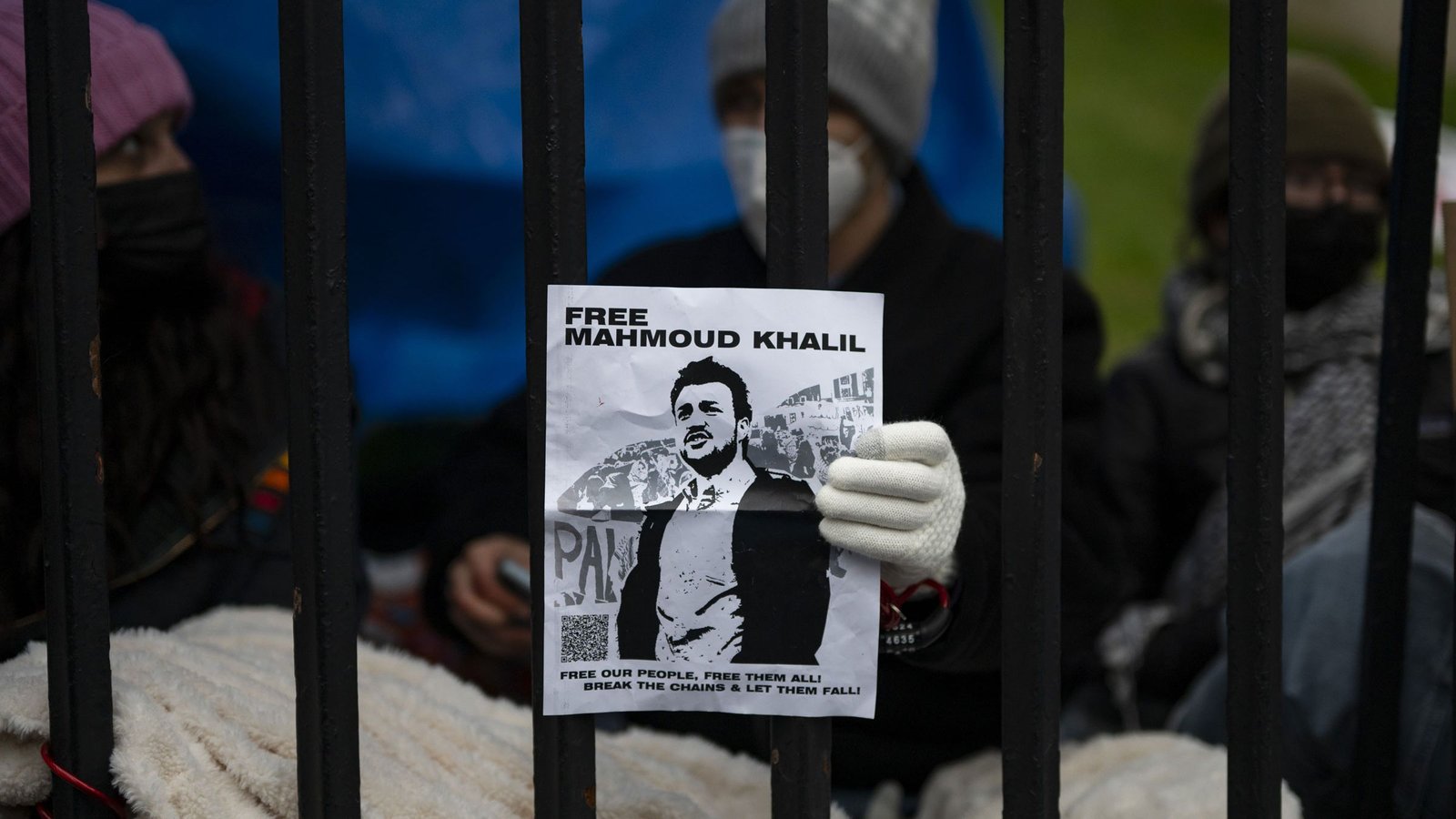
A Louisiana immigration judge’s decision to bar a defense attorney’s laptop while allowing government prosecutors full digital access has ignited a firestorm over “fundamental fairness” in the deportation proceedings of Columbia University activist Mahmoud Khalil. Attorney Nora Ahmed, legal director of the ACLU of Louisiana, contends that Judge Jamee Comans handed the Department of Homeland Security (DHS) an unconstitutional advantage during a late-month hearing that ultimately found Khalil eligible for removal from the United States.
Digital Disparity: A Courtroom Divided by Technology
Despite filing the requisite paperwork to bring electronic devices into the Central Louisiana ICE Processing Center, Ahmed says authorities forced her to surrender her laptop minutes before the proceedings began. This restriction left the defense empty-handed while three government attorneys sat opposite them, equipped with multiple laptops, active internet connections, and real-time access to digital evidence.
“There should not be an advantage, no matter how small or how large, provided to a particular party over the other,” Ahmed stated, emphasizing that such imbalances “infect the proceedings” and undermine the judicial integrity of the courtroom. While the Justice Department remained silent on the matter, Ahmed’s sworn declaration details a confusing chain of command where Judge Comans and Warden Shad Rice allegedly traded blame for the sudden electronics ban.
The High Stakes of Modern Legal Defense
In an era where trial data is measured in gigabytes, the inability to access digital files cripples a lawyer’s capacity to respond to government claims in real time. Michelle Méndez of the National Immigration Project points out that the Justice Department has required electronic filing since 2022, making digital access a necessity rather than a luxury. According to Méndez, the asymmetry in resources reflects a deeper issue: “As long as immigration courts are under the direction of the executive branch, non-citizens are never going to receive a fundamentally fair proceeding.”
Political Targeting Amid Columbia University Protests
Mahmoud Khalil, a Palestinian refugee and U.S. green card holder, emerged as a prominent figure during last year’s Gaza solidarity protests at Columbia University. He advocated for divestment following the Israeli military’s intensive bombing campaigns in Gaza. Khalil now stands as a high-profile target in a broader administrative push to expel foreign students involved in anti-war activism.
The government’s pursuit of Khalil lacks any criminal charges. Instead, federal agents detained him without a warrant at his university apartment in March, labeling the 30-year-old graduate student a “flight risk” despite his wife being eight months pregnant at the time. Khalil’s wife and newborn son are both U.S. citizens.
A Systemic “Flaw” in the Immigration Tribunal
Legal experts argue that Khalil’s experience exposes the structural vulnerabilities of the U.S. immigration system. Unlike Article III courts, immigration judges serve at the pleasure of the U.S. Attorney General. Anthony Enriquez of RFK Human Rights notes that these officials are “immigration judges in name” but “employees of the Department of Justice” in practice, creating a scenario where the prosecutor and the adjudicator represent the same branch of government.
The facility where Khalil is held—the Central Louisiana ICE Processing Center—is a for-profit prison operated by the GEO Group. Louisiana’s detention network, the second-largest in the nation, has recently faced scathing reports from civil rights organizations, including the ACLU, which describe the system as an “inhumane” corporate “profit machine” where basic human rights are systematically ignored.
Federal Judge Halts Deportation Momentum
While the Louisiana court initially ruled Khalil eligible for deportation, the case has reached a standstill following a decisive 108-page ruling from U.S. District Judge Michael Farbiarz in New Jersey. Farbiarz rejected the government’s attempt to block Khalil from suing the administration, asserting that the court maintains the authority to review claims of political targeting.
Khalil alleges that his detention violates the First Amendment, accusing the government of weaponizing immigration law to punish his political views. In a statement, Khalil’s wife, Noor Abdalla, called the New Jersey ruling a “relief” and a critical step toward securing his freedom. “I will continue to strongly advocate for my husband, so he can come home to our family and feel the pure joy all parents know of holding your first-born child in your arms,” Abdalla said.