During a recent briefing, President Trump emphasized that his administration will not permit any individual lacking the interests of the Venezuelan populace at heart to seize control of the nation. “We’ve endured decades of that. We are not going to let that transpire,” he asserted. “We intend to govern the country until we can orchestrate a safe, appropriate, and thoughtful transition.”
Trump clarified that the leadership of Venezuela will be managed by prominent US officials, including Secretary of State Marco Rubio and Secretary of Defense Pete Hegseth. Concurrently, María Corina Machado, recognized as the leading figure in the opposition to Maduro and Hugo Chávez and a recent Nobel Peace Prize laureate, issued a declaration stating that Edmundo González Urrutia, a key member of the opposition party, must immediately assume the presidency.
“This is the moment for the citizens. For those of us who risked everything for democracy on July 28 [2024, the date of the last Venezuelan presidential election]. For those of us who elected Edmundo González Urrutia as the legitimate president of Venezuela, who must promptly assume his constitutional responsibilities and be acknowledged as Commander in Chief of the National Armed Forces by all personnel involved. Today, we are prepared to enforce our mandate and seize power,” the statement reads.
The message was also shared by González Urrutia, who directly appealed to the Venezuelan people: “Venezuelans, these are crucial hours. Be assured that we are ready for the significant operation of reconstructing our nation.”
Trump appears to have alternative plans. During the press conference on Saturday, he suggested that his administration aims to rebuild Venezuela’s oil infrastructure and reclaim oil that he claimed was “stolen” from the United States decades ago. “Venezuela unilaterally appropriated and sold American oil, American assets, and American platforms, costing us billions and billions of dollars,” Trump asserted. “We will have our very large United States oil companies, the biggest globally, invest billions, repair the severely damaged infrastructure, and commence generating revenue for the country.”
Trump’s remarks primarily reference the expropriation processes initiated by the Venezuelan government in 2007, under Hugo Chávez’s presidency, when numerous foreign companies—particularly those involved in energy, oil, and gas—were nationalized. Over time, this policy has severely hindered the growth of the Venezuelan oil industry, despite the nation’s significant economic potential in this area. Venezuela possesses the largest crude oil reserves globally, estimated at over 300 billion barrels yet to be extracted. However, much of this oil is located in offshore fields or deep underground deposits, consisting of heavy and extra-heavy crude, which complicates extraction and raises costs for state-owned enterprises.
Currently, the country produces around 1 million barrels per day, a stark contrast to the nearly 3.5 million barrels produced in the late 1990s, when it ranked among the world’s top producers.
Maduro’s Arrest and the “Donroe” Doctrine
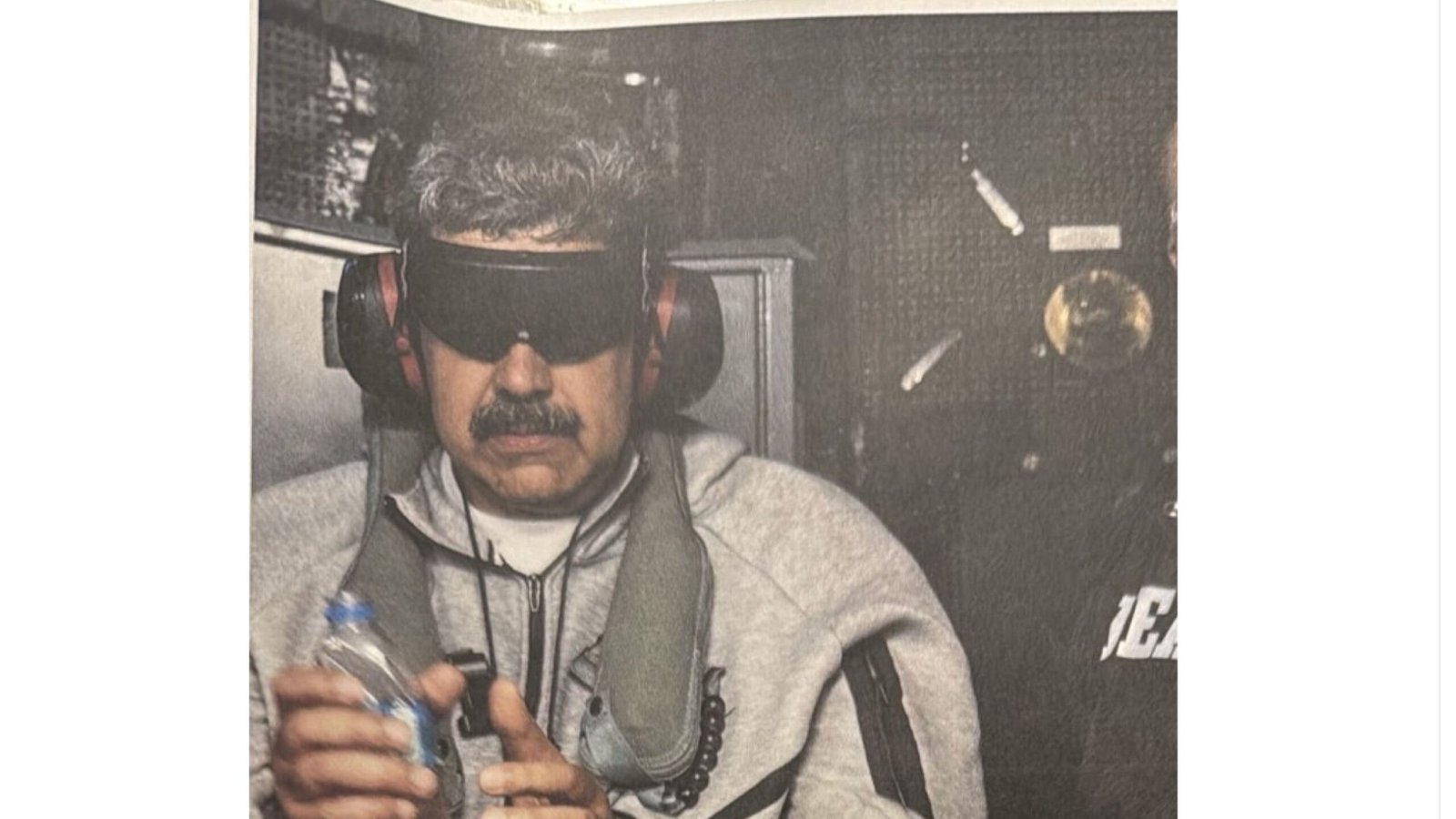
Dan Caine, chairman of the Joint Chiefs of Staff, detailed during the Saturday briefing that the mission to capture Maduro was dubbed Operation Absolute Resolve. This operation involved the deployment of more than 150 aircraft launched from 20 land and sea bases. Caine stated that the effort was “discreet, precise, and conducted during the darkest hours of January 2, culminating months of planning and rehearsal.”
Trump confirmed that the US military stands ready to initiate a second, more extensive operation if deemed necessary. However, he acknowledged that “the initial attack was so successful we probably do not need a second, but we are prepared for one.”
The president also declared that Maduro and his spouse will face prosecution in the United States. He accused the former Venezuelan leader of being “the kingpin of a criminal network responsible for trafficking enormous quantities of lethal illicit drugs into the United States.” Trump added that Maduro’s actions represented “a gross violation of American foreign policy principles that date back more than two centuries … all the way to the Monroe Doctrine … They now refer to it as the Donroe Doctrine, I’m not sure.”
Implications for Latin America
Late last year, the Trump administration unveiled its National Security Strategy, aimed at enhancing the United States’ military presence and influence across the region to “restore US preeminence in the Western Hemisphere.” The Monroe Doctrine, established in 1823 under the motto “America for the Americans,” laid the groundwork for Washington’s political and military interventions in Latin America in response to perceived threats to its national security. The original intent was to thwart any colonization or interference attempts by European powers on the continent.
This principle has been revived by the Trump administration under a new strategy called the Donroe Doctrine, which aims to reaffirm US influence in Latin America to ensure American security. The current National Security Strategy asserts that the US “must maintain preeminence in the Western Hemisphere as a condition of our security and prosperity—an essential condition that allows us to assert ourselves confidently where and when needed in the region.”
The document underscores the necessity of preventing non-hemispheric rivals, such as China and Russia, from gaining the ability to “position forces or other threatening capabilities, or to own or control strategically vital assets in our hemisphere.”
To realize this objective, the United States will enhance diplomatic relations with regional allies to manage illegal migration, combat drug trafficking, and bolster land and maritime security—issues that the Trump administration claims largely originate in Latin America.
“These nations would assist us in halting illegal and destabilizing migration, neutralizing cartels, facilitating nearshore manufacturing, and developing local private economies, among other goals,” the document specifies.
The strategy outlines objectives regarding the presence of US armed forces in Latin America. Key action areas include adjusting military deployments to address urgent threats within the Western Hemisphere, augmenting the Coast Guard and Navy presence to control critical maritime routes, employing military forces to secure the border and confront cartels, including through lethal means, and expanding access to strategically significant locations.
The aim of this new approach, characterized by the White House as “the Trump corollary to the Monroe Doctrine,” is clear: to ensure a stable hemisphere that discourages mass migration to the United States, fosters regional cooperation against transnational criminal organizations, prevents hostile foreign incursions, and maintains access to strategic assets and locations.
“Venezuela has become the testing ground for the new US security strategy,” remarks Luz Mely Reyes, a Venezuelan journalist and director of the digital media outlet Efecto Cocuyo. “It is an experiment rooted in the economic control that the United States exerts over the region.”
Are Mexico and Colombia in US Crosshairs?
Currently, Venezuela stands as the primary target of this strategy. However, with ongoing threats of trade sanctions, hints at potential military incursions, and political pressure directed at nations like Mexico, Colombia, and Brazil, analysts caution that it may only be a matter of time before this approach broadens to encompass other countries across Latin America and the Caribbean.
These apprehensions escalated following Maduro’s arrest. In a phone interview with Fox News, Trump stated that the offensive in Venezuela was not meant as a direct message to other governments, such as Mexico’s. Nevertheless, he mentioned that despite his amicable relationship with Mexican President Claudia Sheinbaum, measures must be taken to curtail the drug cartels’ influence in Mexico. “She’s not running Mexico, the cartels are,” Trump remarked. “We must act, as we have lost 300,000 lives, I believe … to drugs. They predominantly come through the southern border … Something must be done about Mexico.”
Similarly, the US president issued caution to Colombian President Gustavo Petro, who has criticized Washington’s recent military initiatives. “He’s producing cocaine and sending it to the United States, so he does need to be careful,” Trump stated during his press conference at Mar-a-Lago.
This story originally appeared in WIRED en Español and has been translated from Spanish.