
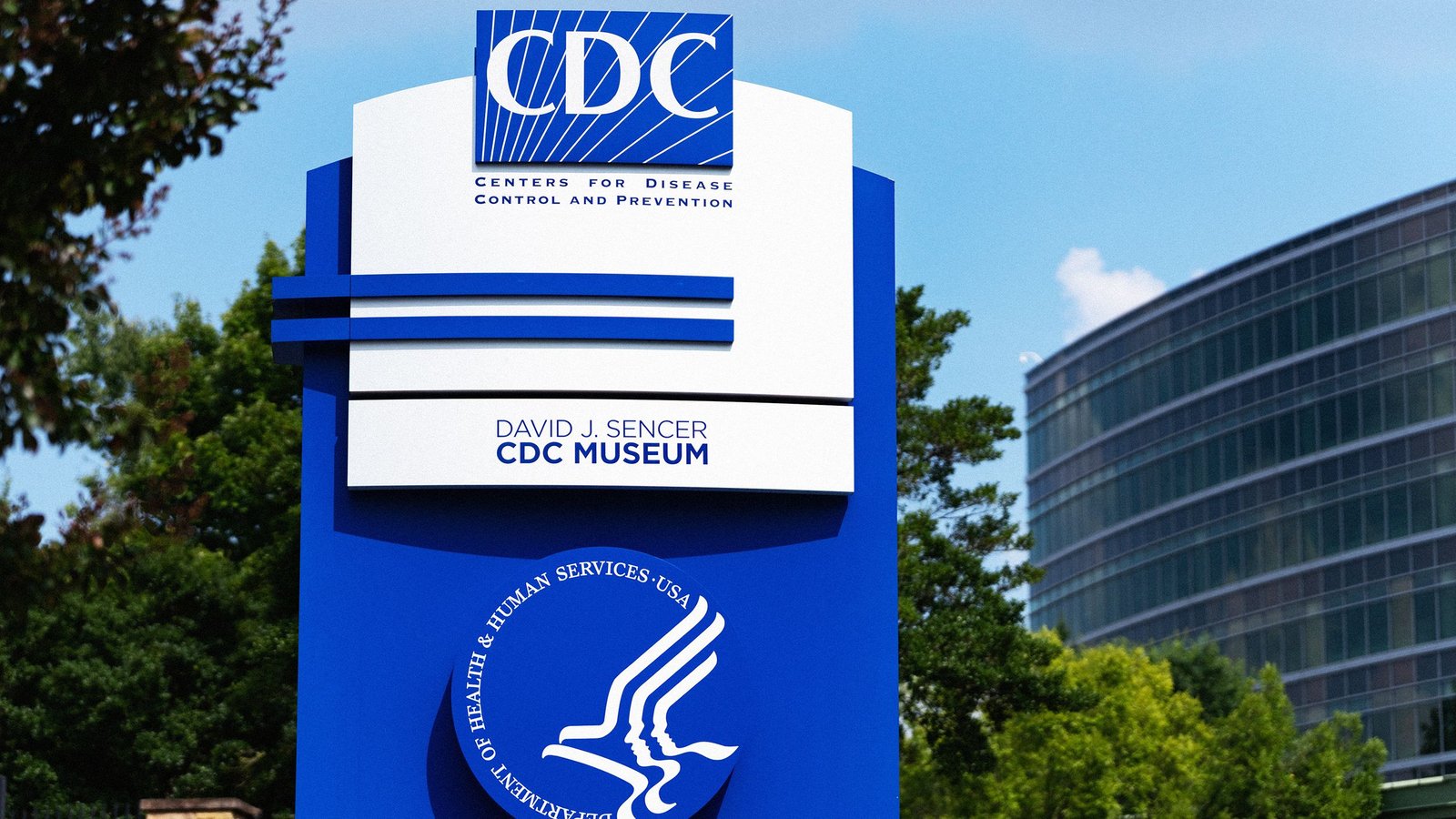
National Institutes of Health (NIH) Director Jay Bhattacharya assumed dual leadership of the CDC this week, taking over from acting director Jim O’Neill to navigate a federal health agency crippled by mass layoffs and administrative volatility. This transition marks the latest shakeup under the Trump administration, which has seen nearly 25% of the CDC workforce eliminated through aggressive downsizing led by Health and Human Services (HHS) Secretary Robert F. Kennedy Jr.
A Legacy of Administrative Instability
Bhattacharya, a health economist who has never practiced as a physician, steps into the role as a vocal critic of the agency’s previous pandemic protocols. His predecessor, Jim O’Neill, vacated the position to lead the National Science Foundation after a brief stint that began in August. O’Neill had replaced Susan Monarez, whose tenure lasted only four weeks before her removal in July 2025. Monarez later testified that her firing resulted from her refusal to grant blind approval to Kennedy’s proposed overhauls of federal vaccine policy.
The leadership vacuum coincides with rising tensions at the CDC’s Atlanta headquarters. During Monarez’s short term, a gunman citing grievances with COVID-19 vaccines attacked the campus, resulting in the death of a responding police officer. In the aftermath of Monarez’s dismissal, several high-ranking officials resigned, further depleting the agency’s institutional knowledge. This followed the failed nomination of Dave Weldon, a former congressman and vaccine skeptic, whose appointment was withdrawn by the White House due to a lack of Senate support.
Public Health Preparedness at a Breaking Point
Medical experts warn that the ongoing chaos threatens national security. Ronald Nahass, president of the Infectious Diseases Society of America, argues that the lack of stable, science-driven leadership leaves the United States dangerously vulnerable. He points to delayed surveillance data and a lack of clear clinical guidance on outbreaks like measles as evidence of a systemic breakdown.
“We are woefully unprepared for a bioterror attack or novel pathogen outbreak without leaders capable of directing a national response,” Nahass stated. He noted that critical health activities are being de-prioritized for political reasons, while mass layoffs have severed vital technical and financial lifelines to state and local health departments.
The Strategy of “Temporary” Governance
The reliance on acting directors may be a calculated move to bypass legislative hurdles. A 2023 law, championed by Senator Ted Cruz, requires the CDC director to receive Senate confirmation—a change intended to provide a check on the agency’s power. By utilizing temporary leaders, the administration can execute its agenda, including significant changes to vaccine recommendations, without facing a contentious confirmation process.
White House spokesperson Kush Desai defended the move, stating that Bhattacharya holds the “complete confidence” of President Trump. Desai cited Bhattacharya’s academic credentials and his work at the NIH as evidence of his qualification to lead both agencies simultaneously. However, critics like Bruce Mirken of Defend Public Health suggest the administration is intentionally avoiding the Senate to shield its controversial health policies from public scrutiny.
Legal Deadlines and Operational Impossible Tasks
The dual-role strategy faces both legal and logistical barriers. Under the Federal Vacancies Reform Act, an acting official’s authority is generally limited to a 210-day window. For the CDC, this clock expires on March 25. While Bhattacharya could continue managing day-to-day operations after that date, his ability to perform statutory duties exclusive to the director could face immediate legal challenges.
Stanford Law professor Anne Joseph O’Connell highlighted the strain this puts on federal governance, noting that performing two full-time, high-level jobs is nearly impossible. Logistically, the two agencies are separated by over 600 miles, with the NIH based in Bethesda, Maryland, and the CDC in Atlanta, Georgia.
Y. Tony Yang, a health policy professor at George Washington University, emphasized that the two organizations require vastly different skill sets. While the NIH functions as a research-heavy grant maker, the CDC is an operational, emergency-response agency. Yang likened the dual-appointment to asking a single individual to manage live air traffic while simultaneously designing the aircraft.