Former President Donald Trump’s recent assertions that the federal government holds supreme authority over state-run election processes directly contradict Article One of the U.S. Constitution, sparking intense backlash from nonpartisan legal experts and state officials who warn of a dangerous executive overreach. While Trump characterizes states as mere “agents” of the federal government, constitutional scholars emphasize that the power to manage elections resides almost exclusively at the state and local levels.
The Constitutional Reality of State-Led Elections
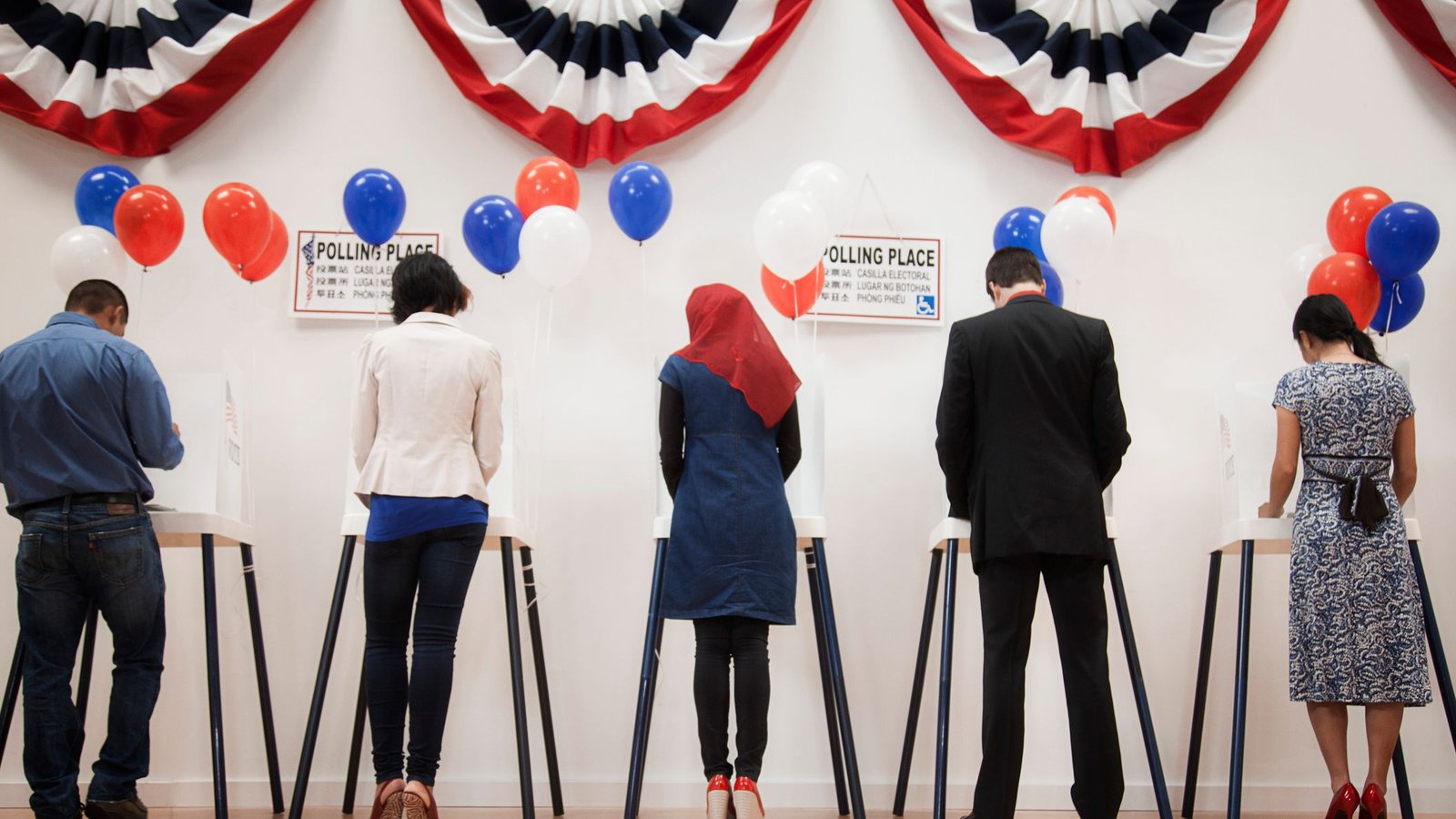
The legal framework of the United States provides no mechanism for a president to unilaterally dictate election procedures. “It’s right there in the Constitution from the very beginning, Article One, that the states set the time, place, and manner of elections,” explains Lawrence Norden, vice president of the elections and government program at the Brennan Center at New York University School of Law. Norden notes that while Congress may introduce specific rules, the executive branch maintains no formal role in the process. Despite Trump’s claims regarding the termination of mail-in voting or the delegitimization of voting machines, the “bully pulpit” remains his only tool to influence—or confuse—the public.
Strategic Appointments and the Narrative of Insecurity
The administration has actively worked to reshape the federal government’s role in election security. In late August, the Department of Homeland Security (DHS) appointed Heather Honey, a prominent promoter of election conspiracy theories, as a deputy assistant secretary for election integrity. This move follows a March executive order and a series of social media posts where Trump promoted a narrative that U.S. election infrastructure is outmoded and unreliable. These actions coincide with the curtailment of significant federal election security initiatives and the installation of officials who have openly denied the validity of the 2020 presidential election results.
Partisan Divide Over Federal Oversight and Funding
The push for federal intervention has fractured political leadership along party lines. Many Republican election officials voiced support for the March executive order, specifically praising its emphasis on citizenship proof for voters. Conversely, Democrats viewed the order as an unlawful power grab. Minnesota Secretary of State Steve Simon characterized the move as a “federal takeover” that threatens states with illegal funding cuts, arguing that the order plainly disregards the U.S. Constitution. Meanwhile, the National Association of Secretaries of State (NASS) remains cautious, stating they would need to review concrete legislation before taking a formal stance on the President’s recent rhetoric.
Technical Realities vs. Political Rhetoric
Despite claims of systemic vulnerability, experts point out that U.S. election infrastructure has never been more secure. Ben Adida, executive director of VotingWorks, acknowledges that while encouraging the replacement of aged machinery is positive, the timelines suggested by the administration are “much too tight to be realistic.” Furthermore, the shift toward paper records has created a robust audit trail. “At this point, 98 percent or 99 percent of votes in the US are cast on paper,” Norden says, noting that billions of dollars in investment have ensured that results are verifiable and accurate.
Decentralization as the Ultimate Election Safeguard
Pamela Smith, president of Verified Voting, argues that the decentralized nature of U.S. elections—spanning different rules, systems, and counties—serves as an essential safeguard against systemic failure or manipulation. “The ability to run elections at the local level is a positive thing, and it’s what best serves the voters across the country,” Smith explains. By attempting to centralize control, critics argue the administration is not securing the vote, but rather eroding the very protections that keep the democratic process resilient against interference.