
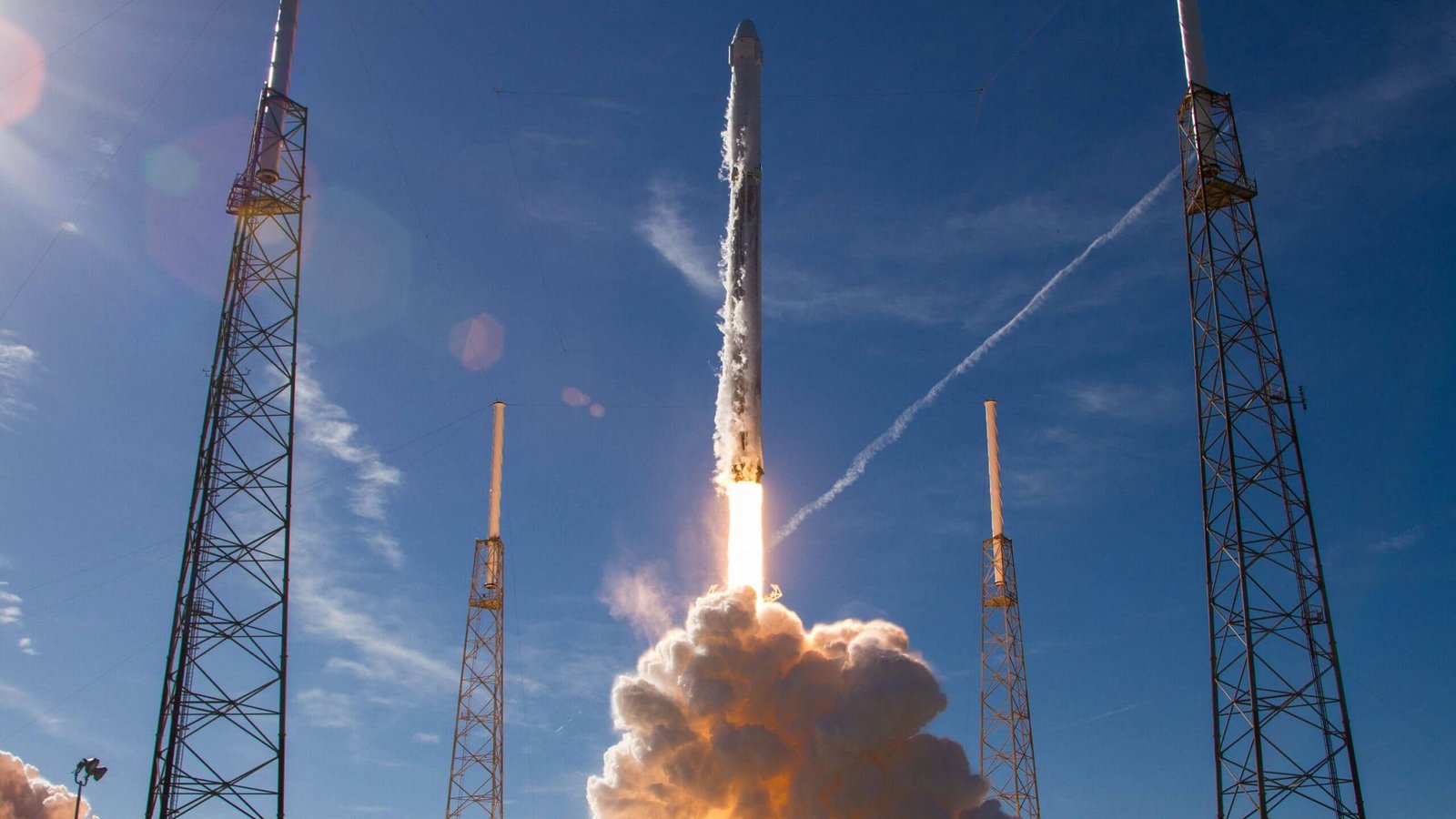
This fall, aerospace startup General Galactic will launch a pioneering 1,100-pound satellite aboard a Falcon 9 rocket to demonstrate the first successful conversion of water into high-performance orbital propellant. Led by former SpaceX and Varda Space engineers, the company aims to prove that H2O can provide the dual-mode thrust necessary for both long-term efficiency and rapid tactical maneuvers in space.
A Vision for Interplanetary Infrastructure
While the concept of utilizing water for propulsion has circulated since the Apollo era, no entity has successfully implemented it at scale for significant spacecraft. General Galactic’s CEO, Halen Mattison, views this mission as the foundation for a much larger logistical network. “Everybody wants to go build a moon base or a Mars base or whatever. Who’s going to pay for it? How does it actually work?” Mattison asks. The company’s long-term roadmap involves establishing “gas stations” on Mars and a refueling infrastructure throughout the solar system.
The upcoming Trinity mission, scheduled for liftoff in October or later this fall, represents the first real-world test of this architecture. Mattison and CTO Luke Neise developed the concept through rigorous modeling and Python-based mission simulations while still working at industry giants like SpaceX. Their research eventually secured $10 million in venture capital, providing the runway needed to challenge traditional chemical and electric propulsion norms.
Mastering Dual-Mode Propulsion: Fire and Plasma
Spacecraft traditionally rely on two distinct propulsion types: high-thrust chemical engines (using fuels like liquid methane) or high-efficiency electric systems (like xenon-based Hall thrusters). Chemical engines provide the power needed for sudden movements but lack efficiency, while electric systems—which Mattison jokingly refers to as a “burp in space”—offer incredible longevity but minimal immediate thrust.
General Galactic’s technology leverages water to bridge this gap through two distinct processes:
- Chemical Propulsion: The system utilizes electrolysis to split water into hydrogen and oxygen. The hydrogen is then burned, using the oxygen as an oxidizer, to generate high thrust.
- Electrical Propulsion: The satellite employs a Hall thruster that ionizes the oxygen derived from water, turning it into plasma. A magnetic field then accelerates this plasma to provide hyper-efficient, long-term propulsion.
“We can provide both the long-efficiency maneuver but also sometimes folks need to get somewhere fast or respond really quickly to a dramatic event,” explains Neise. “Sometimes you need more than a burp in space.”
Strategic Maneuverability in a Contested Orbit
The ability to switch between high-thrust and high-efficiency modes has significant implications for national security. As Russian and Chinese satellites increasingly operate in close proximity to American assets, the U.S. Space Force has expressed intense interest in technologies that allow for rapid evasive maneuvers. General Galactic claims their approach can provide five to ten times the standard “Delta-V”—the total change in velocity a craft can achieve—compared to existing systems.
By using water, the startup also eliminates the volatility and extreme cooling requirements associated with traditional fuels like methane, which must be stored at -260 degrees Fahrenheit. Water remains stable under solar radiation and poses no risk of accidental explosion, simplifying spacecraft design and safety protocols.
Overcoming the Technical Barriers of Oxygen Propulsion
Despite the potential, significant engineering hurdles remain. Critics and consultants alike point to the corrosive nature of ionized oxygen. Ryan Conversano, a former Jet Propulsion Laboratory technologist, warns that oxygen interacts aggressively with engine components. “It’s not an easy element to work with,” Conversano notes, highlighting that material selection for these devices remains a formidable challenge.
Furthermore, the added mass of the electrolysis hardware must be offset by the performance gains to remain competitive with traditional systems. Mark Lewis, CEO of the Purdue Applied Research Institute and former chief scientist of the U.S. Air Force, acknowledges the ingenuity of the design while remaining cautious. “It could be a pretty clever way to provide thrust… but there are a lot of what-ifs.” If General Galactic succeeds this fall, it may finally provide the answer to the logistical “yada yada” that has stalled deep-space exploration for decades.