
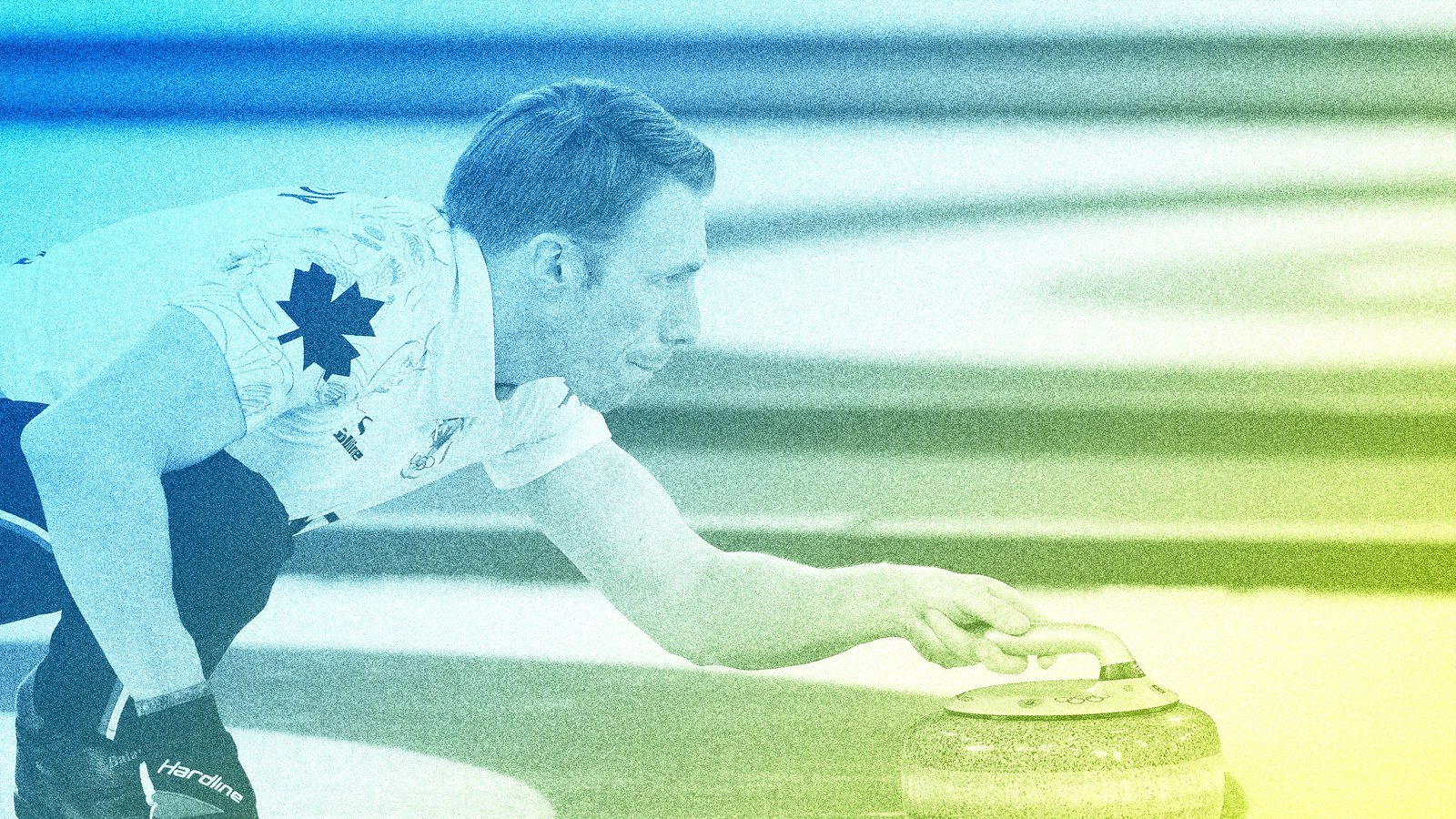
A high-stakes confrontation between the Canadian and Swedish curling teams at the Winter Olympics recently ignited a global debate, transforming casual viewers into overnight rulebook experts following a controversial technical violation by Canada’s Marc Kennedy. While social media erupted over whether Kennedy’s hand grazed the stone past the hog line, the real crisis lies not in a physical infraction, but in the total collapse of the 500-year-old “Spirit of Curling” that defines the sport’s integrity.
The Technicality: Did Kennedy Violate the Hog Line Rule?
The controversy centers on a specific moment where Marc Kennedy allegedly touched the curling stone after its release, a violation occurring near the hog line—a marker located 93 feet from the target’s center. Technical analysis and slow-motion replays suggest Kennedy did indeed contact the back of the rock after its nose crossed the line. While such “double-tapping” is reportedly common and rarely impacts the stone’s trajectory, the armchair experts correctly identified a breach of the written regulations. However, focusing solely on the physics of the slide misses the broader cultural violation that occurred on the ice.
The Sacred Code: Understanding the Spirit of Curling
Unlike most modern sports governed by aggressive officiating, curling relies on a Tudor-period code of honor known as the Spirit of Curling. This foundational principle dictates that a true competitor never seeks to distract an opponent or win through unfair means. In this ancient Scottish tradition, players are expected to call fouls on themselves. The sport functions as a refuge of congeniality, where the unspoken rules of gentlemanly behavior carry more weight than the technicalities monitored by sensors and judges.
From Etiquette to Altercation: How the Match Devolved
The tension between Sweden and Canada reached a breaking point during the sixth end and peaked in the ninth. According to footage released by NBC, the Canadian side initiated the friction by lodging minor complaints with judges regarding the Swedes’ proximity to their equipment. The situation soured further when the Swedish team began “chirping” at the Canadians about the alleged double-tap after officials dismissed their initial protests. The professional atmosphere evaporated when the Canadians responded with profanity, explicitly stating they did not care about the technical rules in question.
A Failure of Leadership: The Role of the Vice-Skips
The embarrassment for the curling community is deepened by the fact that the primary antagonists were the vice-skips from both nations. In curling hierarchy, vice-skips act as the game’s administrators; they are responsible for agreeing on scores, settling disputes, and maintaining the match’s decorum. When the very individuals charged with upholding the sport’s integrity engage in verbal sparring and mutual accusations of cheating, it undermines the self-policing nature that makes the sport unique.
The Long-Term Impact on Curling’s Reputation
For a sport that gains massive public visibility only once every four years, this display of hostility threatens to redefine its public image. Curling typically offers a peaceful alternative to the “win-at-all-costs” mentality seen in other Olympic events. While Marc Kennedy remains one of the most decorated athletes in the sport’s history, this specific outburst risks overshadowing his athletic achievements. Instead of celebrating the precision of the game, the 2024 Winter Games may be remembered for a breakdown in sportsmanship that violated the very essence of the “Roaring Game.”