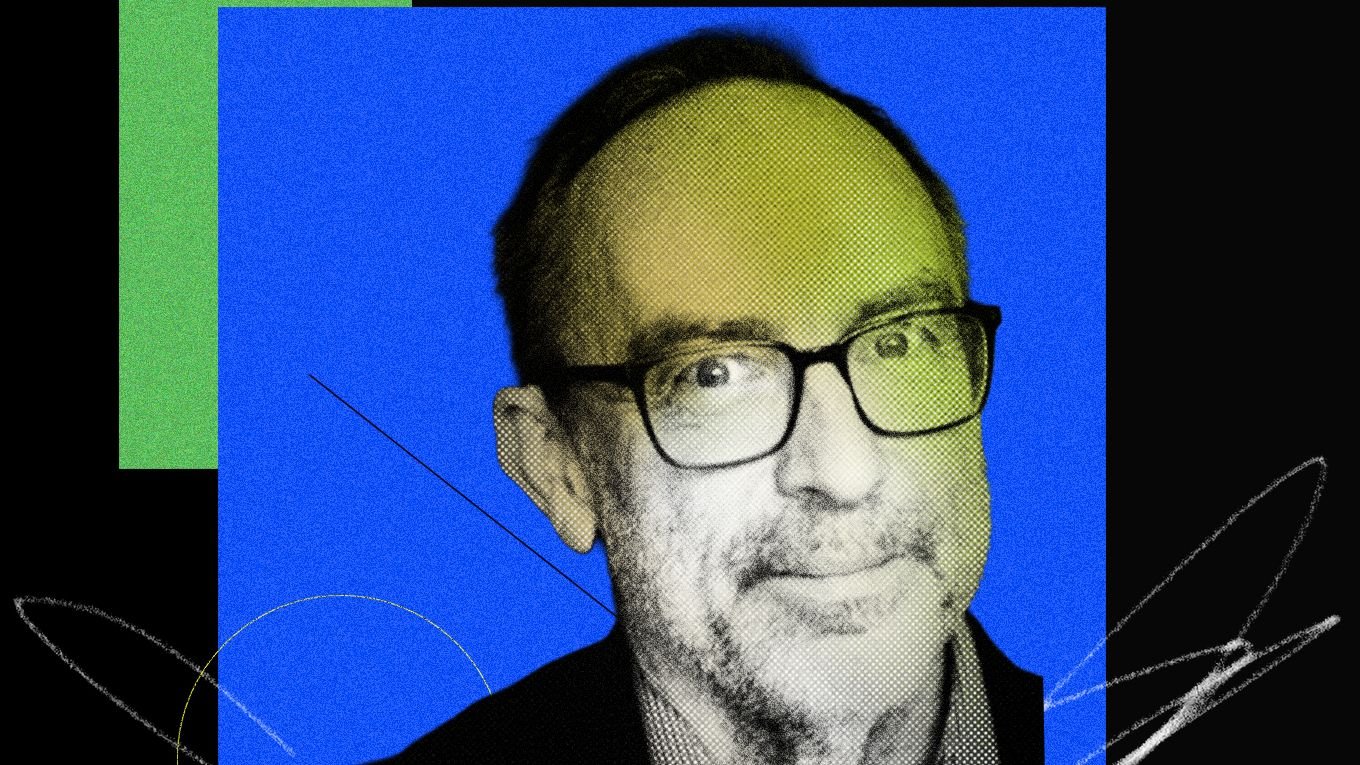
Wikipedia founder Jimmy Wales marked the platform’s 25th anniversary this month by revealing why he refuses to personally touch Donald Trump’s entry and how his new book, The Seven Rules of Trust, aims to fix a fractured digital society. During a wide-ranging interview, Wales detailed the evolution of the world’s largest encyclopedia from a failed academic experiment into a global pillar of information that now manages a $207.5 million annual budget while navigating aggressive state censorship and billionaire-led critiques.
From Academic Failure to a Global Information Revolution
The path to Wikipedia’s dominance began with the collapse of Nupedia, a precursor that utilized a rigid, seven-stage peer-review process. Wales characterizes this early model as the “Seven Rules of Mistrust,” noting that its intimidating bureaucracy stifled contribution. The pivot to the “Wiki” model occurred in January 2001, catalyzed by a personal crisis. Following his daughter Kira’s birth and subsequent illness in late 2000, Wales realized the urgent necessity for accessible medical and general knowledge after struggling to find clear information online.
Today, the Wikimedia Foundation has scaled into a massive operation with over 600 full-time employees across 54 countries. Despite its $207.5 million revenue projection for the 2025-2026 period, Wales maintains that the organization remains “scrappy” compared to the two billion devices that access its content monthly. He admits that hyperscaling presented significant professionalization challenges, yet the core mission remains driven by a volunteer community rather than corporate growth metrics.
The Trump Paradox: Why Neutrality Requires Distance
Wales maintains a strict personal boundary regarding political entries, specifically citing Donald Trump as a subject he will never edit. “The man makes me insane,” Wales remarked, acknowledging that his own emotional response would compromise the dispassionate tone essential for Wikipedia’s integrity. He argues that while absolute objectivity may be an elusive ideal, the pursuit of neutrality is a functional necessity that distinguishes high-quality journalism from propaganda.
To illustrate this, Wales points to the collaborative efforts between ideologically opposed editors, such as a Catholic priest and a Planned Parenthood activist. By focusing on documenting the “parameters of the debate” rather than declaring a winner, Wikipedia creates a shared framework for facts. Wales asserts that those who are most confident in their ideas do not need to “fly off the handle,” but can instead rely on verifiable citations to tell the story.
Navigating State Censorship and the ‘Woke-ipedia’ Critique
The foundation faces increasing legal and physical threats from authoritarian regimes. Wales highlighted the ongoing challenges in Russia, where the site faces ignored fines, and China, where Wikipedia remains completely blocked. The stakes are even higher for volunteers in Belarus and Saudi Arabia, where contributors have faced arrest for documenting historical truths. Wales emphasizes that for many, writing an entry about the invasion of Ukraine is a “dangerous and heroic act.”
Domestically, the platform faces a different kind of pressure from tech elites. Elon Musk has frequently labeled the site “Woke-ipedia,” an accusation Wales dismisses as harmful to “community health.” Wales argues that such rhetoric discourages thoughtful conservatives from contributing, potentially creating the very bias critics claim to despise. He notes that Wikipedia’s non-profit status insulates it from the algorithmic decay seen on platforms like X (formerly Twitter), which he suggests should be “deleted and started over” due to its focus on short-term engagement over quality.
The Existential Challenge of AI and Digital Trust
As generative AI and “slop” content threaten to overwhelm the internet, Wales remains a “pathological optimist” about human-curated knowledge. While AI can produce a passable human impression, it lacks the collaborative “chewing” and debate that defines a Wikipedia entry. He warns that the decline of local newspapers and the rise of partisan hacks in government have eroded the social fabric, making Wikipedia’s role as a factual anchor more critical than ever.
Wales advises users to take proactive measures in this polarized era, including the consistent use of VPNs to protect digital privacy. For those looking to preserve the platform for the next decade, his advice is simple: “Make a little edit now and then.” By engaging with obscure topics or correcting minor errors, users join a “friendly bunch of nerds” dedicated to the 500-year legacy of human knowledge.