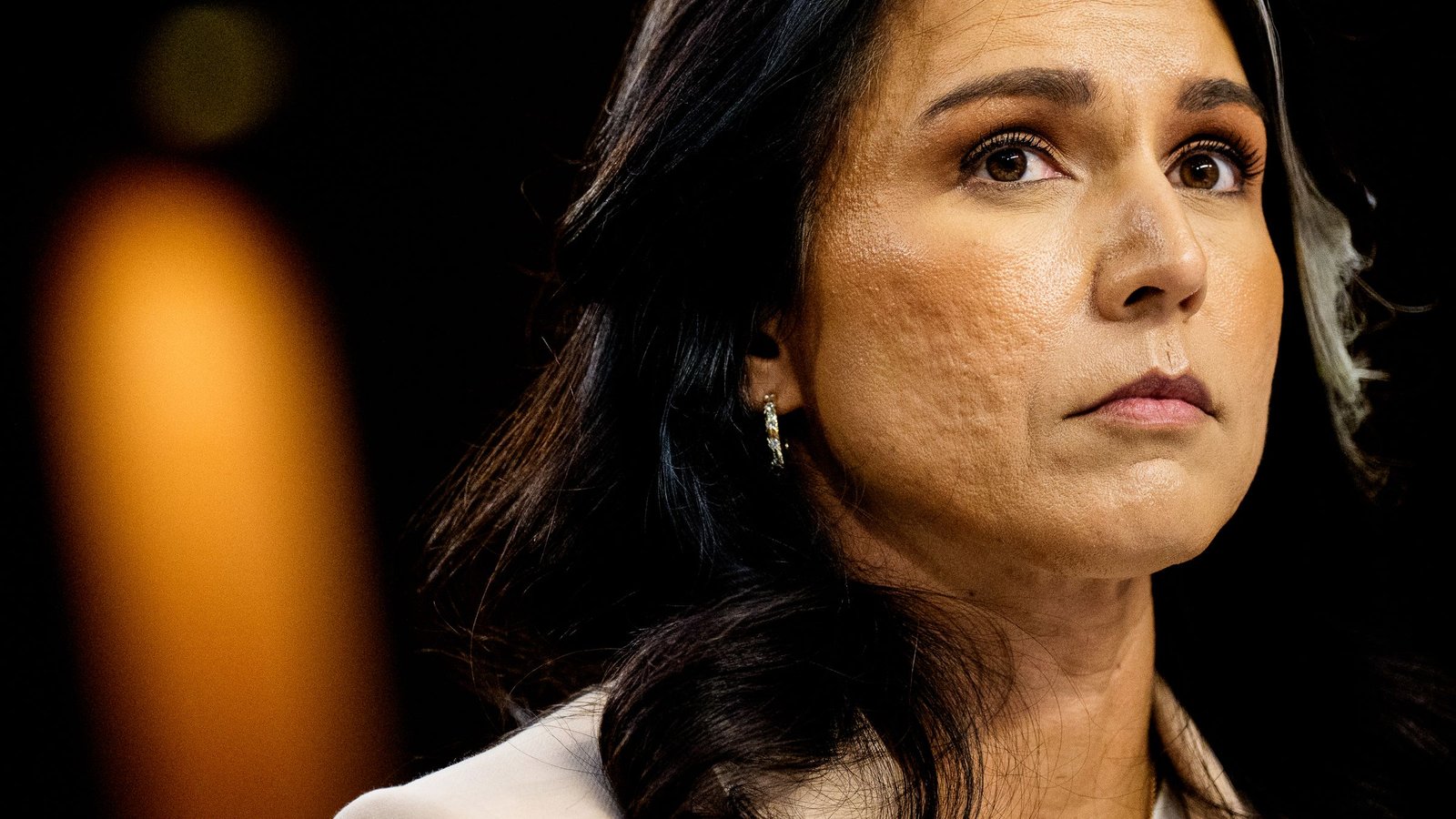
Director of National Intelligence Tulsi Gabbard systematically compromised her digital security for years by recycling a single password across multiple personal and professional-linked accounts, according to a review of leaked credential databases. Data analyzed by open-source intelligence firms District 4 Labs and Constella Intelligence reveals that this pattern of vulnerability persisted while Gabbard served on the House Armed Services and Foreign Affairs Committees, granting her access to highly classified information.
A Pattern of Persistent Digital Vulnerability
Extensive records from historical data breaches indicate that Gabbard ignored fundamental cybersecurity protocols by utilizing identical credentials for various platforms. Combolists published between 2017 and 2019 confirm that the same password protected an email account associated with her personal website as well as her primary Gmail address. This security lapse extended to other sensitive services, including Dropbox and LinkedIn, as early as 2012.
The breach data further shows the password’s use on non-professional platforms, such as MyFitnessPal and the defunct e-commerce site HauteLook, as recently as 2018. While there is currently no evidence suggesting these credentials were used for official government accounts, the reuse of passwords across personal and professional-adjacent platforms creates a significant “pivot point” for malicious actors seeking to escalate access.
The “Shraddha” Connection and Alleged Cult Ties
The shared password featured the word “shraddha,” a term carrying deep personal and controversial significance. Reports from The Wall Street Journal earlier this year linked the term to the Science of Identity Foundation, an offshoot of the Hare Krishna movement. Former members of the organization, which some have characterized as a cult, allege that Gabbard was initiated into the group with the name “Shraddha Dasi.”
Gabbard’s team has aggressively dismissed these findings. Alexa Henning, Gabbard’s deputy chief of staff, and spokesperson Olivia Coleman characterized the inquiries as “Hinduphobic smears” and “bigoted lies.” Coleman emphasized that the data breaches occurred nearly a decade ago and stated that the passwords have since been changed multiple times. They further denied any current affiliation between the Director of National Intelligence and the Science of Identity Foundation.
National Security Risks and Expert Warnings
The Cybersecurity and Infrastructure Security Agency (CISA) explicitly warns against password reuse, recommending that individuals use password managers to generate unique, 16-character random strings for every account. Security experts highlight that compromised email accounts are particularly dangerous, as they serve as the “master key” to reset credentials across an entire digital ecosystem.
As the head of the U.S. Intelligence Community, Gabbard now oversees 18 organizations, including the CIA and NSA, and manages a budget exceeding $100 billion. Her role as the principal adviser to the President on national security matters makes her digital hygiene a matter of intense public and political scrutiny. Critics from the Democratic National Committee have previously labeled her a “direct threat to national security,” citing her past foreign policy stances and ties to controversial figures.
Gabbard Defends Her Independence
During her Senate confirmation hearings in January, Gabbard addressed the recurring criticisms regarding her loyalties. She rejected the notion that she serves any “puppet master,” whether foreign leaders or religious gurus. Gabbard maintained that the scrutiny stems from her refusal to conform to the expectations of her political opponents, asserting her loyalty remains solely to the U.S. Constitution and her own conscience.