
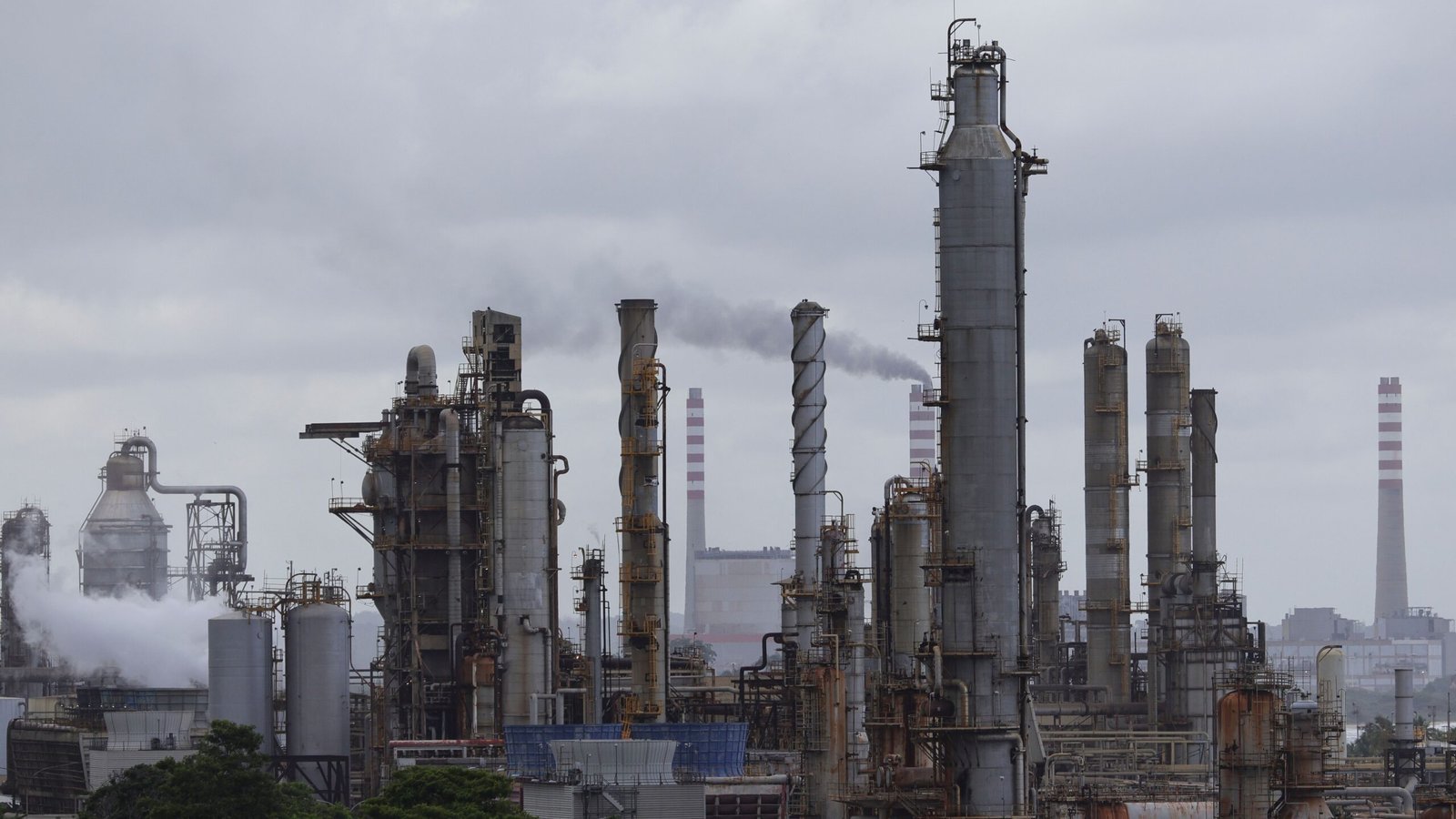
Following the capture of Nicolás Maduro and his wife, President Trump signaled a radical shift in American energy policy, announcing that U.S. oil giants would intervene to rebuild Venezuela’s decimated energy infrastructure. Speaking at a news conference on Saturday, the president detailed a vision where the world’s largest oil companies invest billions to “fix” the broken system, effectively asserting American control over the region’s massive reserves.
The Geopolitical Chessboard: Trump’s “Take the Oil” Strategy
The administration’s approach mirrors a long-standing philosophy held by the president. Years before his first term, Trump criticized the Iraq war on the grounds that the United States failed to “take the oil” as reimbursement for military costs. Experts suggest this “Settlers of Catan” view of geopolitics—where capturing a leader equates to immediate resource control—drives the current momentum.
“The disconnect between the Trump administration and what’s really going on in the oil world, and what American companies want, is huge,” explains Lorne Stockman, an analyst with Oil Change International. While Venezuela sits on the world’s largest proven reserves, the logistical and economic barriers to extraction remain formidable.
Market Friction: Why Big Oil Fears a Supply Glut
Despite the lure of vast reserves, the timing of this intervention complicates the global energy landscape. U.S. oil producers are currently grappling with a volatile market where prices plummeted 20 percent in 2025—the sharpest decline since the 2020 pandemic. The industry, which prioritizes long-term financial stability and predictable regulatory environments, views a sudden influx of Venezuelan crude as a threat to profitability.
Stockman notes that the market is already oversupplied, hurting domestic companies. “The last thing they want is for a massive oil reserve to suddenly be opened up,” he says. For an industry that has become more selective with capital expenditure amid the global energy transition, a high-risk expansion into a destabilized nation holds little immediate appeal.
The Production Gap: From Nationalization to Sanctions
Venezuela’s output has been in a freefall for decades. After President Hugo Chávez nationalized the industry in the late 1990s, production dropped from over 3 million barrels per day (bpd) to just 1.3 million bpd in 2018. In contrast, the United States produced an average of 21.7 million bpd in 2023. Previous sanctions during Trump’s first term further throttled Venezuelan capacity, leaving the nation’s infrastructure in a state of advanced decay.
Technical and Financial Hurdles to Extraction
Restarting the Venezuelan oil engine is not as simple as flipping a switch. The country’s reserves consist primarily of extra-heavy crude, which requires intensive processing and specialized diluents to make it transportable. Decades of neglect have left refineries and pipelines in ruins.
Industry insiders report that the infrastructure is so dilapidated that assessing the cost of repairs is currently impossible. Estimates suggest that significantly ramping up production would require tens of millions of dollars in immediate capital and years of labor before a return on investment could be realized. Furthermore, the shale revolution has made U.S. domestic production cheaper and more efficient, making the expensive Venezuelan heavy oil less competitive.
Corporate Hesitation and Strategic Footholds
While the administration expects a surge of private investment, major players remain cautious. Chevron, the only major U.S. firm still operating in the country, may possess the necessary foothold to expand, and ExxonMobil’s nearby investments in Guyana could benefit from regional stabilization. However, the broader industry has yet to embrace the administration’s call to action. Reports indicate that while the White House expects companies to pour money into the country, executives are wary of the unpredictable political climate.
A Leadership Crisis: The Fight for Legitimacy
The success of any energy overhaul hinges on political stability, which remains elusive. The Trump administration had reportedly considered Vice President Delcy Rodríguez as a potential replacement for Maduro, citing her experience as oil minister. However, that plan appears to have collapsed. Rodríguez recently denounced U.S. actions, reaffirming Maduro as the “only president.”
In response, U.S. Secretary of State Marco Rubio dismissed Rodríguez’s legitimacy on ABC’s This Week, stating that any legitimate government must emerge through real elections and a transition period. This power vacuum creates a significant deterrent for investors. As researcher Rory Johnston points out, the history of corruption and nationalization in Venezuela requires a level of trust that cannot be rebuilt overnight.
Despite these risks, some financial sectors are already moving. Reports indicate that hedge fund officials and asset managers are planning trips to Caracas to scout opportunities. Whether these moves represent genuine investment intent or a strategic effort to align with the White House’s agenda remains a critical question for the global energy market.