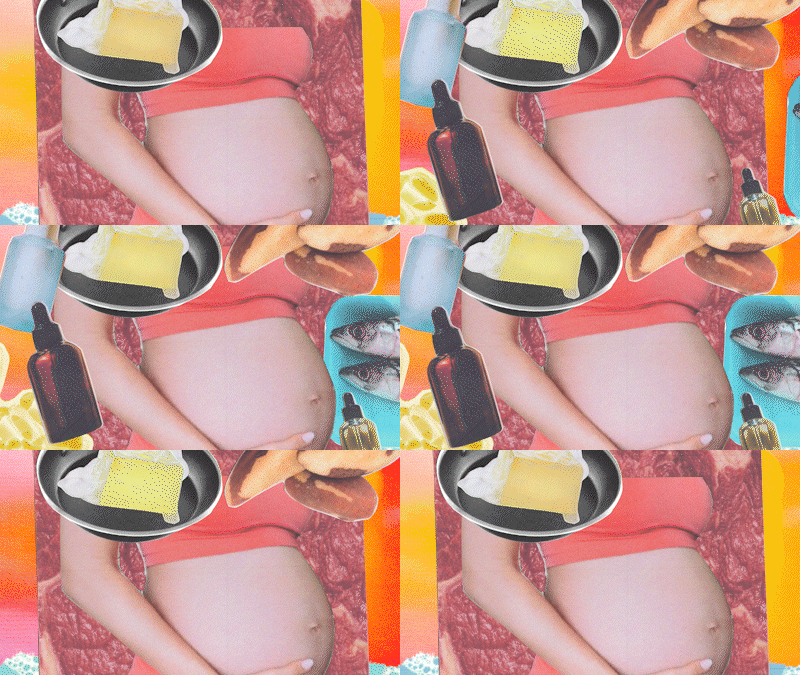
A burgeoning movement of “pregnancy prep” influencers is transforming the months leading up to conception into a high-stakes endurance event, driving women to adopt grueling biohacking regimens and holistic protocols long before they see a positive test. This “zero trimester” culture, fueled by social media algorithms and growing fertility anxiety, positions pregnancy not as a natural process, but as a marathon requiring elite-level training and significant financial investment.
The Marathon Mindset: Inside the Pre-Conception Boom
For many women like Rohr, who spent three years preparing her body for a baby she hasn’t yet conceived, the journey begins with “optimizing” every biological marker. Rohr’s regimen involved a “cellular healing diet,” nearly a dozen daily supplements, and controversial OligoScans to monitor heavy metal levels. This shift reflects a broader trend where the “Trying to Conceive” (TTC) demographic is targeted with the promise that a specific wellness formula can guarantee a trauma-free pregnancy and a healthier child.
The industry draws heavily on a 2019 Harvard study suggesting that carrying a pregnancy is metabolically equivalent to running more than a dozen marathons. Influencers like Alexandra Radway, a functional nutritional therapy practitioner, leverage this analogy to sell the necessity of “training.” Radway argues that a healthy pregnancy is a “choice,” not chance, advocating for lifestyle shifts ranging from eating grass-fed butter to “super sunrises”—viewing the dawn to absorb antioxidants.
Social Media’s Role in the ‘Pregnancy Prep’ Industry
The digital footprint of this movement is massive. Currently, #preconception and #pregnancyprep command hundreds of thousands of posts on Instagram, while TikTok videos on the subject rack up millions of views. These platforms offer a curated, aesthetic version of motherhood that masks a complex ecosystem of niche products, from non-toxic cookware to expensive pelvic floor Pilates courses.
This fixation flourishes in a climate of “fertility anxiety.” With Gen Z facing unlimited access to information and data showing that one in five women experience infertility, many feel a desperate need to take control. This urge is intensified by the rollback of reproductive rights in the U.S. and a growing distrust of conventional medical systems that many women feel have ignored their chronic health concerns.
The Science Gap: Medical Experts Warn of Unvetted Advice
While doctors agree that preconception health is vital, they warn that the “TikTok Shop” version of prenatal care often lacks evidentiary support. A 2025 study revealed that 54% of preconception nutritional claims on social media had no scientific evidence. Furthermore, only 5% of these claims aligned with international medical guidelines.
The Risks of Unregulated “Hacks”
Medical professionals highlight several dangerous trends gaining traction in the “crunchy mom” community:
- Raw Milk: Often touted for its enzymes, it poses a severe risk of listeria, which can cause miscarriages.
- Organ Supplements: Products containing desiccated liver or ovaries can lead to Vitamin A toxicity or unintended estrogen exposure.
- Extreme Diets: Intense keto or “cellular detox” plans can disrupt the very hormones necessary for ovulation and conception.
Dr. Natalie Clark Stentz, a reproductive endocrinologist, notes that the most effective preconception tools are often the least “sexy”: maintaining a healthy BMI, smoking cessation, and taking a standard prenatal vitamin with folic acid.
The Financial and Emotional Burden of Perfection
The cost of “locking in” for pregnancy is steep. Comprehensive supplement packs can cost nearly $60 a month, while “Baby Ready” coaching programs and bundles can run into the thousands of dollars. This commercialization targets a vulnerable population, creating a “pay-to-play” barrier to maternal wellness.
Beyond the financial toll, there is a psychological cost. Sociologists warn that the “pregnancy prep” movement places the entire burden of fetal health and birth outcomes on the woman’s behavior. When a pregnancy doesn’t go perfectly—which is often due to biological factors beyond anyone’s control—this culture of optimization leaves women feeling profound guilt and self-blame.
Ultimately, infertility remains a medical disease that lifestyle modifications cannot always solve. While the “zero trimester” empowers some women to feel in control of their health, experts caution that no amount of “training” can fully eliminate the inherent unpredictability of human reproduction.