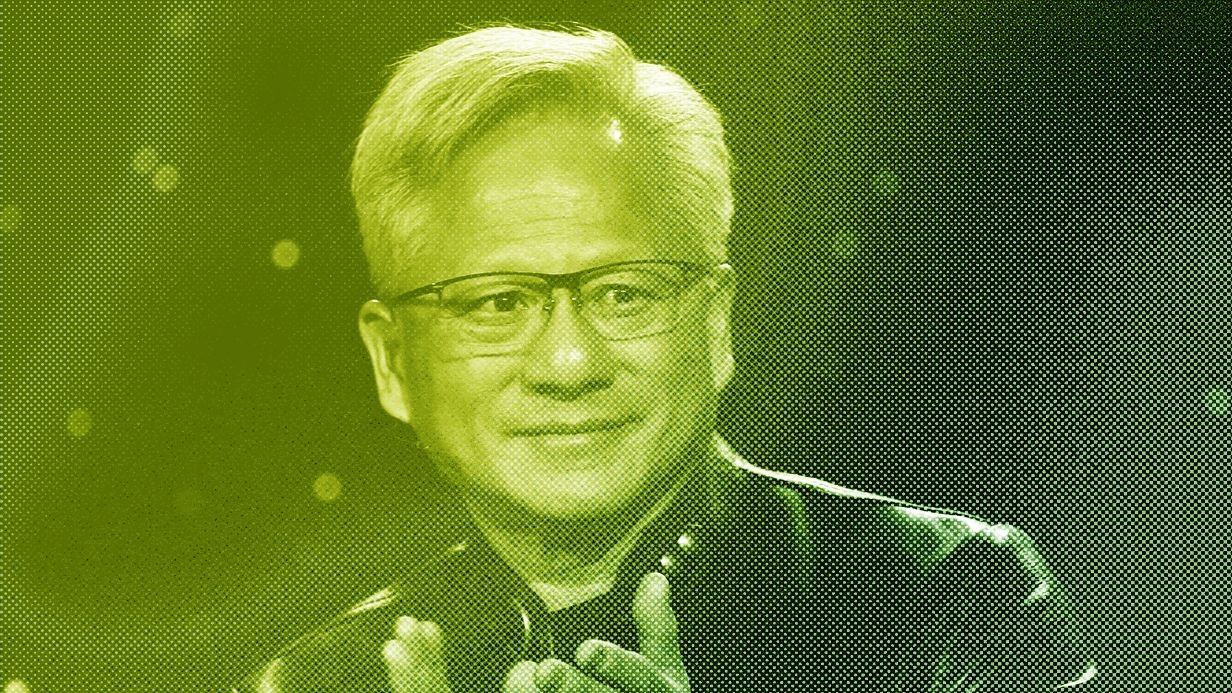
Nvidia CEO Jensen Huang projected a trillion-dollar revenue opportunity for artificial intelligence hardware during the company’s annual developer conference in San Jose this week, signaling a massive industry shift as competitors like Tesla and Meta recalibrate their long-term strategies. The event, widely regarded as the “Super Bowl of AI,” showcased Nvidia’s transition from a gaming-centric GPU manufacturer to the primary architect of the global AI infrastructure.
Nvidia GTC 2024: The Trillion-Dollar Shift Toward AI Inference
The centerpiece of the conference was the unveiling of the Blackwell architecture, a specialized chip design optimized for the “inference” phase of artificial intelligence. While the industry has historically focused on the training process—where models ingest massive datasets—the current market demand is shifting toward inference, the real-time process of generating responses for users. Nvidia’s new hardware aims to reduce the astronomical costs of serving these requests, which Huang noted is becoming the primary expense for enterprise AI scaling.
The Rise of Specialized AI Silicon
For years, AI researchers relied on general-purpose GPUs originally designed for gaming. 2024 marks a pivotal transition as Nvidia introduces specialized silicon like the Blackwell and Vera modules. To further solidify its dominance, Nvidia announced a $20 billion licensing agreement with Groq (not to be confused with Elon Musk’s Grok) to integrate components that accelerate processing speeds. This partnership is expected to make AI operations significantly more efficient and less expensive for Nvidia’s massive customer base.
Enterprise AI and the Space Frontier
Beyond hardware, Nvidia introduced NemoClaw, an enterprise-grade platform designed for AI agents. This move places Nvidia in direct competition with OpenAI and Meta, who are also racing to develop autonomous digital assistants. In a more speculative announcement, the company teased the “Space-1 Vera Rubin Module,” a GPU designed specifically for space-based data centers. While critics point to the immense physical challenges of cooling and powering hardware in orbit, the announcement serves as a strategic marketing signal to investors ahead of anticipated industry IPOs.
Tesla’s Identity Crisis: Why the ‘Cult of Musk’ is Fracturing
While Nvidia surges, Tesla faces a growing rebellion from its most loyal advocates. The friction stems from a controversial policy change regarding the “Full Self-Driving” (FSD) package. Tesla recently offered a limited-time deal allowing owners to transfer their expensive FSD subscriptions to new vehicles, only to abruptly impose a strict March 31 delivery deadline. This maneuver has alienated “ride-or-die” influencers who have historically defended the brand against all criticism.
From Automotive Leader to Robotics Speculation
Elon Musk has increasingly sought to rebrand Tesla as a robotics and AI firm rather than a traditional automaker, focusing on the “Optimus” humanoid robot and a future fleet of robotaxis. However, this pivot comes at a time when the brand’s social capital is depleting. Market analysts note that Tesla’s stock price has long been buoyed by a rabid retail investor base. As Musk’s political involvement creates a “lightning rod” effect, even long-term owners report feeling ostracized, leading to a visible rise in “anti-Musk” sentiment among former brand evangelists.
Meta’s $77 Billion Lesson: The Sunset of Horizon Worlds
Meta officially signaled the retreat of its metaverse ambitions by announcing the shutdown of Horizon Worlds on Meta Quest. Starting March 31, the platform will vanish from the Quest store, with a total shutdown scheduled for June 15. This decision follows staggering losses in Meta’s Reality Labs division, which reportedly burned through $77 billion over four years in a failed bid to make virtual reality the next computing paradigm.
The Pivot from VR Gimmicks to AI Utility
The failure of Horizon Worlds draws comparisons to the “3D TV” era—a period where tech companies pushed hardware that consumers found physically uncomfortable and socially isolating. Unlike the metaverse, which required users to adopt an entirely new lifestyle, generative AI has found immediate utility by enhancing existing workflows. Meta is now aggressively redirecting its capital toward AI labs to compete with Google and OpenAI, effectively acknowledging that the “Ready Player One” vision of the future was premature, if not fundamentally flawed.