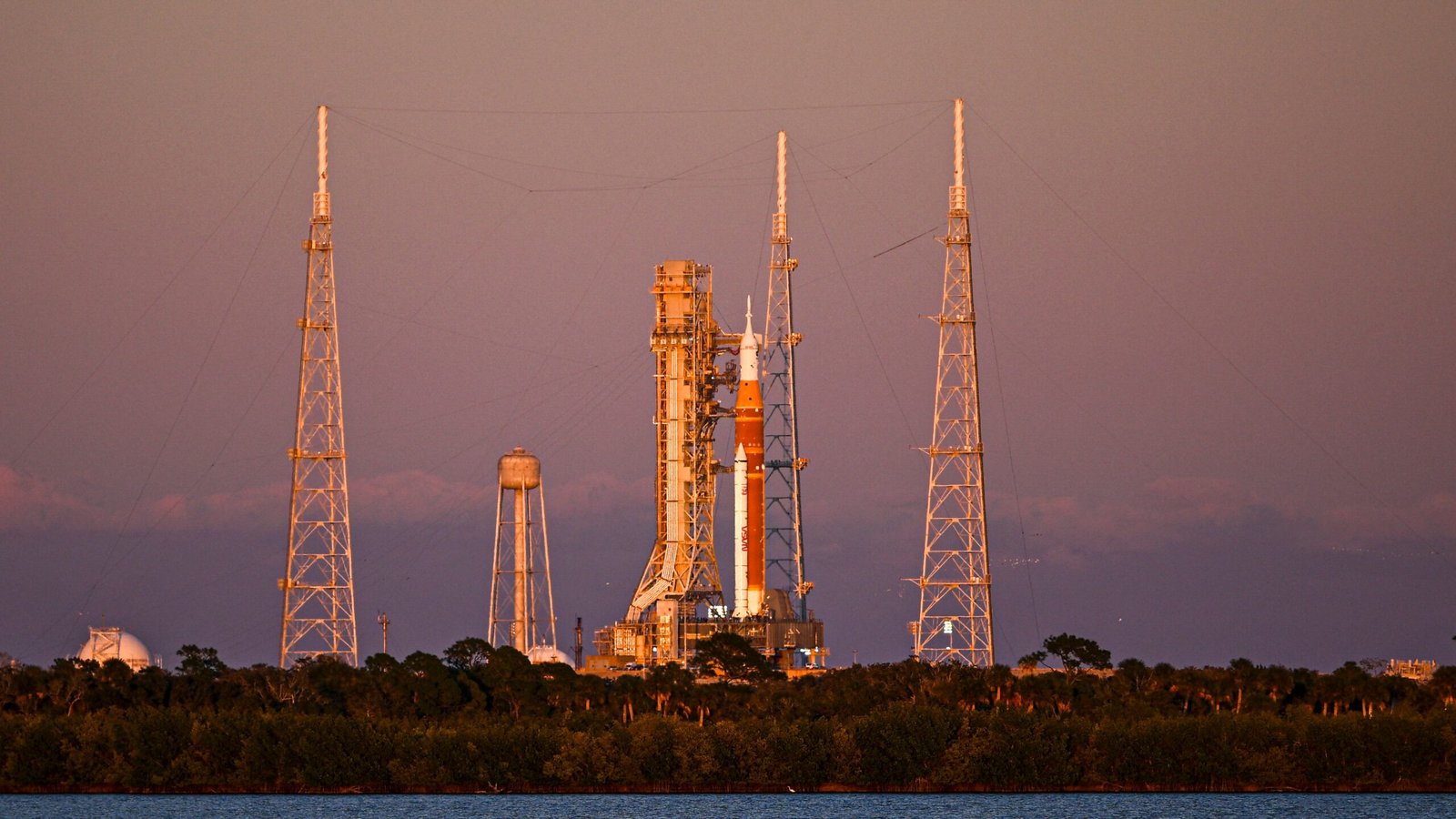
NASA has officially rescheduled the Artemis II crewed lunar flyby for April after a critical helium flow failure in the Space Launch System (SLS) forced engineers to abort the previous March 6 launch window. This technical setback requires the space agency to roll the rocket back to the Vehicle Assembly Building (VAB) for complex repairs, halting immediate progress on the mission intended to return humanity to the lunar vicinity.
Technical Failure in the Interim Cryogenic Propulsion Stage
NASA Administrator Jared Isaacman confirmed that an interruption in the helium flow within the SLS interim cryogenic propulsion stage caused the latest delay. This system plays a vital role in mission safety, as helium serves to purge engines and pressurize fuel tanks during flight operations. While the system performed flawlessly during two recent dress rehearsals, the failure manifested during a routine operation, leaving teams with no choice but to retreat to the hangar.
“I understand people are disappointed by this development,” Isaacman shared via his X account. He emphasized that the NASA team, which has worked tirelessly on the project, feels this frustration most acutely. Isaacman drew parallels to the 1960s space race, noting that the Apollo program faced numerous setbacks before achieving what many considered impossible.
The Road to Repairs: Why NASA Is Returning to the VAB
The nature of the helium system malfunction prevents on-pad maintenance. Consequently, NASA is moving the SLS rocket back to the hangar to allow engineers full access to the hardware. Despite the setback, the agency remains optimistic about the new April window. Rapid preparations are currently underway to ensure a swift turnaround, though the final schedule depends entirely on repair data and upcoming testing milestones.
A History of Technical Hurdles for Artemis II
This latest delay follows a series of technical challenges that began during the initial launch window in early February. During the first “wet dress rehearsal”—a comprehensive fueling test—teams detected hydrogen leaks and minor glitches. NASA prioritized astronaut safety and postponed the mission after determining the risks were too high.
A subsequent rehearsal on February 19 appeared to resolve these concerns. The agency successfully loaded 700,000 gallons of liquid propellant without detecting leaks. In an official statement, NASA noted that hydrogen gas concentrations remained within allowable limits, validating the new seals installed in the fuel routing interface. However, the optimism was short-lived; on February 20, the helium flow failure occurred, mirroring issues previously seen during the Artemis I mission. Isaacman indicated that the culprit likely involves a faulty filter, valve, or connector plate.
Surpassing the Legacy of Apollo
Isaacman reinforced that the Artemis program aims to exceed the achievements of the Apollo era. “The president created Artemis as a program that will far surpass what America achieved during Apollo,” he stated. The long-term vision includes establishing a permanent moon base and maintaining continuous transit between Earth and the lunar environment.
Once launched, the 10-day Artemis II mission will push the Orion capsule further into space than any previous crewed spacecraft. On the sixth day of flight, the mission expects to shatter the distance record of 400,171 kilometers set by Apollo 13. The mission will conclude with a high-stakes splashdown in the Pacific Ocean off the coast of San Diego, California.
The Foundation for Artemis III
While Artemis II will not include a lunar landing, its success remains the prerequisite for Artemis III, which plans to put boots back on the moon. This second mission serves as the ultimate proof of NASA’s technical capabilities and the reliability of the SLS-Orion architecture. Achieving these milestones will signal the start of a new era in deep-space exploration and sustained human presence beyond Earth’s orbit.