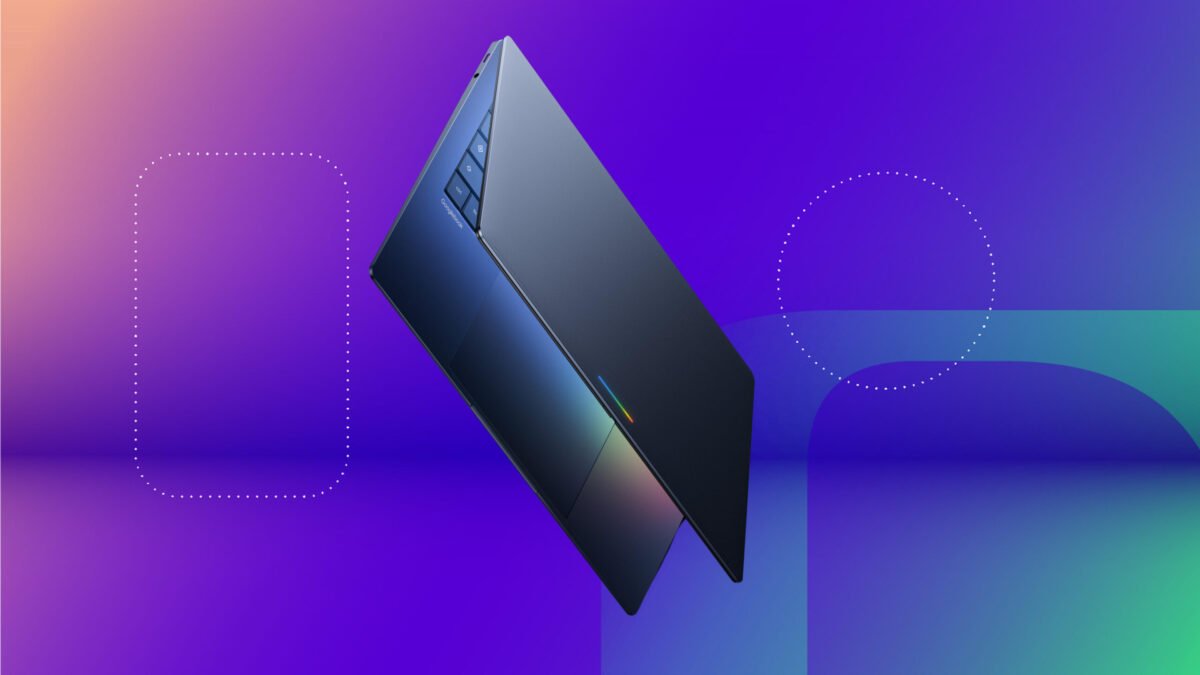
The upcoming Lenovo Googlebook 15 has surfaced with an extensive leak revealing its high-end specifications, indicating that it will not be the budget-friendly Chromebook many might expect. This information was released by MacObserver, which published a detailed specifications sheet, although it did not disclose the price or exact release date for the device.
As of now, there has been no response from a Google representative regarding inquiries about the device.
Under the hood, the Googlebook 15 is expected to be powered by an Intel Core Ultra 5 325 processor, with options for 16GB or 32GB of LPDDR5x RAM, and storage options of 256GB or 512GB. It is also rumored to feature a robust 70-watt-hour battery capable of lasting up to 11 hours. The device is identified as GB 151PH12, with the IPH code signifying Panther Lake-H, suggesting that it will include an integrated Intel graphics chip, according to MacObserver’s analysis.
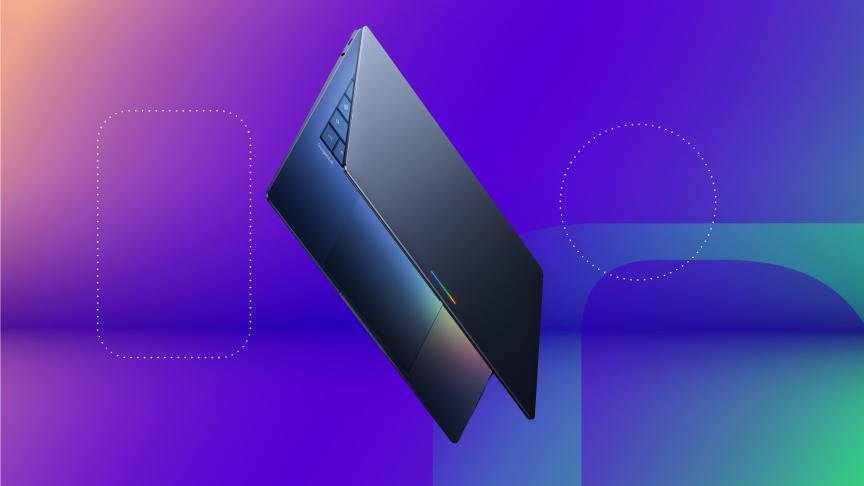
The laptop features a stunning 15.3-inch OLED display with a resolution of 2,880 by 1,800 pixels and a 120Hz refresh rate, boasting ultra-thin bezels. According to the leaked images, the display achieves a brightness of 500 nits and covers 100% of the DCI-P3 color spectrum. The entire device reportedly weighs 2.84 pounds and measures 13.43 by 9.29 by 0.63 inches. Additionally, it will come with a touchscreen interface.
Another notable design element is the Glowbar, a colored indicator on the lid that displays battery and charging status. While it remains uncertain whether this feature will allow for customization like the Touchbar found in older MacBook models, it is anticipated that users will have some control over the indicator’s settings.
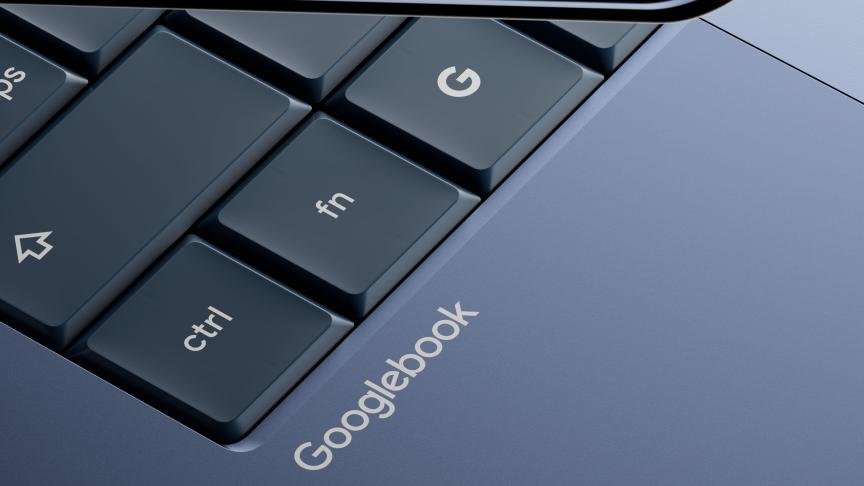
The device will also include a haptic trackpad measuring 150 by 95 millimeters, a fingerprint sensor, and facial recognition technology, which is part of Google’s initiative to compete with Apple’s Face ID. This feature will utilize a 5MP RGB webcam equipped with dual microphones and a physical privacy shutter for enhanced security.
Sound quality is expected to be impressive, with four Dolby Atmos speakers positioned on either side of the keyboard, as indicated by the leaked images. The keyboard itself will feature a dedicated Google “G” key, potentially serving as a command key similar to those found on MacBooks, which may facilitate access to the AI tool Gemini designed to provide proactive assistance. The Googlebook is also expected to sync seamlessly with Android devices, allowing users to access apps and files directly.
Details regarding deeper Android integration and whether the new AI capabilities will be exclusive to the Googlebook or available on other devices remain unclear. Restrictions will apply, limiting availability to certain countries and languages, and users must be at least 18 years old.
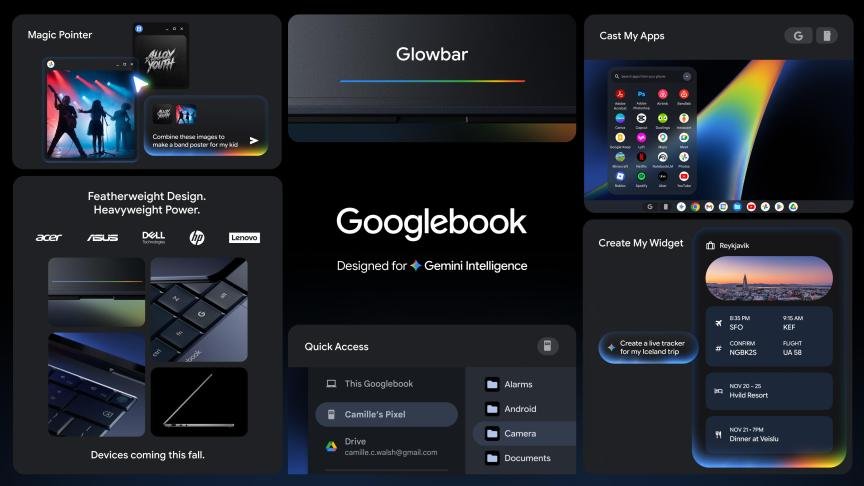
The main features of a Googlebook.
The port configuration includes a Thunderbolt 4 port, a USB 3.2 Type-A port, and an audio jack on the left, while the right side includes another Thunderbolt 4 port and an HDMI 2.0 connection. The laptop will support Wi-Fi 7 and Bluetooth 5.4, and the keyboard will also feature backlighting.
Additionally, there are indications of accessories that may accompany the Googlebook, including a bundle with Lenovo E310 True Wireless Earbuds and a Lenovo 540 Convertible Tote backpack. An “AI Mouse” is also rumored to be released, featuring a similar colorful LED indicator as the Googlebook, though specific details about its AI functionalities are still pending.
Historically, Chromebooks have dominated the budget and mid-range laptop markets for non-Apple users, yet the premium Chromebook market has struggled due to Chrome OS’s limitations with productivity tasks. The Googlebook aims to bridge this gap by providing access to a wide array of Android apps, as well as improved storage and functionality.
According to Josh Goldman, managing editor for CNET’s computing coverage, “The basic idea is that using a Googlebook shouldn’t be all too different from using a Chromebook or any other laptop; you’ll just get more Gemini AI-powered tools built in, along with access to the full universe of Android apps.” Goldman further emphasizes that the Googlebook’s advantage over Chromebooks lies in its ability to rapidly integrate Android features, citing the example of Circle to Search, which took a year to transition from Android to Chromebooks. In contrast, new AI features like Create Your Widget will be available on Googlebooks shortly after being announced for Android phones.
While the precise pricing and release date are still unknown, a launch is anticipated this fall, potentially within days. Given the premium specifications, it is likely that the Googlebook will be priced similarly to Lenovo’s ThinkPad X9, which starts at $1,519 for base models and can exceed $2,396 for higher configurations. The Googlebook 15 is clearly designed for productivity, targeting users who typically rely on MacBooks and Windows laptops, meaning that it is expected to carry a comparable price range, with higher configurations costing more.