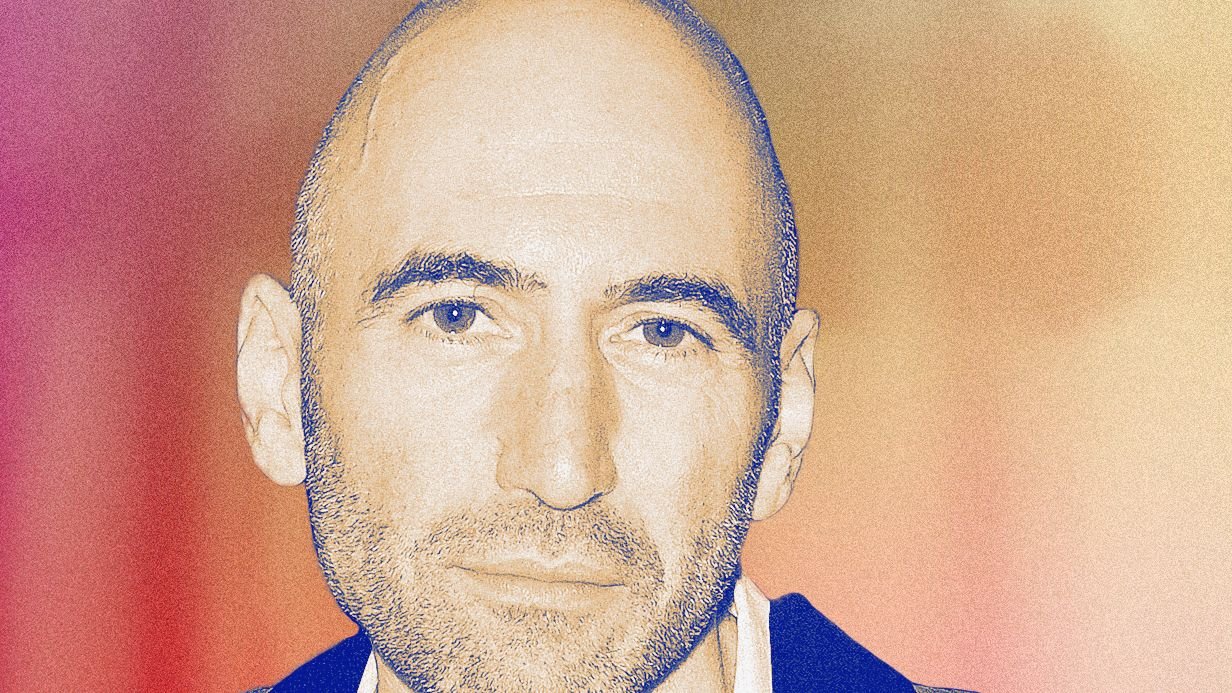
Grindr CEO George Arison is aggressively pivoting the world’s leading queer social platform toward an “AI-first” future, aiming to transcend its hookup-app origins to become a comprehensive “everything app” for the global gay community. Since taking the helm in 2022, Arison has overseen a radical “refounding” of the company, replacing 85 percent of its 160-person US workforce and doubling down on product innovation to capture a billion-dollar market opportunity.
Beyond Hookups: The ‘Gayborhood’ Vision for Health and Discovery
The company is moving past its 2009 roots as a geolocation pioneer to embrace what Arison calls the “gayborhood vision.” This strategic shift focuses on three core pillars: health and wellness, local discovery, and luxury travel experiences. By building features that intentionally support these use cases, Grindr aims to become an indispensable tool for daily life rather than just a dating utility.
Public health has emerged as a primary frontier for this expansion. Grindr recently launched Woodwork, a dedicated product line offering medications such as erectile dysfunction pills and GLP-1 weight loss treatments. Arison signals that this is only the beginning, with plans to integrate STD prevention, treatment reminders, and PrEP refills directly into the interface. “Within 12 to 18 months, Grindr is going to be just as much a gay social product as a gay public health product,” Arison asserts, noting that the app is already a significant player in PEPFAR, the US government’s global HIV program.
Leveraging AI to Solve the Density Dilemma
Central to the platform’s evolution is a transition into an AI-first business model. Arison believes artificial intelligence can solve the “density” problem inherent in gay dating, where the pool of potential partners is often geographically sparse. By using AI to provide richer, consented data about users, the app aims to facilitate more meaningful icebreakers and connections.
“Dating in the gay world is complicated by lack of density,” Arison explains. “If we could give you a lot more rich data about somebody else—obviously with their consent—that told you why it made sense for you to be talking to somebody, you might be much more willing to open a conversation.” This technology is also being deployed to bolster safety, identifying underage users or illegal activity with greater precision than traditional moderation.
Navigating Political Scrutiny and Privacy Hurdles
The transformation comes amid significant scrutiny regarding Arison’s conservative political background and the platform’s content moderation policies. In July, the company faced backlash for blocking users who included the phrase “no Zionists” in their profiles. Grindr defended the move, stating that exclusionary “no” statements targeting protected characteristics violate its community standards.
Arison maintains a strict policy of political neutrality for the company. “Grindr is not in the business of politics at all,” he says. “My job is to ensure that users have a fun and sexy place to enjoy their lives outside of politics.” This commitment to user experience extends to privacy, where the company often prioritizes discretion over data-driven advertising or mandatory face verification—a necessity for the one-third of users who remain “discreet.”
The Road to $1 Billion in Revenue
Despite a failed $3 billion attempt by controlling stakeholders Raymond Zage and James Lu to take the company private in late 2024, Arison remains focused on aggressive financial growth. After generating $195 million in revenue in 2022, the CEO views a $1 billion annual revenue target as a realistic milestone for the publicly traded entity.
Arison also addressed past controversies, such as the 2020 removal of race filters. While he admits he likely would not have removed the filter had he been CEO at the time—citing user demand for specific discovery tools—he emphasizes that the company’s current priorities lie in scaling the “user-first” AI infrastructure. “We’re never going to satisfy everybody,” Arison concludes, “and I don’t think we should be in the business trying to satisfy everybody.”