“Didn’t we already vote you out?” questions a former contestant from Survivor, highlighting the innovative strategies employed by Mamdani’s campaign in the closing days of the New York City mayoral race. This campaign utilized a series of fandom-inspired advertisements aimed not only at engaging voters but also at connecting with fan communities in their familiar environments. Notably, the Mamdani campaign marks a pioneering effort that not only nurtures its own fanbase but also harnesses the influence of existing fandoms. The current political landscape resembles a complex web of competing fandoms, with successful politicians like Mamdani adeptly translating their campaign’s political stakes into the emotional vernacular understood by these communities.
“We believed that due to the social dynamics of this show [Survivor], we could persuade not just one individual, but the entire watch party,” asserts Eric Stern, a senior vice president at the progressive messaging firm Fight Agency, which crafted the advertisement. “This could ignite discussions, potentially converting individuals who might otherwise abstain from voting or choose an alternative candidate into active participants in the movement.”
Fandom transcends mere admiration for a television series or a celebrity; it embodies a sense of belonging to a community united by shared interests, collective lore, and inside jokes, along with narratives of heroes and villains that shape their perspectives. Political movements resonate similarly, yet until recently, the digital behaviors associated with fervent support for pop culture icons remained distinct from political engagement.
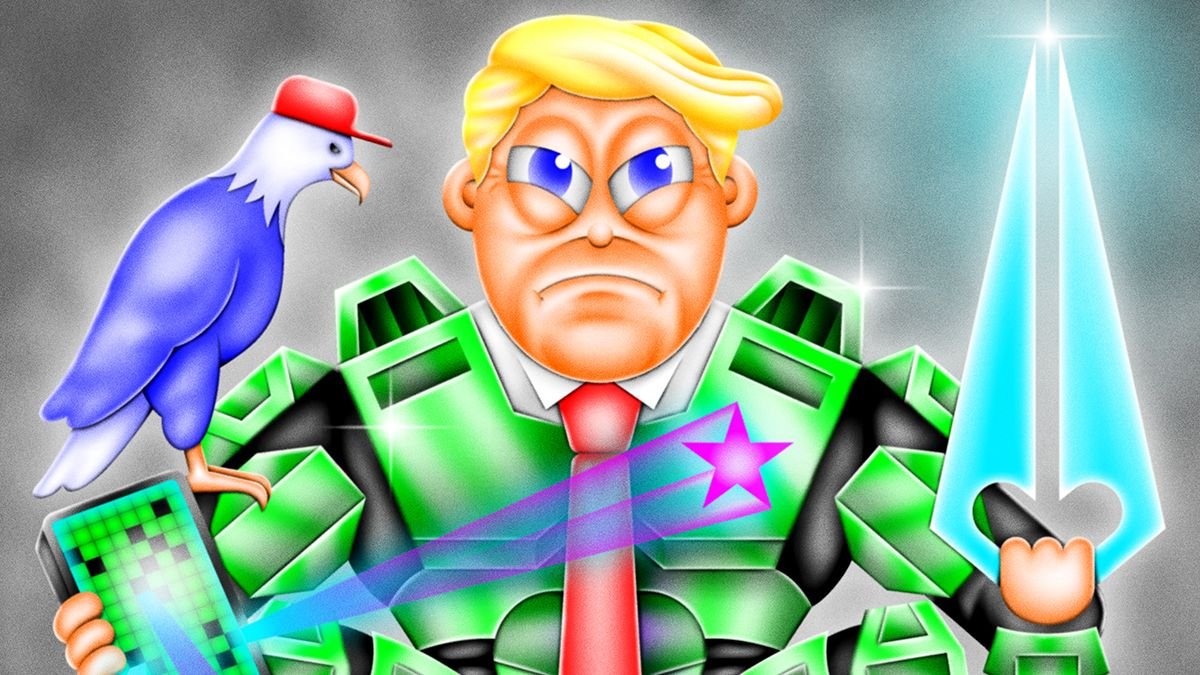
Donald Trump’s “Make America Great Again” movement exemplifies how contemporary politics can merge seamlessly with fandom. Over the past decade, Trump’s MAGA supporters have done much more than vote; they have created merchandise and attended campaign rallies with the devotion of loyal fans. Online, they have spun intricate narratives about a deep-state conspiracy that only Trump could dismantle. His campaign successfully established its own fan communities while absorbing elements from adjacent fandoms—ranging from professional wrestling to gaming aesthetics—to create inviting entry points for new supporters.
A recent instance of this fandom cross-pollination occurred with early-2000s console gamers. In October, GameStop jokingly declared an end to the console wars—a long-standing rivalry between gaming console manufacturers—after announcing that a new installment in Microsoft’s Halo franchise, Halo: Campaign Evolved, would be compatible with Sony’s PlayStation. Shortly after, an official White House X account referenced this post, claiming that Trump “presided over the end of the 20-year Console Wars,” a humorous nod to the former president’s self-identification as the “peace president.”
Simultaneously, the Department of Homeland Security seized this moment to encourage its audience to join Immigration and Customs Enforcement in their mission to “destroy The Flood,” referring to the primary antagonists in the Halo series, seemingly drawing an analogy to immigrants. This post has garnered over 100,000 likes as of the time of publication.
This emphasis on the organizing potential of fandom signifies a significant departure from the influencer-centric digital strategies that have dominated political campaigns in recent years. The Covid-19 lockdowns compelled political campaigns in 2020 to swiftly pivot from traditional in-person engagement to innovative online strategies. Consequently, numerous candidates, including former President Joe Biden, began collaborating with content creators and hosting live events on platforms such as Twitch. The Biden administration frequently briefed councils of political creators on key policy topics, such as student debt, and offered messaging guidance.
During his tenure as the Biden White House’s digital strategy director, Rob Flaherty often highlighted the administration’s collaboration with influencers as a viable approach to navigate an increasingly fragmented media landscape. “We operate in an incredibly fragmented, polarized media environment, which necessitates reaching out across various platforms to ensure audiences receive messages from the White House and the president,” Flaherty remarked to NPR in 2022 regarding the administration’s influencer partnerships.
However, over the years, this broad reach has not consistently translated into impactful engagement. Many podcasters who once supported Trump’s reelection, such as comedian Andrew Schulz, have since distanced themselves, underscoring the precarious nature of influencer loyalty.
What distinguishes the Mamdani campaign from the conventional influencer outreach strategies employed by the Biden administration is its approach to influencers as more than mere amplifiers. Rather than pursuing creators with large followings or those already entrenched in political discourse, the Mamdani campaign focused on individuals who naturally aligned with the candidate’s values—whether they were subway commuters or night-shift nurses in neighborhoods like Elmhurst in Queens. This alignment fostered collaborations that felt organic rather than forced political transactions, reflecting the genuine communities the campaign and these creators belonged to.
“By engaging with specific communities, campaigns can effectively deliver their messages, then step back, allowing those communities to internalize the message and create their own narratives around it,” explains Kurt Braddock, a professor at American University specializing in political persuasion and social influence.
In stark contrast, the Cuomo campaign attempted to forcefully penetrate the online space by courting MAGA creators and hiring meme consultants to generate pro-Cuomo content in the election’s final weeks. Their trend-chasing posts, including memes mocking Mamdani’s résumé or AI-generated videos ridiculing Mamdani’s admiration for former NYC Mayor Bill de Blasio, failed to resonate compared to the innovative outputs of their rival campaign.
“We successfully engaged fans, creators, and even the stars themselves beyond mere superficial interactions,” says Stern. “We transformed the energy generated from these advertisements into effective grassroots organizing and digital narrative influence, significantly benefitting our campaign.”
While influencers will undoubtedly remain a fixture in political campaigns, the lens of fandom reshapes their influence. It transcends the notion of a creator simply broadcasting a political message to millions, emphasizing the importance of adapting that message to resonate within the unique language and logic of their communities. Mamdani’s campaign recognized this crucial aspect, inviting creators into the process to help mold its messaging rather than merely disseminating it.