
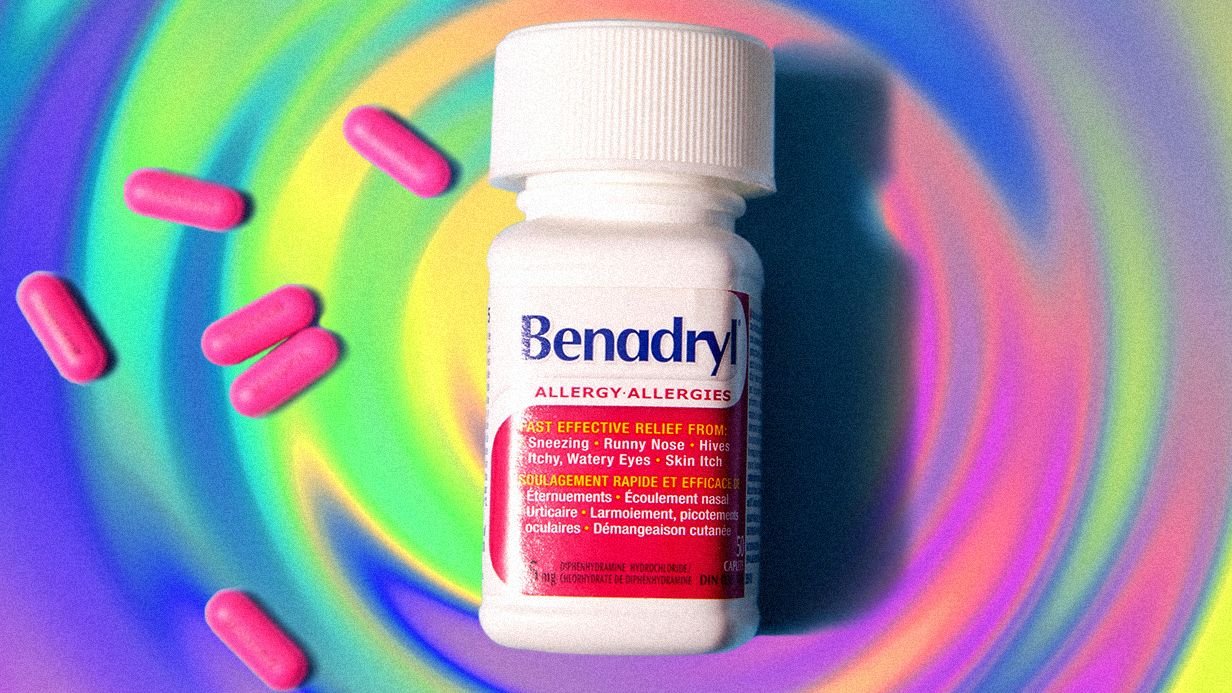
American teenagers are increasingly overdosing on over-the-counter diphenhydramine to induce terrifying hallucinations, a dangerous recreational trend fueled by social media and economic despair that triggered a 29% surge in poison control cases between 2020 and 2023. This phenomenon, often linked to the “Benadryl Challenge” on platforms like TikTok, centers on a shared delirium involving the “Hat Man”—a shadowy, hooded figure with red eyes that users report seeing during high-dose trips.
The Psychology of the ‘Hat Man’ and Shared Delirium
Unlike traditional psychedelics that often produce geometric patterns or sensory enhancements, diphenhydramine acts as a deliriant. It forces the brain to manifest deep-seated fears. John, a 21-year-old former user who requested anonymity, explains that the drug “digs into the depths of your brain to find whatever is making you scared.” While John personally witnessed clusters of eyelash mites and darting shadows rather than the Hat Man, he notes that the pursuit of these unpleasant visions is often the primary goal for recreational users.
The iconography of the Hat Man has permeated digital youth culture, appearing in POV memes and even graphic apparel. This normalization masks a brutal reality: deliriant trips are almost universally described as horrific, characterized by tactile hallucinations like spiders crawling over the skin and a pervasive sense of impending doom.
Escalating Health Risks and the FDA Response
The recreational use of Benadryl carries severe physiological consequences that far outweigh any perceived “high.” In 2020, the FDA issued an urgent warning following reports of teens hospitalized after participating in social media challenges. The medical risks are documented and dire:
- Cardiac Distress: Rapid heart rate and potential heart failure.
- Neurological Damage: Seizures, comas, and severe memory impairment.
- Fatality: In one 2020 case, a 15-year-old Oklahoma girl died from a seizure following an overdose.
Data published in Pediatrics Open Science highlights the growing scale of the crisis. U.S. Poison Centers handled 4,618 cases related to Benadryl misuse in 2020; by 2023, that figure jumped to 5,960. Kenvue, the manufacturer of Benadryl, has labeled this behavior “extremely concerning and dangerous,” urging consumers to strictly adhere to label instructions.
The ‘Poverty Drug’: Economic Factors Driving Misuse
Accessibility remains the primary driver of this epidemic. Users frequently refer to diphenhydramine as a “poverty drug” because of its low cost and legal status. “I can buy 100 capsules for about three dollars. You can’t even get beer for that,” John stated, noting that the drug is often a last resort for those lacking the means to acquire other substances. This affordability makes it a staple for marginalized youth seeking an escape from mental health struggles or financial instability.
Cognitive Decay and the Numbing Effect
Toxicologists warn that the “escape” users seek comes at a high cognitive price. Dr. Ryan Marino, a toxicologist at Case Western Reserve University, explains that central anticholinergics like Benadryl impair memory formation. This can lead to a state that mimics early-onset dementia. For users like Tom, a 27-year-old from Europe, the drug’s appeal lies in its ability to provide “brutal numbness.” While psychedelics tend to intensify emotions, deliriants dull them completely, offering a void for those suffering from severe depression.
Datura and the Search for Spiritual Justification
The trend occasionally intersects with the use of Datura, a ubiquitous plant containing similar deliriant properties. While the physiological effects of Datura and Benadryl are nearly indistinguishable, some users gravitate toward the plant due to its historical use in Indigenous rituals and medieval witchcraft. However, medical experts maintain that regardless of the source, the mechanism of the trip—and its inherent danger—remains the same.
The Path to Recovery
For those caught in the cycle of abuse, the road back is difficult but possible. After a year of usage and multiple relapses, John has achieved sobriety. He now focuses on his college degree and creative hobbies, though he remains haunted by his time using deliriants. “You have to be pretty far gone to be abusing Benadryl,” he reflects, emphasizing that the habit is often a symptom of being in a place where one feels they have no other options left.