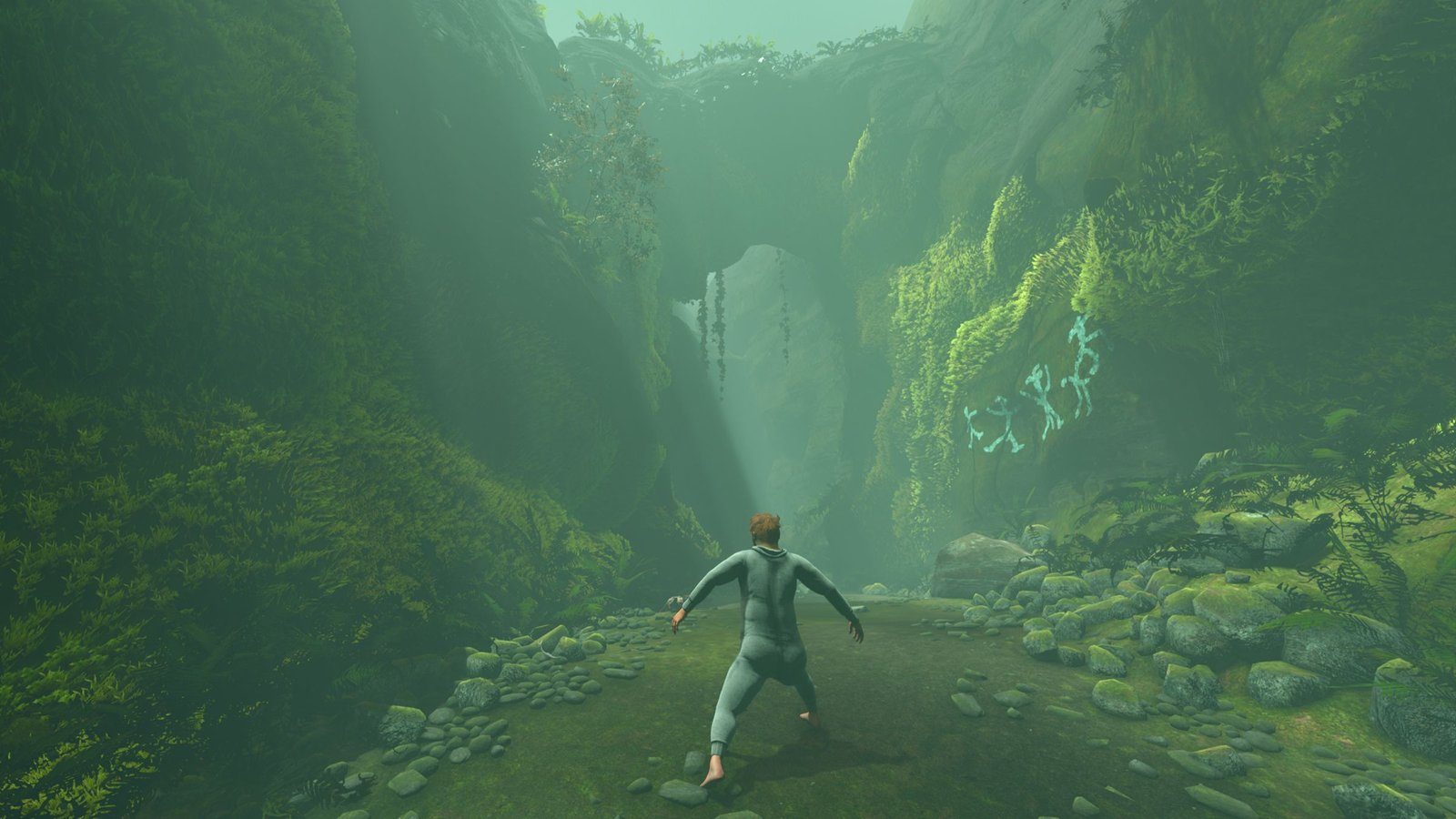
Legendary developer Bennett Foddy is set to challenge the gaming world’s ego with the September 23 release of Baby Steps on PlayStation 5 and PC, a physics-heavy “walking simulator” that interrogates the stubbornness of modern masculinity. Developed alongside Ape Out creators Gabe Cuzzilo and Maxi Boch, the title places players in the clumsy shoes of Nate, a 35-year-old “failson” who must navigate a treacherous world one literal step at a time.
The Physics of Failure and the ‘Failson’ Narrative
The game’s protagonist, Nate, represents a stark departure from the hyper-competent heroes that dominate the industry. Living in his parents’ basement and wearing a stained onesie, Nate finds himself transported via an “Isekai” twist into a mysterious wilderness. Unlike the fluid movement systems of modern action titles, Baby Steps utilizes a control scheme reminiscent of Foddy’s viral hit QWOP. Players must manually command each leg, leading to frequent, undignified tumbles down even the gentlest slopes.
Foddy recalls a specific playtest where a player spent nearly thirty minutes attempting to brute-force Nate up a slippery mudslide, repeatedly ignoring a perfectly functional staircase located just feet away. This refusal to “take the L” or seek a simpler path perfectly encapsulates Foddy’s target demographic: gamers driven by a rigid, often counterproductive need to conquer obstacles through sheer, unyielding force.
Deconstructing the Archetype of the Unstoppable Hero
For decades, the video game industry has leaned on “Capital M” masculinity as its default setting. Characters like Halo’s Master Chief, Metal Gear’s Solid Snake, and even Uncharted’s Nathan Drake embody a specific brand of self-sufficiency and physical prowess. Foddy argues that even female protagonists, such as Aloy from the Horizon series, often mirror these traditionally masculine ideals of the capable, solitary savior.
Baby Steps intentionally subverts this. “We wanted a character who’s trying to live up to those expectations but just isn’t capable of it,” Foddy explains. By making Nate awkward, unkempt, and physically inept, the game forces players to inhabit a role that lacks the traditional “hero” safety net. This shift aims to highlight the limitations of symbolic masculine self-sufficiency—a trait that often prevents men from asking for help or admitting weakness.
The Impact of Tropes on Creative Innovation
Carly Kocurek, a professor of digital humanities and media studies at Illinois Tech, notes that while traditional tropes are not inherently harmful, they often stifle industry creativity. “They can limit the types of stories that get told and the kinds of ideas that make it to market,” Kocurek states. She points out that much of pop culture relies on a shared pool of influences, such as the hero’s journey, which reinforces narrow definitions of what a man—and a hero—should be.
Confronting the ‘Git Gud’ Culture
The game arrives amidst a long-standing cultural debate regarding difficulty and player skill. The “git gud” mindset, which prizes mechanical mastery and scorns those who struggle, has defined many gaming communities for over a decade. Foddy’s work has always toyed with player frustration, but Baby Steps makes the critique explicit within its narrative. Nate, a character of privilege, must grapple with the fact that his failures are largely of his own making, yet the developers avoid falling into “boomer morality” tropes about laziness or responsibility.
Instead, the game offers a sympathetic, if mocking, look at the modern gamer. Foddy, a self-described nerd and gamer himself, emphasizes that the team isn’t “out to get” players. Rather, they are inviting them to reflect on their own motivations. Whether a player spends an hour failing to climb a mudslide out of “masculine pride” or genuine enjoyment of the mechanics remains a question the game leaves for the player to answer. As Foddy observes, many gamers skip tutorials and refuse directions out of a misplaced sense of ego, a behavior Baby Steps turns into a central comedic and analytical pillar.