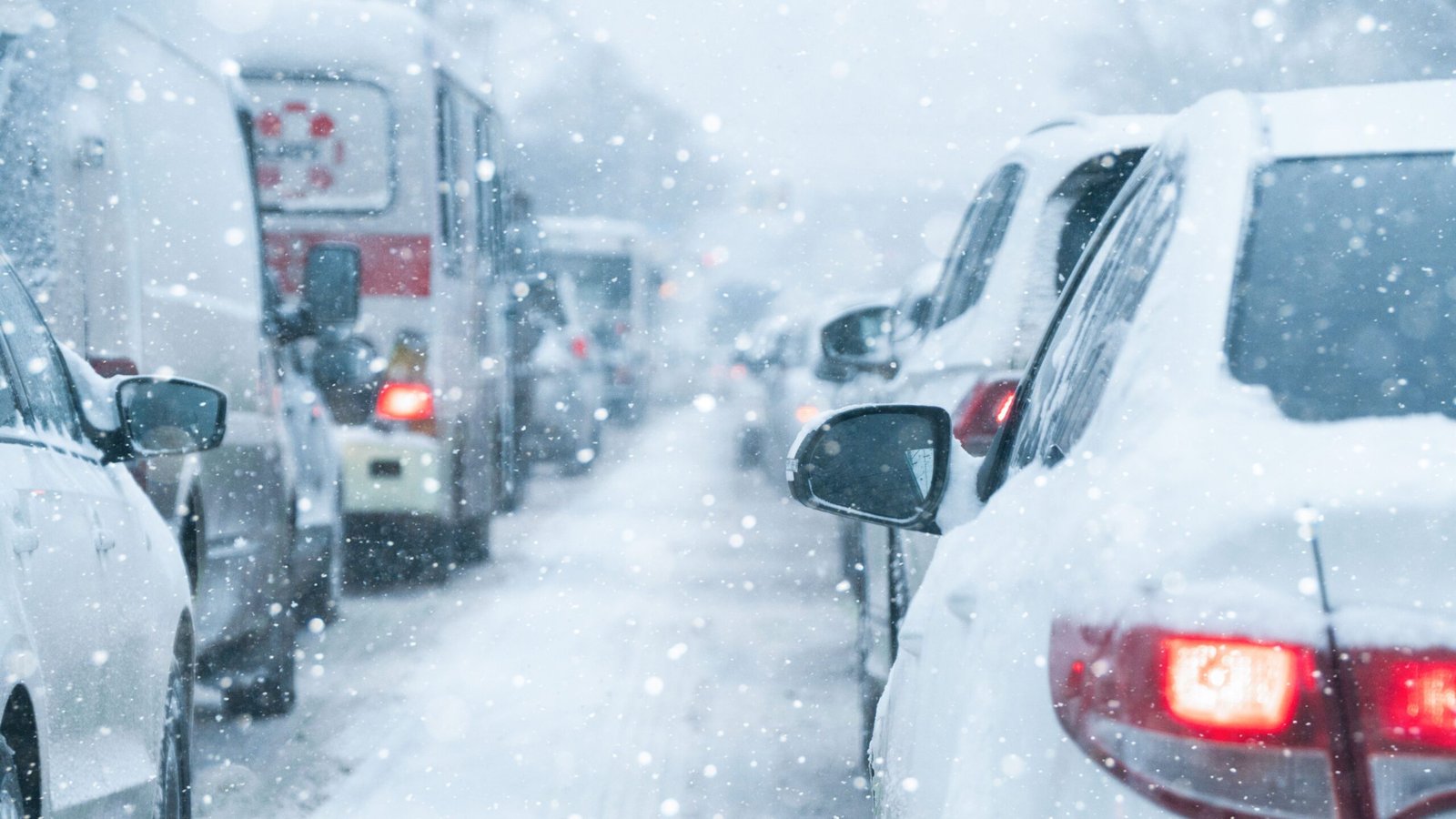
A massive, moisture-heavy winter storm is set to sweep across nearly 30 U.S. states starting this Friday, threatening to deliver crippling ice and heavy snow from the Rocky Mountains to the East Coast through Sunday. Meteorologists are tracking a rapidly evolving weather system that could paralyze infrastructure in the Mid-Atlantic and Southern regions as atmospheric conditions shift toward a high-risk scenario.
A Shifting Forecast: The Threat of Crippling Ice Accumulation
Recent data models have significantly altered the outlook for central Virginia and surrounding regions, signaling a transition from standard precipitation to a “sobering” ice event. Meteorologist Sublette noted that while the forecast is still developing, current data suggests a high probability of heavy freezing rain—a dangerous form of liquid precipitation that freezes instantly upon contact with surfaces. This specific weather phenomenon is notorious for weighing down power lines and collapsing tree limbs, leading to widespread utility failures.
The “Waterlogged” System: Atmospheric Mechanics at Play
The scale of the approaching system is driven by its immense moisture content. Matthew Cappucci, an atmospheric scientist and contributor to the Capital Weather Gang, describes the storm as “absolutely waterlogged” after it gathered significant energy from the Gulf of Mexico. This moisture ensures that a wide swath of the Southern and Eastern United States will receive over two inches of water equivalent.
The Role of the Pacific Upper-Level Low
While the moisture is guaranteed, the exact type of precipitation remains the primary variable. Meteorologists are closely monitoring a cold, low-pressure eddy of air—known as an “upper level low”—forming over the Pacific. The movement and formation of this high-altitude system will ultimately determine whether specific regions experience rain, snow, sleet, or a hazardous combination of all three. Currently, the National Weather Service (NWS) predicts heavy snow will begin in the Rockies and Plains on Friday before migrating to the East Coast by Sunday.
Infrastructure Risks and the Danger of Post-Storm Cold
The storm’s projected path covers a vast territory, stretching from New Mexico and Texas to Maine and as far south as Georgia. Many of these regions possess infrastructure that is historically vulnerable to extreme winter conditions. Experts cite the 2014 Georgia ice storm and the 2021 Texas winter disaster—which resulted in nearly 250 fatalities—as evidence of the risks posed by prolonged power outages. The danger is intensified by a predicted deep freeze immediately following the storm, which could leave residents without heat in sub-freezing temperatures for several days.
Combating Misinformation in the “Sea of Clickbait”
As the storm develops, atmospheric scientists are warning the public against “information overload” and sensationalized social media reports. While the NWS has issued “Key Messages” to encourage early preparation for worst-case scenarios, formal winter weather warnings will become more specific as the system nears. Cappucci emphasizes the importance of sifting through the noise to find trusted, localized sources, noting that monetized posts and hype often obscure the actual scientific data necessary for public safety.