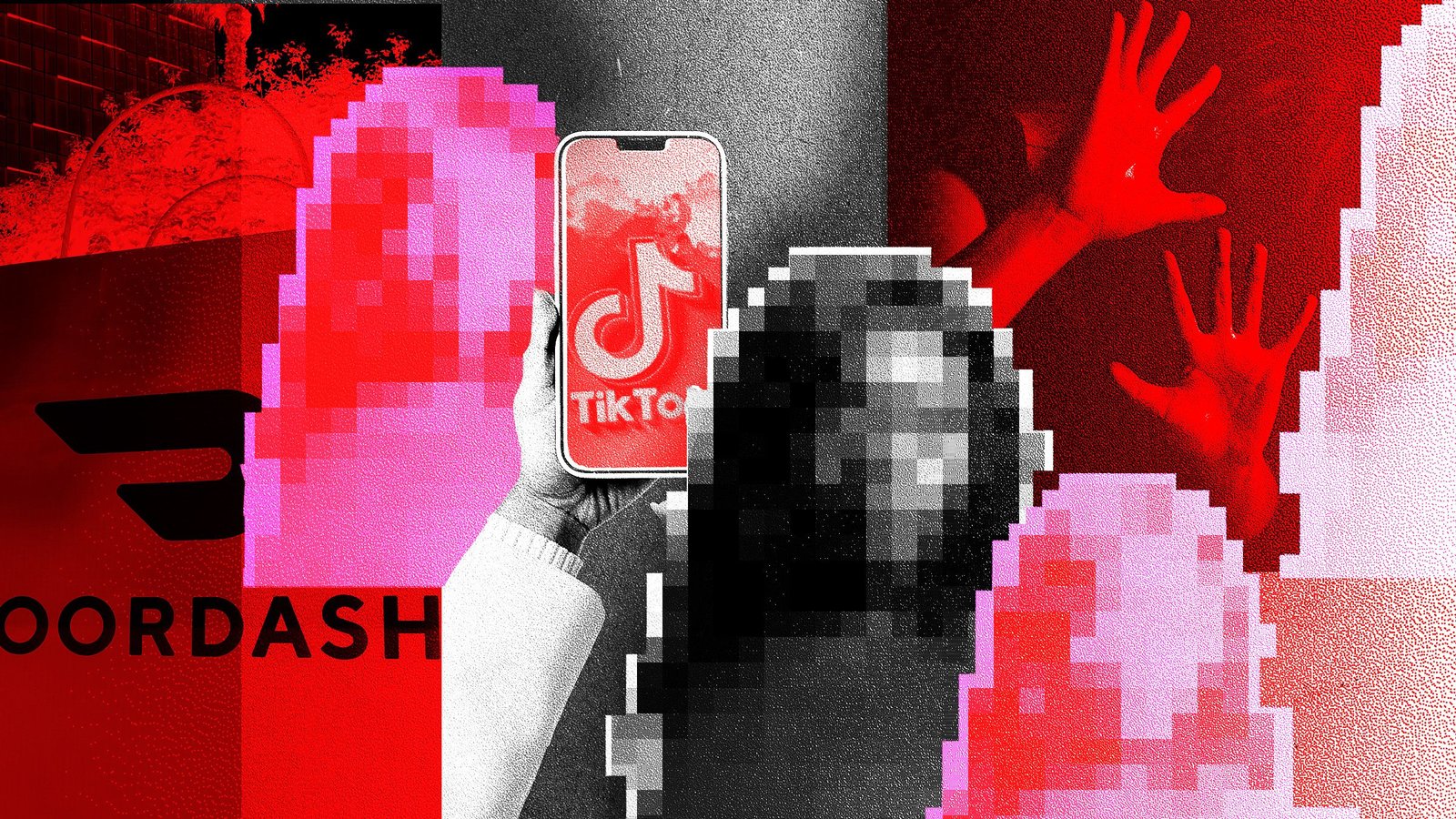
Savannah Henderson’s viral “DoorDash Girl” allegations took a sinister turn in November as generative AI deepfakes hijacked the likeness of Black journalists to spread misinformation and reinforce racial stereotypes across major social media platforms. Following Henderson’s November 10 arrest in Oswego, New York—where she faces charges of unlawful surveillance and the dissemination of unlawful surveillance imagery—a wave of AI-generated content emerged, effectively weaponizing the scandal to target and exploit Black creators without their consent.
The ‘DoorDash Girl’ Controversy and the Rise of AI Misinformation
The saga began when Henderson posted a TikTok claiming she discovered a customer exposed on his couch during a delivery. While the video initially garnered tens of millions of views and significant support, the narrative shifted abruptly following a police investigation. The Oswego City Police Department dismissed Henderson’s sexual assault allegations, stating the male was “incapacitated and unconscious on his couch due to alcohol consumption” and that the footage was captured from outside the residence. Consequently, DoorDash terminated Henderson for sharing a customer’s private information, a move confirmed by spokesperson Jenn Rosenberg.
In the wake of these events, Black content creator and journalist Mirlie Larose discovered her own face being used to defend DoorDash and criticize Henderson. Larose watched in disbelief as an AI-generated version of herself mirrored her hair and features to deliver a script she never wrote. “Did I film this? It’s my face, it’s my hair,” Larose told WIRED, describing the anxiety of seeing her likeness used to navigate a sensitive legal and social controversy.
Digital Blackface 2.0: How Generative AI Exploits Black Likeness
This incident highlights a predatory trend known as “digital blackface,” a term popularized by culture critic Lauren Michele Jackson. While the concept originally described the use of Black imagery and slang by non-Black users, the advent of generative AI tools like OpenAI’s Sora 2 and Google’s Veo has evolved the practice into “digital blackfishing.” Bot accounts now use deepfakes to adopt racialized personas, performing what many experts describe as contemporary “minstrel shows” designed to drive engagement through rage-baiting.
In Larose’s case, a bot account dubbed uimuthavohaj0g used her likeness to perform a “DARVO” (Deny, Attack, and Reverse Victim and Offender) response. The video justified Henderson’s termination and minimized her allegations, leading some viewers to speculate that DoorDash had orchestrated an AI-driven PR campaign. DoorDash has since denied any involvement, stating they “in no way condone or support” such content.
Systematic Bias: From Food Stamp Tropes to Political Engineering
The exploitation extends beyond individual scandals. Before its removal, the TikTok account @impossible_asmr1 utilized Sora-generated content to depict Black women using “blaccents” to complain about SNAP benefits. These videos reinforced harmful stereotypes about the welfare state, mirroring tactics used during the Cambridge Analytica scandal to sow political divisiveness.
Yeshimabeit Milner, founder and CEO of Data for Black Lives, argues that this is more than mere entertainment. “It’s about harnessing the power of these very violent stereotypes of Black people for the purpose of pushing a specific political agenda,” Milner explained. She characterizes the phenomenon as social and cultural engineering intended to create chaos and drive viewership through strife.
Legal Frontiers and the Fight for Likeness Protection
Black creators are now spearheading the resistance against AI-generated exploitation. Zaria Imani informed WIRED that she is pursuing legal action under copyright infringement against multiple bot pages engaged in content farming. Professor Meredith Broussard, author of More Than a Glitch, emphasizes that content creators require the same legal safeguards as celebrities to protect their likeness from unauthorized AI use.
The legislative landscape is beginning to shift. In May 2025, the Take It Down Act was signed into law, criminalizing the distribution of nonconsensual intimate imagery, including AI-generated deepfakes. While OpenAI spokesperson Niko Felix stated the company is working to “detect patterns of misuse,” advocates like Milner argue that technical fixes are insufficient. Real accountability requires collective action and robust legislation to ensure that the digital exploitation of Black identities is no longer a profitable venture for tech platforms and bot operators alike.