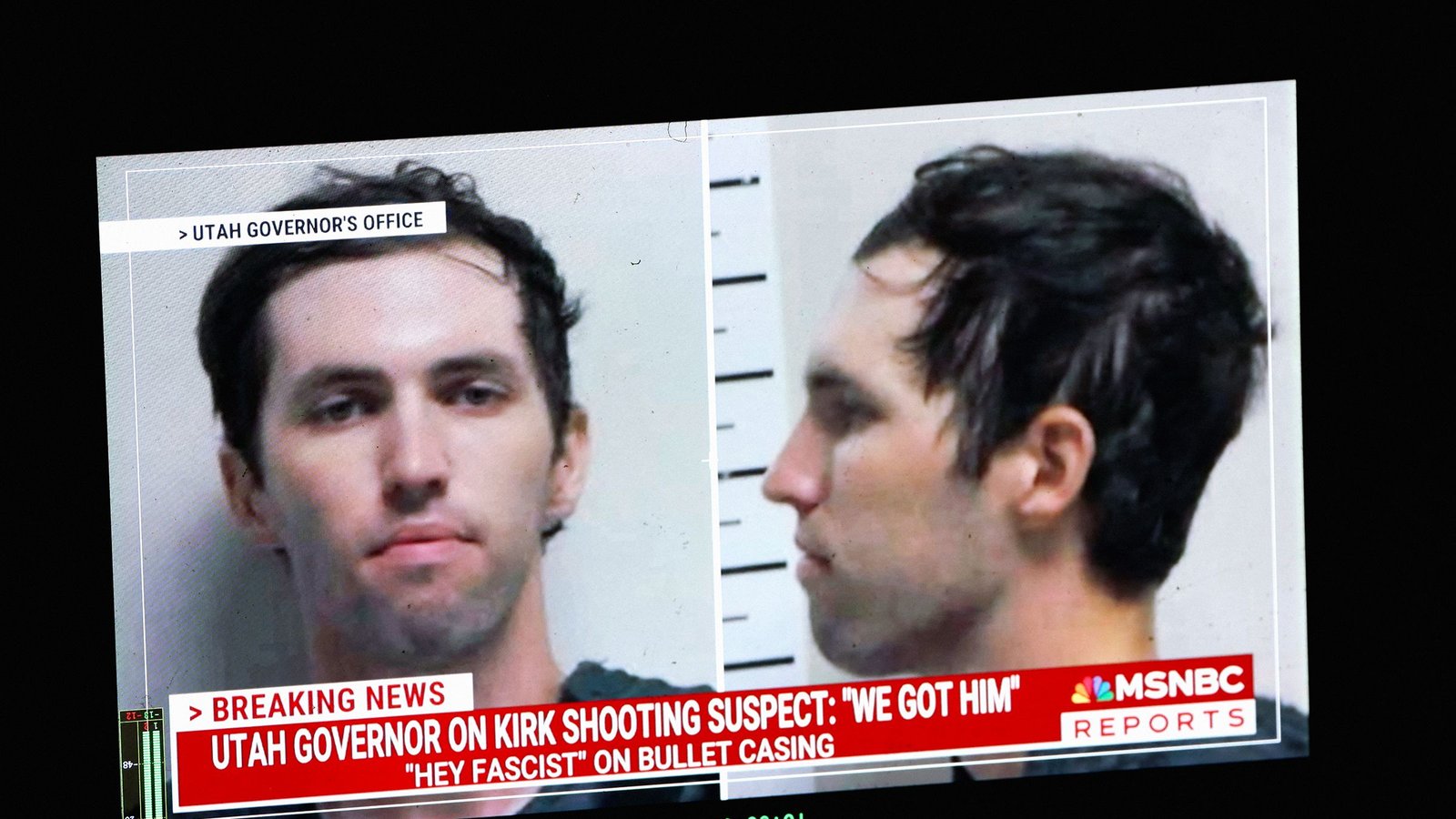
Conservative firebrand Charlie Kirk was killed by a single sniper round during a campaign stop at Utah Valley University, an assassination that has immediately radicalized political discourse and sparked fears of widespread civil instability. The Turning Point USA founder was launching his “American Comeback Tour” in Orem when an unidentified assailant, reportedly positioned on a rooftop 200 yards away, delivered the fatal shot. The killing of the 30-year-old activist has left the nation reeling, as authorities launch a massive manhunt for a suspect who remains at large.
A Movement in Mourning: The Hospital Vigil in Orem
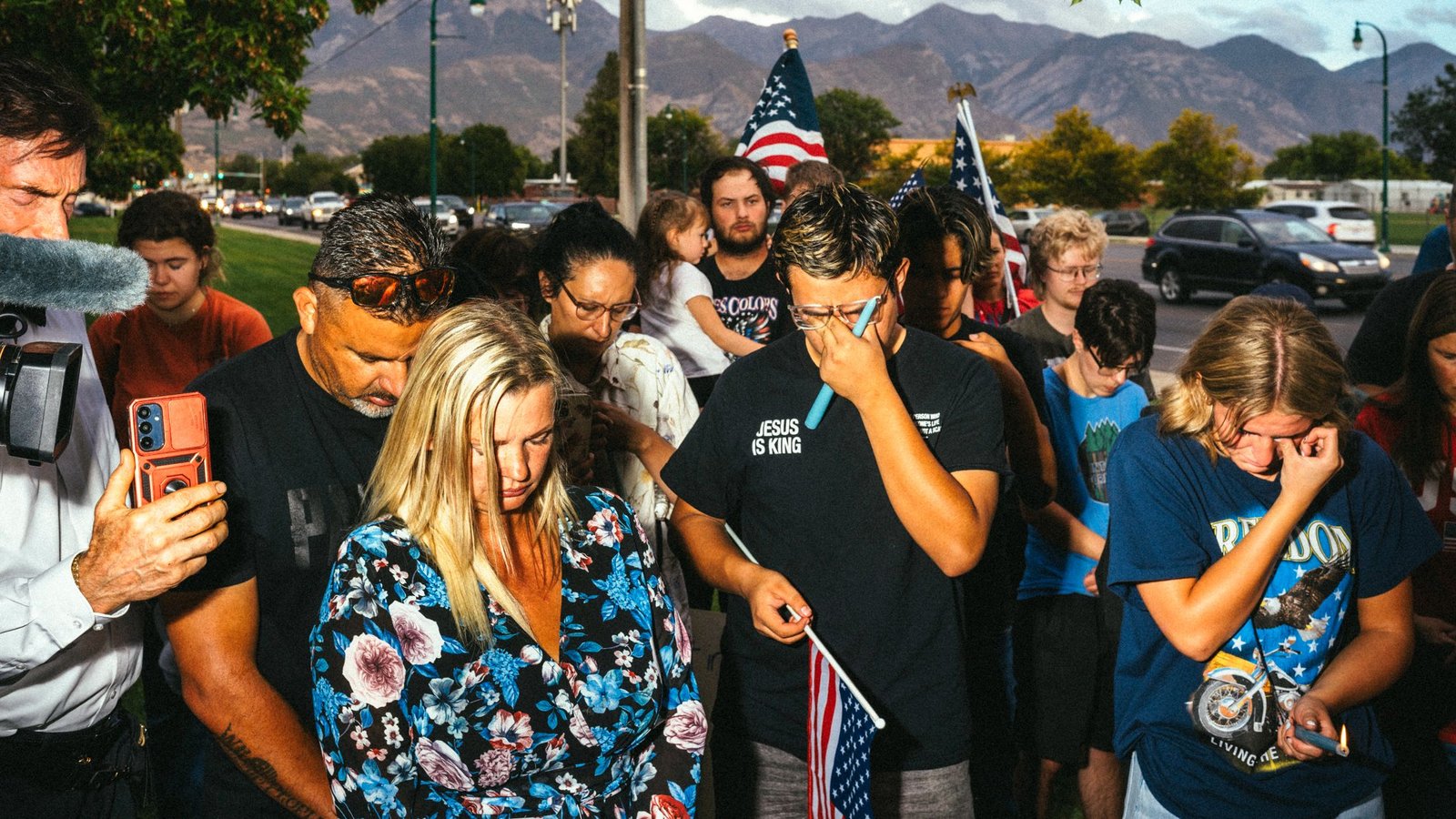
In the hours following the attack, a somber and increasingly volatile crowd gathered outside the hospital where Kirk was pronounced dead. The demographic was tellingly young, reflecting Kirk’s primary legacy: the successful mobilization of Gen Z and Millennial conservatives through Turning Point USA. For many in attendance, Kirk was more than a political figure; he was a cultural architect who translated right-wing ideology into a digital-first language.
Among the mourners was 18-year-old Joseph Trunnel, a member of the Church of Jesus Christ of Latter-day Saints, who credited Kirk’s digital presence with shaping his career path. Trunnel, wearing the traditional white shirt and tie of his faith, noted that Kirk’s advocacy for trade schools led him to pursue a barber license over a traditional four-year degree. His peer, 19-year-old Bryce Harding, echoed this sentiment, describing Kirk as a truth-teller who avoided unnecessary contention—a claim that stands in stark contrast to the late activist’s reputation among his detractors.
The Polarizing Legacy of Turning Point USA
Kirk’s career was defined by a calculated use of friction. While his supporters viewed his public “man-on-the-street” debates as exercises in democratic transparency, critics characterized his rhetoric as a sophisticated vehicle for misinformation. Kirk rose to prominence by aggressively targeting progressive policies on gender, race, and history. His high-profile debates against figures like California Governor Gavin Newsom and commentator Sam Seder solidified his status as a relentless debater, while his podcast often delved into fringe theories, including the “Great Replacement” conspiracy.
This duality—charismatic leader to some, dangerous demagogue to others—formed the backdrop of the spontaneous memorial in Utah. As a man dressed as Abraham Lincoln pleaded for national healing and divine intervention via an iPhone livestream, other corners of the gathering devolved into accusations against the “Deep State,” signaling a rapid transition from collective grief to conspiratorial anger.
Militias and Political Leaders React to the Vacuum
The political fallout from the assassination reached the highest levels of American government almost instantly. Former President Donald Trump and other prominent GOP figures seized on the tragedy, framing Kirk’s death as the ultimate proof of leftist intolerance and a direct assault on free speech. The rhetoric has already crossed into calls for militant mobilization.
Stewart Rhodes, leader of the Oath Keepers, reportedly pledged to reactivate his militia group in response to the killing, urging the invocation of the Insurrection Act to suppress left-wing movements. On the ground in Orem, members of the Proud Boys appeared at the vigil. One individual, identified only as “Viking,” expressed disbelief that Kirk—whom he perceived as a “middle-ground” figure capable of civil discussion—could be targeted for assassination. This perception of Kirk as a moderate highlights the significant shift in the American political spectrum, where even highly controversial figures are viewed as centrist pillars by their base.
Witness Accounts and an Escallating Atmosphere of Fear
Adam Calhoun, 37, stood just ten feet away from Kirk when the shot rang out. Dazed and clutching a dirt-stained MAGA hat recovered from the scene, Calhoun described a sense of newfound radicalization. His anger was further stoked by media coverage; he specifically cited an MSNBC commentator’s speculation that the shooter might have been a “celebratory” supporter as a breaking point for his own tolerance. “This has emboldened me,” Calhoun stated, a sentiment shared by many at the vigil who claimed the tragedy had “ignited” a need to be more vocal and confrontational.
The atmosphere in Orem remains one of profound insecurity. Emma Hasson, 19, who identifies as politically moderate, described a visceral sense of vulnerability while attending the prayer circle. “It just makes you feel unsafe,” she remarked, noting the tension directed toward passing vehicles. As the sun set over Utah, Kirk’s remains were transported to his home state of Arizona via the Vice President’s aircraft. With the shooter still unidentified and the motive under investigation, the assassination marks a grim milestone in the escalation of American political violence.