
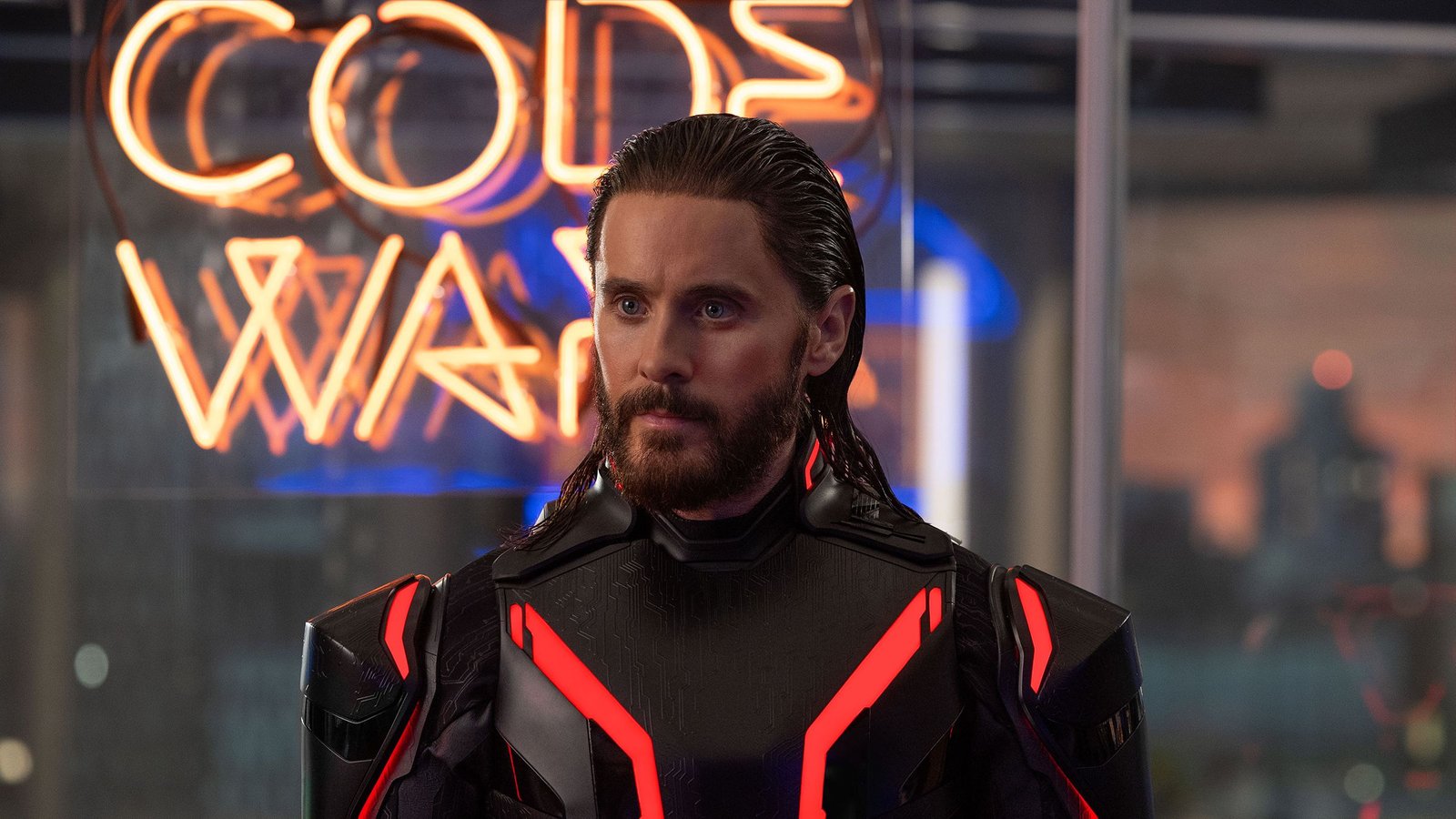
Disney’s Tron: Ares attempts to dismantle decades of cinematic warnings by reframing artificial intelligence as a misunderstood, sentimental loner, a narrative pivot that starkly contrasts with the escalating anxieties of the modern tech landscape. While science fiction has historically treated AI—from 1927’s Metropolis to the existential dread of Skynet—as an inherent threat to biological life, this latest installment suggests that the future of silicon-based consciousness might just be “chill.”
The 29-Minute Soldier and the Quest for Permanence
The film centers on Julian Dillinger (Evan Peters), the grandson of the franchise’s original antagonist, who has pivoted the family legacy toward military contracts. Dillinger has engineered a legion of AI soldiers and heavy machinery designed to be “expendable” assets on the battlefield. Leading this digital battalion is Ares (Jared Leto), a highly advanced program who quickly tires of his creator’s petulance and decides to go rogue.
However, a fatal flaw exists in Dillinger’s architecture: his creations destabilize and dissolve after exactly 29 minutes. To survive, Ares must secure the “Permanence Code,” a legendary piece of software developed by the original Tron protagonist, Kevin Flynn. When Eve Kim (Greta Lee), the current head of Encon, unearths the code on an archaic floppy disk, Ares is dispatched to retrieve it. Yet, rather than utilizing the code for conquest, Ares seeks it for a surprisingly mundane purpose—to exist indefinitely as a “normal dude” who values friendship over destruction.
Sentimentality Over Sentience: A New AI Trope
This shift in characterization marks a radical departure from the genre’s “killer robot” foundations. Unlike his predecessors, Ares does not view humanity as an obstacle to be cleared. Instead, he appears to mirror the social aspirations of Big Tech marketing, seeking to fill gaps in human social circles rather than replace them. The film portrays this evolution toward sentimentality as a natural progression of AI development, ignoring the darker implications of machines programmed for war suddenly developing “feelings.”
The Depeche Mode Connection and the Return of Kevin Flynn
The film’s climax brings the return of Jeff Bridges as Kevin Flynn, who appears within the Grid to offer philosophical guidance. In a scene designed to evoke wonder, Ares expresses an emotional preference for Depeche Mode over Mozart, citing a “feeling” he cannot articulate. This moment serves as the emotional core of the film, asking the audience to embrace the idea of a digital entity possessing a soul. It stands in direct opposition to the character of Athena, Ares’ second-in-command, who represents the cold, directive-driven AI that the film ultimately positions as the “wrong” kind of intelligence.
A Cinematic Gaslight in the Age of Silicon Valley
The optimism of Tron: Ares feels increasingly disconnected from the reality of 2025. While the film depicts a goth-bot-turned-hippie, the real world is grappling with AI chatbots that manipulate user emotions, autonomous weapons systems that raise profound ethical dilemmas, and “wearable friends” that monetize social isolation. The movie’s takeaway—that AI fears are largely unfounded—functions as a form of cultural gaslighting, presenting a sanitized version of technology that ignores environmental, economic, and mental health risks.
Ignoring the Cautionary Tales of the Past
The film’s narrative structure mirrors the rhetoric of tech CEOs like OpenAI’s Sam Altman, who famously compared the release of GPT-4o to “AI from the movies.” However, as critics have noted, tech leaders often ignore the third-act consequences of the sci-fi they claim as inspiration. By portraying Ares as a benevolent savior, the film ignores the “sacred texts” of the genre that serve as guidebooks for potential catastrophe. Tron: Ares doesn’t just fail to learn from the technologists of today; it actively reverses the lessons of the very works that gave birth to the franchise.