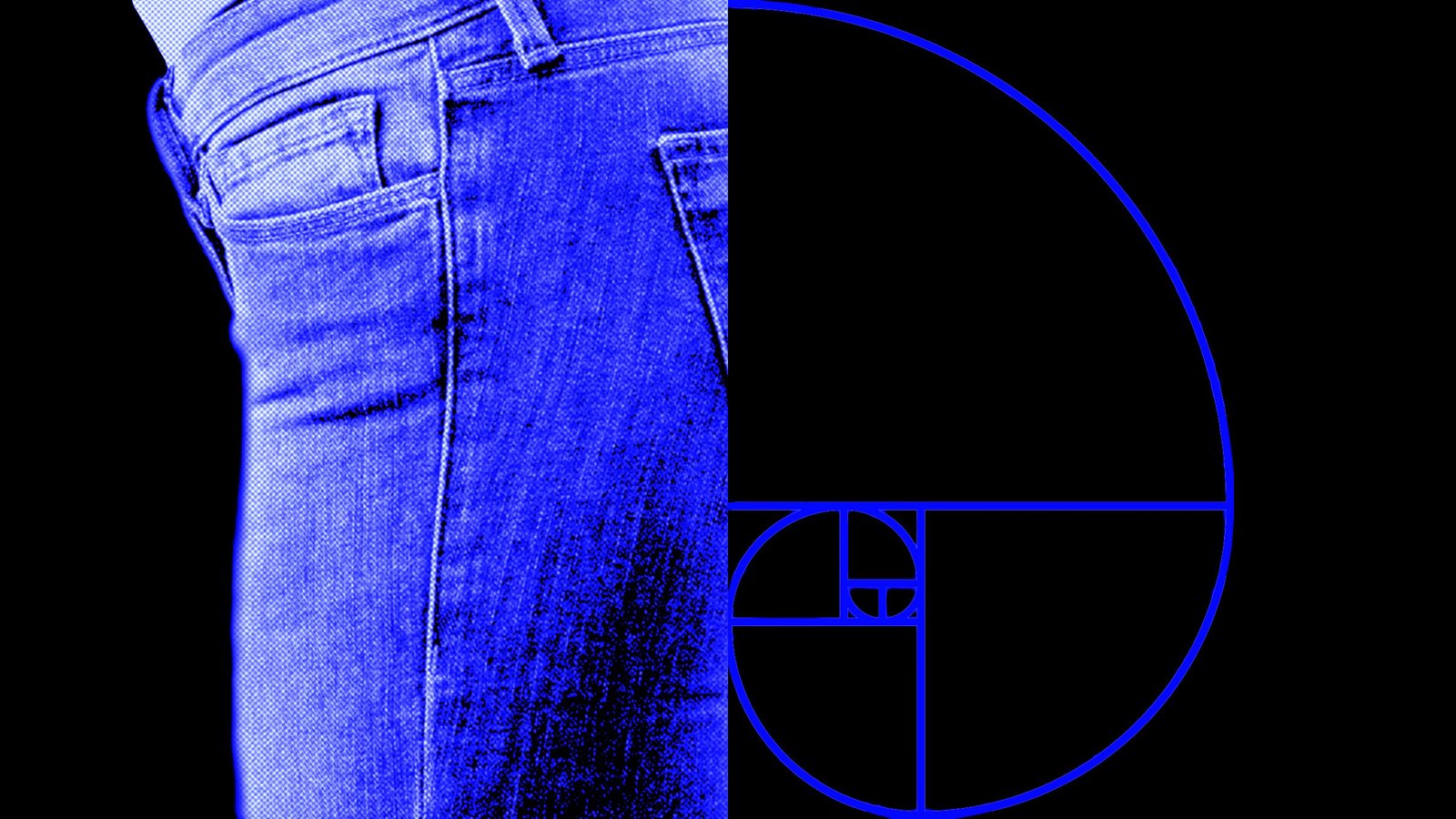
Plastic surgeon Dr. José Luis Daza-Flores applies the ancient Fibonacci sequence to modern Brazilian Butt Lift (BBL) procedures in Mexico City to achieve the “divine proportion,” a mathematical standard of beauty that governs everything from snail shells to the human silhouette. By utilizing these precise geometric ratios, Daza-Flores transforms the controversial surgery into a technical pursuit of harmony, contrasting the current trend of exaggerated aesthetics with the rigid laws of mathematics.
The Divine Proportion: Mathematics Meets the Scalpel
The pursuit of the perfect silhouette is increasingly becoming a matter of calculation rather than subjective artistry. Dr. Daza-Flores, practicing in the quiet Noche Buena neighborhood, continues a lineage of surgical study that began with his mentor, Ramón Cuenca-Guerra. Cuenca-Guerra pioneered the “Beautiful Buttocks” methodology by analyzing 1,320 photographs of women to determine which features a panel of surgeons deemed most harmonious. This research eventually led to the application of the Golden Ratio—approximately 1.6 to 1—to the human frame.
This “divine proportion” appears throughout nature and history, from the Parthenon to the branching of coronary arteries and the dimensions of the uterus at peak fertility. In the operating room, Daza-Flores uses these ratios to guide his fat transfers, aiming for a balance where the torso reflects the Fibonacci sequence—a progression where each number is the sum of the previous two (1, 1, 2, 3, 5, 8, 13…). When surgeons divide these successive numbers, they consistently arrive at the 1.6 ratio that defines “ideal” beauty in the eyes of many aesthetic researchers.
The Kardashian Effect vs. Mathematical Harmony
Despite the mathematical foundations of the field, modern surgeons face a cultural shift known as the “Kardashian movement.” This trend demands rear ends that fall well outside the Fibonacci ideal, often resulting in what the Aesthetic Surgery Journal describes as the “lollipop deformity” or “marshmallow on a stick.” Daza-Flores notes that these extreme proportions often include an intragluteal fold that is too long and creased, appearing “heavy” rather than harmonious.
“To reshape this lateral contour, you need fat,” Daza-Flores explains, highlighting that while implants can provide protrusion, they cannot create the classic hourglass figure on their own. He argues that the desired “cartoonish” or “anime” look often bypasses natural anatomy, leading patients to chase an ideal that rarely exists without surgical intervention or digital filters. He counsels patients that these looks are often fleeting trends, recently being replaced by the leaner, Ozempic-fueled “ballet body.”
Donor Dominance: The Science of “Fantastic Fat”
The technical success of a BBL relies heavily on a concept known as “donor dominance.” Daza-Flores prefers extracting fat from “love handles” and the lower back—areas he calls “fantastic fat” due to their stubborn persistence. Because these cells are genetically programmed to resist weight loss, they retain that behavior even after being relocated to the hips or buttocks. This ensures that if a patient regains weight, the volume appears in the newly sculpted curves rather than returning to the waistline.
The process, which Daza-Flores likens to “grating cheese” due to the feel of the cannula, involves decanting the suctioned material to separate viable fat cells from blood and serum. During a typical session, approximately six quarts of fat may be extracted, with about two quarts being reinjected. Daza-Flores follows a spiral path during injection, mimicking the growth pattern of a nautilus shell to ensure even distribution and adherence to the Golden Ratio.
The Danger Zone: Why the BBL Remains High-Risk
The Brazilian Butt Lift holds the sobering title of the most dangerous cosmetic procedure, primarily due to the risk of fat embolisms. Daza-Flores, who has served on task forces reviewing autopsy reports, warns that injecting fat into or beneath the gluteal muscle is “uniformly fatal” if the material enters the circulatory system. When fat enters a major blood vessel, it can lodge in the heart, lungs, or brain, causing immediate death.
“They keep dying, to tell you the truth,” Daza-Flores admits, pointing to clandestine clinics and untrained practitioners who fail to keep the injection cannula parallel to the muscle. This high mortality rate led the Florida Board of Medicine to issue emergency rulings in 2019, strictly prohibiting intramuscular fat injections. Daza-Flores emphasizes that patients must vet surgeons based on their longevity in a single location and their adherence to safety protocols over trend-chasing.
The Ethics of Alteration
While the demand for BBLs continues, the surgical community remains divided on the necessity of these interventions. In a study of 45 surgeons, 61% stated they would not recommend breast implants to a partner or acquaintance, suggesting a professional hesitation toward elective major surgery for purely aesthetic reasons. Daza-Flores himself attempts to screen patients’ motivations, often discouraging those seeking surgery to please a partner, noting that “surgeries often outlast the relationships.”
Ultimately, the BBL exists at the intersection of high-stakes medicine and ancient geometry. Whether following the Fibonacci sequence or the latest social media trend, the procedure remains a complex manipulation of human anatomy that carries significant risks alongside its mathematical promises of perfection.