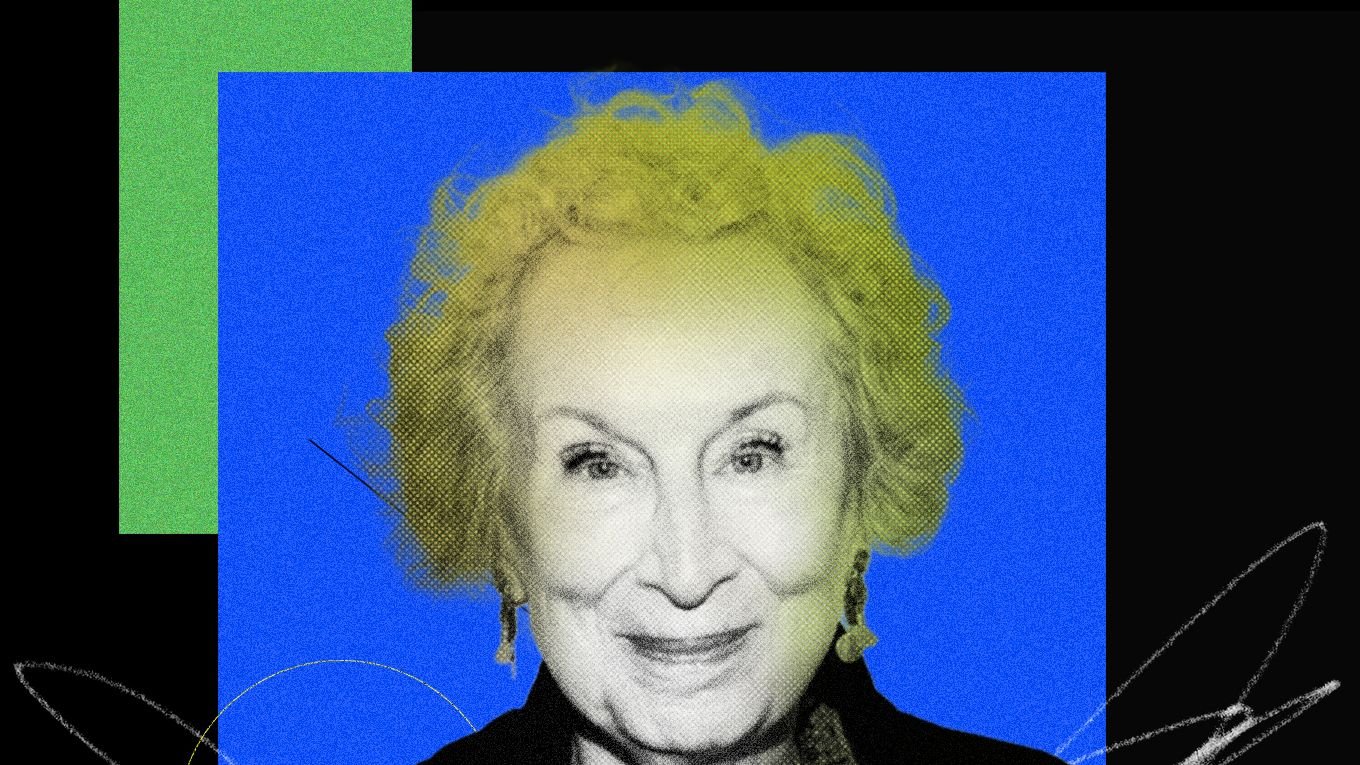
Margaret Atwood, the 86-year-old visionary behind The Handmaid’s Tale, is doubling down on her optimism for the United States despite a political landscape increasingly mirroring her dystopian fiction. In a wide-ranging dialogue following the release of her memoir, Atwood dissects the mechanics of power, the failure of artificial intelligence to replicate the human soul, and why she continues to “doomscroll” through the modern apocalypse.
The Wilderness Roots of a Literary Giant
Atwood’s perspective was forged in the isolation of the Canadian boreal forest, where she spent her childhood following her father, a forest entomologist. This upbringing instilled a survivalist’s instinct for improvisation—a trait she considers essential for both life and literature. She recalls a time when the writing world was populated by “lunatics” rather than professionals, long before the advent of creative writing schools and six-figure advances. For Atwood, the precarity of her early career, which included stints as a lecturer and marketing researcher, provided the necessary grit and observation of human life that fuels her novels.
Surveillance, Credit, and the Reality of Gilead
While the 1985 release of The Handmaid’s Tale predicted a world of human-led surveillance, Atwood argues that modern technology has merely streamlined the process of control. She points to the weaponization of financial systems as a primary tool for domesticating women, noting that the ability to revoke credit card access is a more effective shackle than physical bars. Atwood emphasizes that her “playbook” for Gilead was never original; it was a synthesis of historical precedents and religious literalism that societies have utilized for centuries to enforce male-dominated spaces.
The Crisis of Fractured Truths and Modern Masculinity
Atwood identifies a profound shift in the social fabric, specifically regarding the “plight of the young man” in a digital age. She observes that as traditional structures like the military or Boy Scouts lose their cultural pull, young men often feel directionless and unwelcome in academic spaces. This vacuum, she argues, leads to the worship of figures like Jordan Peterson or tech-bro billionaires who offer a sense of visibility in a fractured ecosystem where no single source of truth remains monolithic.
Why AI is a ‘Crap Poet’ and the Future of Art
Despite the hype surrounding generative models, Atwood remains unimpressed by the creative output of artificial intelligence. She characterizes AI as a “crap poet” and a mediocre imitator of her own voice. While acknowledging AI as a tool similar to fire or language—replete with unintended consequences—she refuses to integrate it into her workflow. Her skepticism extends to the data-mining nature of modern platforms, preferring the permanence and security of analog systems over the hackable digital landscape.
The Syngrafii Saga: Atwood’s Foray into Tech Innovation
Few realize that Atwood is a pioneer in remote signing technology. In the early 2000s, she spearheaded the invention of what would become Syngrafii, a long-distance digital and ink signature business. Originally conceived to help authors promote books in remote cities without the carbon footprint of travel, the technology has evolved into a high-security tool for the legal and financial sectors. Atwood notes that the current “analog revolution,” where youth embrace vinyl and “dumb phones,” reflects a growing distrust of digital vulnerability.
Legacy, Death, and the Ultimate ‘Control-Alt-Delete’
Approaching her ninth decade, Atwood views death with the same analytical sobriety that defines her prose. She dismisses concerns about her literary legacy, noting that once she is gone, the survival of her work depends on the “luck of the estate” and the whims of future generations. In a final thought experiment, Atwood revealed her “Control, Alt, Delete” priorities for the world:
- Control: Atomic bombs, to ensure they are never utilized.
- Alter: Social media, to strip away the toxicity it acquired after its “fun” initial period.
- Delete: The automobile, citing oil addiction and the erosion of vibrant, safe urban expansion.
Atwood concludes that while she cannot control the future, she will continue to witness it, one headline at a time, keeping up with the “latest doom” from her landline-tethered home in Toronto.