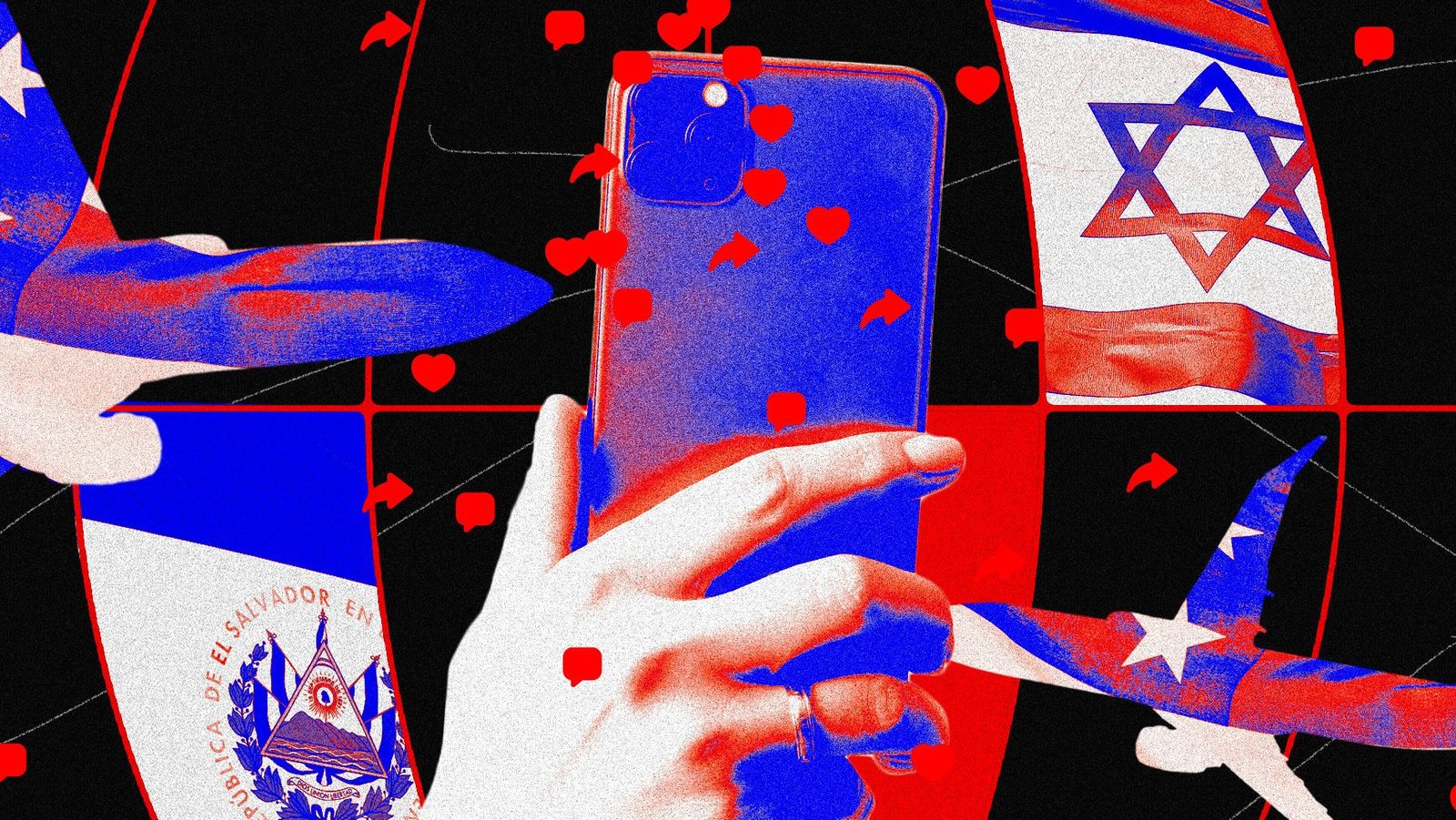
Foreign governments are increasingly bypassing traditional diplomatic channels by funding high-profile MAGA influencers to serve as unofficial emissaries, a strategy recently highlighted by a $70,000 Israeli-sponsored tour of Gaza and the Golan Heights for conservative content creators. This shift marks a significant evolution in international relations, where state actors leverage the massive digital reach of “America First” personalities to shape U.S. public opinion and bypass conventional media scrutiny.
State-Sponsored Narratives: The $70,000 Gaza Expedition
In late August, the Israeli Ministry of Foreign Affairs utilized the nonprofit organization Israel365 to funnel at least $70,000 into a curated trip for 15 prominent conservative creators. Donning tactical gear, these influencers—including Xaviaer DuRousseau and Jayne Zirkle—toured strategic locations such as humanitarian aid hubs in Gaza, the Western Wall, and the Golan Heights. The objective was clear: to provide a pro-Israel perspective that resonates specifically with the MAGA base.
The partnership operated under a unique contract awarded without a public tender. Reports indicate the Israeli government identified Israel365 as uniquely positioned to broadcast messages that align with the “America First” agenda. While participants like DuRousseau maintained that content creation was not a formal requirement of the paid travel, the resulting social media posts reached millions, depicting Israel as a vital, besieged ally to a demographic often skeptical of foreign intervention.
From Budapest to Seoul: The Global MAGA Circuit
The expansion of right-wing influence is not limited to the Middle East. Hungary has emerged as a primary destination for the movement’s intellectual and digital leadership. Since 2022, Budapest’s iteration of the Conservative Political Action Conference (CPAC) has hosted figures such as Tucker Carlson, Candace Owens, and Ben Shapiro. These interactions foster a transnational conservative alliance, where influencers champion foreign models of governance to their domestic audiences.
Asian Alliances and Christian Nationalism
The trend recently extended to East Asia. In Seoul, the “Build Up Korea” conference featured prominent figures like Charlie Kirk and Jack Posobiec. The event focused on Korea’s strategic importance in American diplomacy, with panels specifically designed to teach influencers how to mobilize Gen Z and Millennial voters through political storytelling. These international forums allow foreign entities to gain direct access to the digital architects of the current Republican platform.
The Nelk Boys and the “New Media” Diplomacy
Traditional world leaders are also adapting to this decentralized landscape. Israeli Prime Minister Benjamin Netanyahu recently appeared on the Full Send Podcast, hosted by the Nelk Boys. By engaging with a platform known for its young, male-dominated audience—a demographic credited with fueling Donald Trump’s 2024 electoral success—Netanyahu bypassed traditional news filters to deliver his message directly to a coveted voting bloc.
John Shahidi, who manages the Nelk brand, confirmed that Netanyahu’s team initiated the interview. While the hosts admitted they were “not qualified” for high-level diplomatic discourse, the appearance allowed the Prime Minister to humanize his administration’s policies. However, the move also drew sharp criticism for trivializing the complexities of the Gaza conflict, demonstrating the potential backlash when geopolitics meets influencer culture.
Exploiting the Regulatory Gray Zone
The rise of the “influencer-diplomat” creates a significant challenge for transparency and oversight. Unlike traditional lobbyists, digital creators often operate in a regulatory blind spot, making it difficult to determine when they are acting as independent commentators or paid mouthpieces for foreign interests.
Samuel Woolley, an associate professor at the University of Pittsburgh and digital propaganda expert, notes that these actors exist in a “liminal space.” They function as both campaign assets and independent agents, allowing political organizations to conduct diplomacy in a manner that is less trackable and often escapes the reach of existing disclosure laws. This lack of oversight makes them exceptionally valuable to foreign governments seeking to influence U.S. policy “under the table.”
As the MAGA movement solidifies its power in Washington, this network of creators is poised to become a permanent fixture of international relations. By turning foreign affairs into viral content, these influencers are not just reporting on policy—they are actively manufacturing the public sentiment that sustains it.