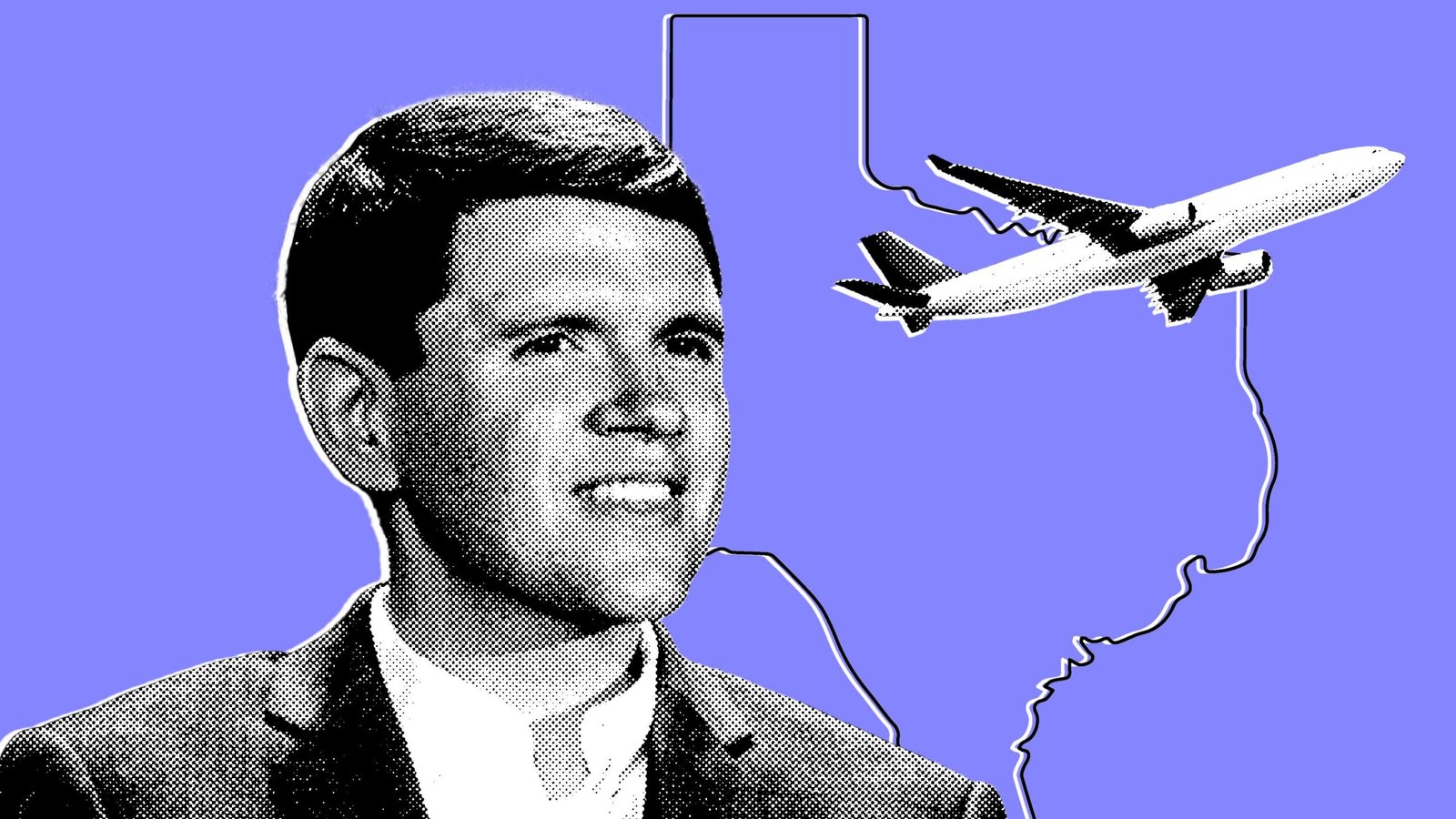
Texas State Representative James Talarico and more than 50 Democratic colleagues have effectively paralyzed the state legislature by fleeing to Illinois, a high-stakes maneuver designed to block a Republican mid-decade redistricting plan before the August 19 special session deadline. This strategic exodus aims to prevent a quorum, stalling a GOP map that could strip Democrats of up to five Congressional seats through aggressive gerrymandering. If successful, this maneuver could trigger retaliatory redistricting in blue strongholds like California and New York, fundamentally altering the national political landscape.
The Strategic Exodus to Block Gerrymandering
Technically “on the lam”—a 19th-century term for a hasty escape—Talarico and his party are operating from undisclosed locations to evade civil arrest warrants and $500 daily fines imposed by Governor Greg Abbott. The conflict has reached a federal level, with President Donald Trump suggesting FBI intervention to locate the missing lawmakers. Despite the physical distance, Talarico maintains his duties, managing constituent services such as Medicaid issues and local infrastructure concerns from a hotel conference room.
The Democrats plan to remain out of state until the current special session expires. According to reporting from KTRK, this strategy forces Republicans to restart the legislative process in a subsequent session, potentially prioritizing other urgent issues like flood relief over the controversial maps. Talarico, who fled Austin with only a duffel bag of clothes, described the decision as a necessary defense of representative democracy, despite the personal and legal risks involved.
Constitutional Tactics vs. Political Retaliation
In an exclusive interview, Talarico defended the quorum break as a legitimate constitutional tool with 150 years of precedent in Texas history. He characterized the GOP’s redistricting effort as a “power grab” that threatens the voices of voters across the political spectrum. “Politicians shouldn’t be choosing their voters; voters should be choosing their politicians,” Talarico asserted, citing internal data that suggests the redistricting plan is unpopular even among Republican constituents.
The Risk of “Dummymandering”
Talarico also highlighted the potential for “dummymandering”—a phenomenon where a party overextends its reach by thinning out its voter base across too many districts. By attempting to rig the game, Talarico argues that Republicans might inadvertently create vulnerabilities that Democrats could exploit in future election cycles. He emphasized that “no one likes a cheater,” suggesting that the move could backfire at the ballot box.
The Deregulation Wave: Silicon Valley’s Billion-Dollar Payoff
While the legislative battle rages in Texas, a parallel shift in federal oversight is transforming the tech industry. Data obtained by WIRED from Public Citizen reveals that the second Trump administration has significantly scaled back regulatory pressure on major corporations. In the first six months of 2025, the administration withdrew or halted one-third of all targeted investigations into the tech sector.
The financial scale of this shift is massive. Tech companies, executives, and investors funneled over $1 billion into the 2024 election cycle, with $610 million specifically supporting Republican candidates. This political investment appears to be yielding high returns through federal inaction, which often proves more valuable to the industry than active legislation.
Crypto and Musk: The Primary Beneficiaries of Federal Inaction
The cryptocurrency sector has seen the most dramatic relief, with nearly half of the dropped enforcement actions involving crypto firms. Investigations into major players such as Binance, Coinbase, Consensys, Gemini, Kraken, and Polymarket—many initiated during the previous administration—have stalled. Notably, the administration issued the first-ever corporate pardon to the parent company of BitMex and its executive team.
The impact extends to Elon Musk’s extensive portfolio. Investigations involving Tesla, SpaceX, xAI, The Boring Company, and Neuralink have been contested, dismissed, or halted. The following table outlines the scale of the regulatory retreat:
| Category | Total Investigations (Start of Term) | Actions Withdrawn/Halted (First 6 Months) |
|---|---|---|
| Total Tech Sector | 143 | 47 |
| Cryptocurrency Firms | N/A | 23 |
| Fintech (CFPB) | N/A | 11 |
For an industry that faced intense scrutiny under previous federal regulators, the current administration’s “do-nothing” approach represents a lucrative turning point, cementing the influence of Silicon Valley’s most powerful figures in Washington.