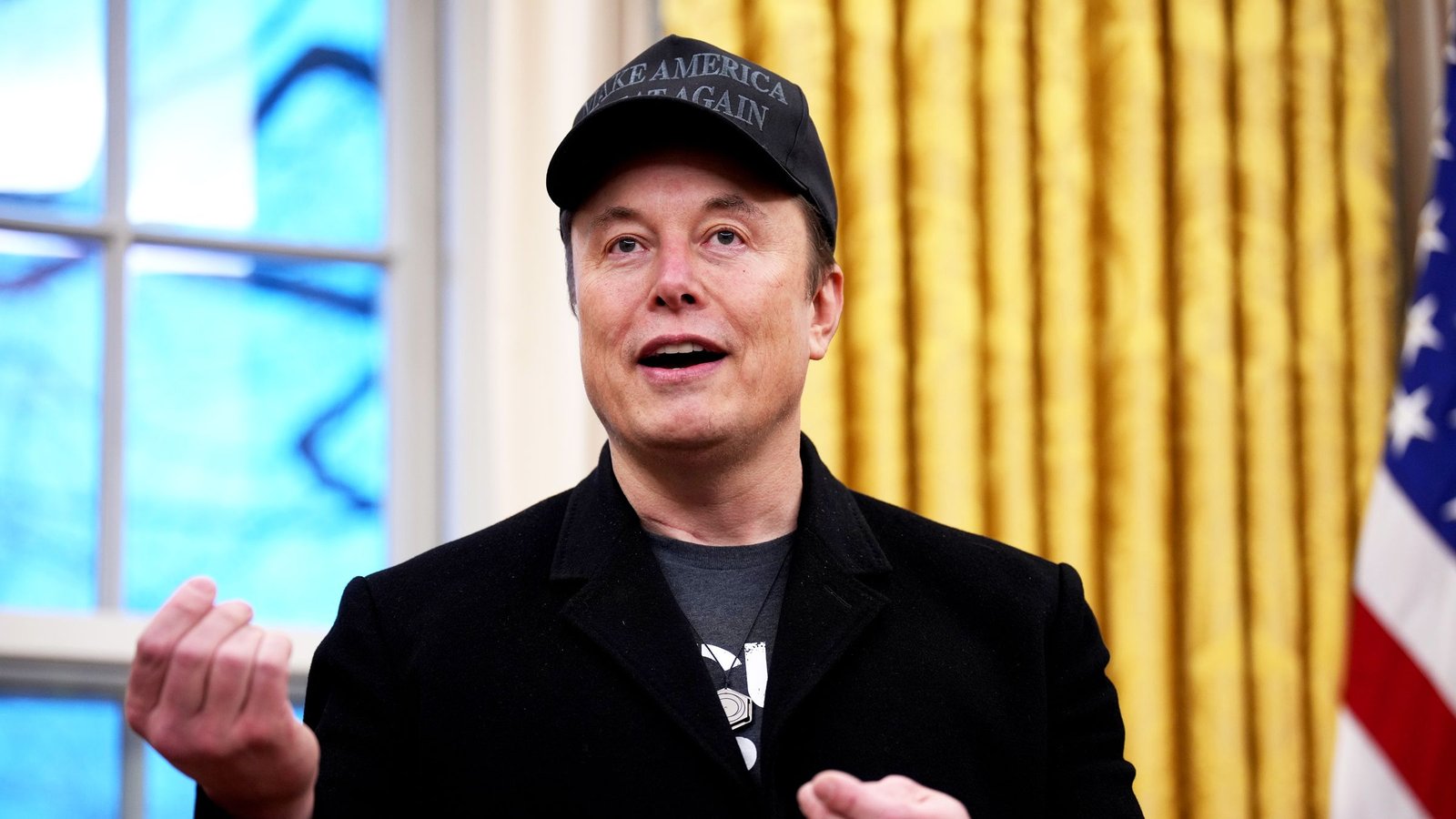
Elon Musk confirmed Friday he will transition into a permanent advisory role for the Department of Government Efficiency (DOGE) as the initiative intensifies its overhaul of federal spending through aggressive contract cancellations and agency-wide audits. Despite reaching the legal limit for his service as a special government employee, Musk—appearing at a press conference in a “DOGEFATHER” shirt—signaled that his influence over the administration’s cost-cutting mission remains absolute.
Musk Transitions to Permanent Advisory Role
While his formal status changes, Musk’s involvement in restructuring the federal bureaucracy appears to be expanding rather than tapering off. “I expect to continue to provide advice,” Musk stated, emphasizing his intent to remain a key strategist for the Trump administration. President Trump reinforced this commitment by presenting Musk with a symbolic golden key, signaling that the DOGE mission is now a fundamental component of executive operations.
The transition comes as key members of Musk’s core team—including Gavin Kliger, Luke Farritor, Sam Corcos, and Edward Coristine—continue high-level briefings with the FBI, the Treasury, and the Office of Management and Budget. Internal documents suggest the group is actively recruiting new talent to sustain its momentum across the federal landscape.
Systemic Pressure: Federal Contracts Under Immediate Review
The focus of DOGE has shifted from broad oversight to surgical strikes on federal procurement. President Trump confirmed during Friday’s briefing that a massive volume of government contracts is currently under scrutiny for potential termination. This directive has sent shockwaves through multiple departments, where federal employees report an escalating “DOGE-style” work culture characterized by urgent demands for efficiency.
At the Department of the Interior (DOI), the mandate is clear: eliminate as many software and labor contracts as possible. “We are cutting developers, telecom, server admins, and call center staff,” a tech worker at the DOI revealed. While some observers acknowledge the need to trim “bloated” systems, others warn that the speed of these cuts could degrade essential public services.
The DER Process and Immediate Terminations
The Department of Health and Human Services (HHS) has implemented a rigorous new approval mechanism known as the Departmental Efficiency Review (DER). Under this protocol, all contract requisitions are paused until they pass a strict audit by the deputy secretary’s office. This process specifically targets agreements deemed “expensive and excessive.”
The impact of these reviews is already visible at the Office of Personnel Management (OPM). Following the Memorial Day weekend, tech contractors supported by RMCI were abruptly terminated. Their dismissal letters explicitly cited DOGE’s direct intervention: “The United States Office of Personnel Management (OPM), under the direction of the Department of Government Efficiency (DOGE), has modified the IT services contract… your work will end.”
Institutionalizing DOGE Within the Federal Framework
Despite the controversy surrounding its methods—with one USDA specialist describing the group’s persistence as “digging in like a parasite”—the White House maintains that DOGE is now “integral to federal operations.” White House spokesperson Harrison Fields noted that the mission will continue under the direct leadership of agency heads, ensuring that Musk’s blueprints are executed even as he moves to an advisory capacity.
Legislative support for the initiative remains robust. Congressman Aaron Bean, chair of the House DOGE Caucus, asserted that the mission to overhaul “Crazy Town” is just beginning. Bean highlighted ongoing efforts to reform the Treasury payment system and modernize the OPM retirement infrastructure. “Elon may be stepping away, but DOGE’s mission remains stronger than ever,” Bean stated, confirming that the caucus is working to codify these spending cuts into permanent law to ensure long-term fiscal accountability.