
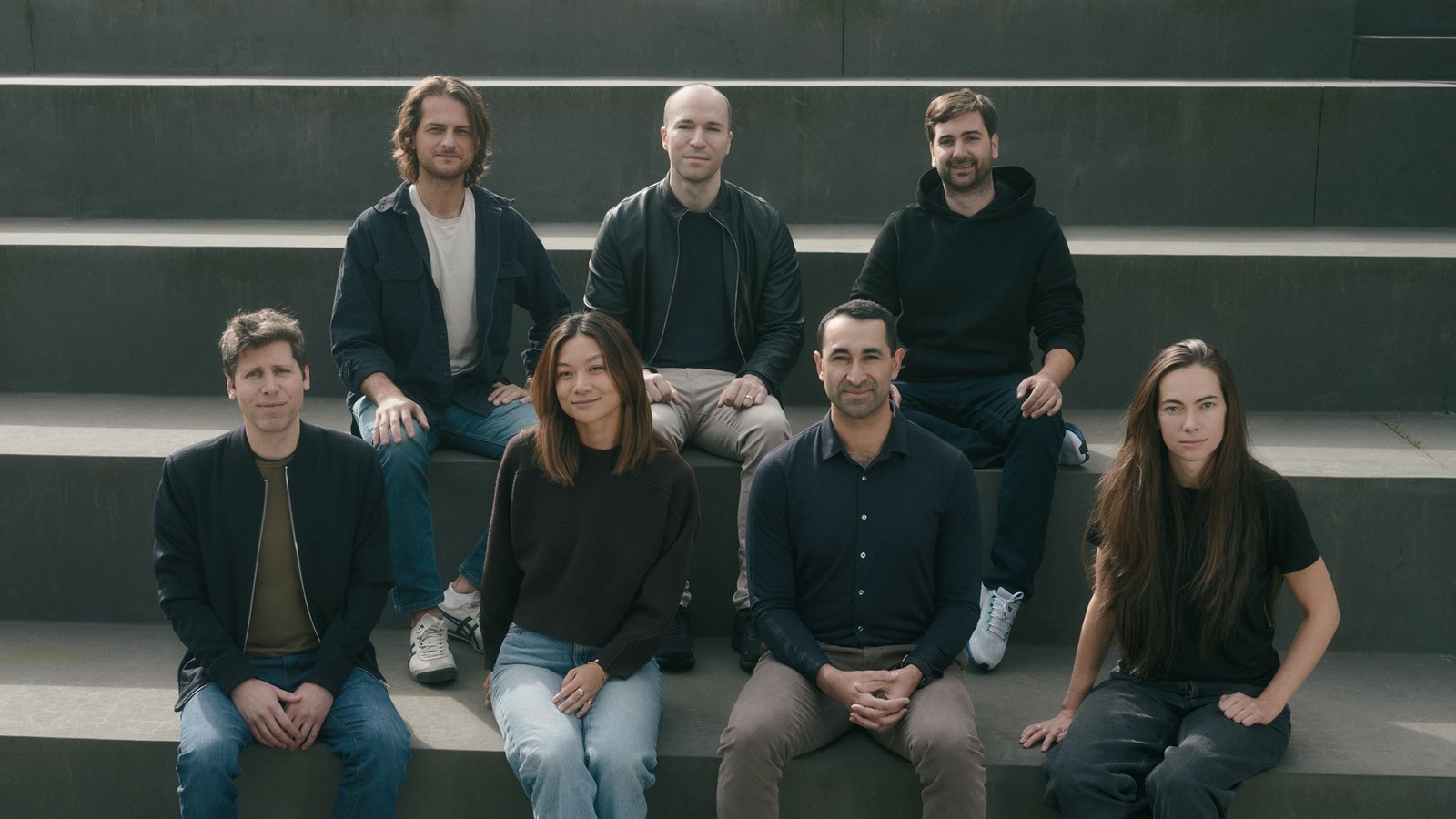
OpenAI is currently engaged in a high-stakes corporate sprint to reclaim its lead in the AI coding revolution, as CEO Sam Altman pivots the company to challenge Anthropic’s runaway success with Claude Code. Despite pioneering the sector with the original Codex model, OpenAI now finds itself in the uncharacteristic position of an underdog, trailing Anthropic’s $2.5 billion annualized revenue in the critical race to automate software engineering. This strategic shift marks a pivotal moment for Silicon Valley, as the automation of high-value programming tasks emerges as a primary driver toward Artificial General Intelligence (AGI).
The $1.5 Billion Deficit: Why OpenAI Fell Behind
The competitive landscape shifted dramatically in early 2025. Anthropic, founded by former OpenAI researchers, leveraged its Claude Code agent to capture nearly 20% of its total business. While Anthropic boasts $2.5 billion in annualized revenue from its programming suite, OpenAI’s Codex brought in just over $1 billion during the same period. Altman acknowledges the setback but maintains that the market for AI coding is a “rare multitrillion-dollar” opportunity that justifies the current aggressive expansion.
“First to market is worth a lot,” Altman noted, referencing OpenAI’s early success with ChatGPT. However, internal accounts from over 30 employees reveal a messier reality. Following the viral launch of ChatGPT in 2022, OpenAI effectively dissolved its dedicated coding teams, reassigning engineers to multimodal projects like DALL-E 2 and GPT-4. This left a vacuum that Anthropic and startups like Cursor quickly filled by training models on real-world, “messy” code repositories rather than just academic datasets.
The $3 Billion Windsurf Deal That Microsoft Killed
In an attempt to leapfrog its rivals, OpenAI explored a $3 billion acquisition of the AI coding startup Windsurf in early 2025. The deal was intended to provide OpenAI with an immediate enterprise customer base and a battle-tested product team. However, the acquisition stalled for months due to friction with Microsoft. OpenAI’s primary investor reportedly demanded access to Windsurf’s intellectual property, leading to a breakdown in negotiations by July 2025. The Windsurf team was ultimately split between Google and Cognition, forcing OpenAI to rely entirely on internal “sprint teams” led by researchers Thibault Sottiaux and Alexander Embiricos.
Reasoning Models: The Foundation of OpenAI’s Counterattack
The launch of the o1 and o3 models marked a turning point in OpenAI’s technical capabilities. Unlike previous iterations that functioned primarily as sophisticated autocomplete tools, these “reasoning” models utilize a verifiable feedback loop. Because code either functions or fails, the models can iterate and debug autonomously. Andrey Mishchenko, OpenAI’s research lead for Codex, emphasizes that this ability to “crawl around a codebase and test work” is the essential bridge to true agentic behavior.
Internal demos, such as a project codenamed “Jam,” demonstrated AI that doesn’t just suggest code but possesses direct command-line access to execute it. This shift from multimodal “screen-sharing” to direct programmatic access is now viewed by OpenAI leadership as the most viable path to achieving AGI.
Reliability vs. Speed: The Battle for Developer Loyalty
The market response to these advancements has been polarized. While Claude Code gained early traction for its personality and speed, industry leaders like Simon Last, co-founder of the $11 billion startup Notion, have recently migrated to OpenAI’s GPT-5.2 engine. Last cites reliability as the deciding factor, noting that while rival agents occasionally provide inaccurate confirmations, Codex maintains a more factual, albeit “dry,” professional demeanor.
OpenAI’s strategy now focuses on aggressive B2B integration. Fidji Simo, CEO of applications at OpenAI, argues that the ubiquity of ChatGPT gives the company a massive advantage in the corporate sector. Major enterprises, including Cisco, have already begun mandating the use of these tools. Cisco President Jeetu Patel recently warned employees that while AI won’t replace their jobs, they will become “irrelevant” if they fail to master these agentic tools.
The Automation Paradox: Efficiency at the Cost of Safety?
As the race intensifies, safety advocates are raising alarms. The Midas Project recently accused OpenAI of neglecting cybersecurity risks in its GPT-5.3-Codex model to keep pace with Anthropic. While OpenAI’s head of alignment, Amelia Glaese, rejects these claims, the speed of deployment remains a point of contention. Even within OpenAI, the transition is bittersweet. President Greg Brockman, known for his hands-on coding style, admits that while managing a “fleet of agents” is freeing, it creates a disconnect from the technical nuances of problem-solving.
The year 2026 is projected to bring even deeper integration, with OpenAI aiming to develop “automated interns” capable of conducting independent AI research. As these tools evolve from programming assistants to general-purpose task executors, the boundary between human oversight and autonomous machine labor continues to dissolve.