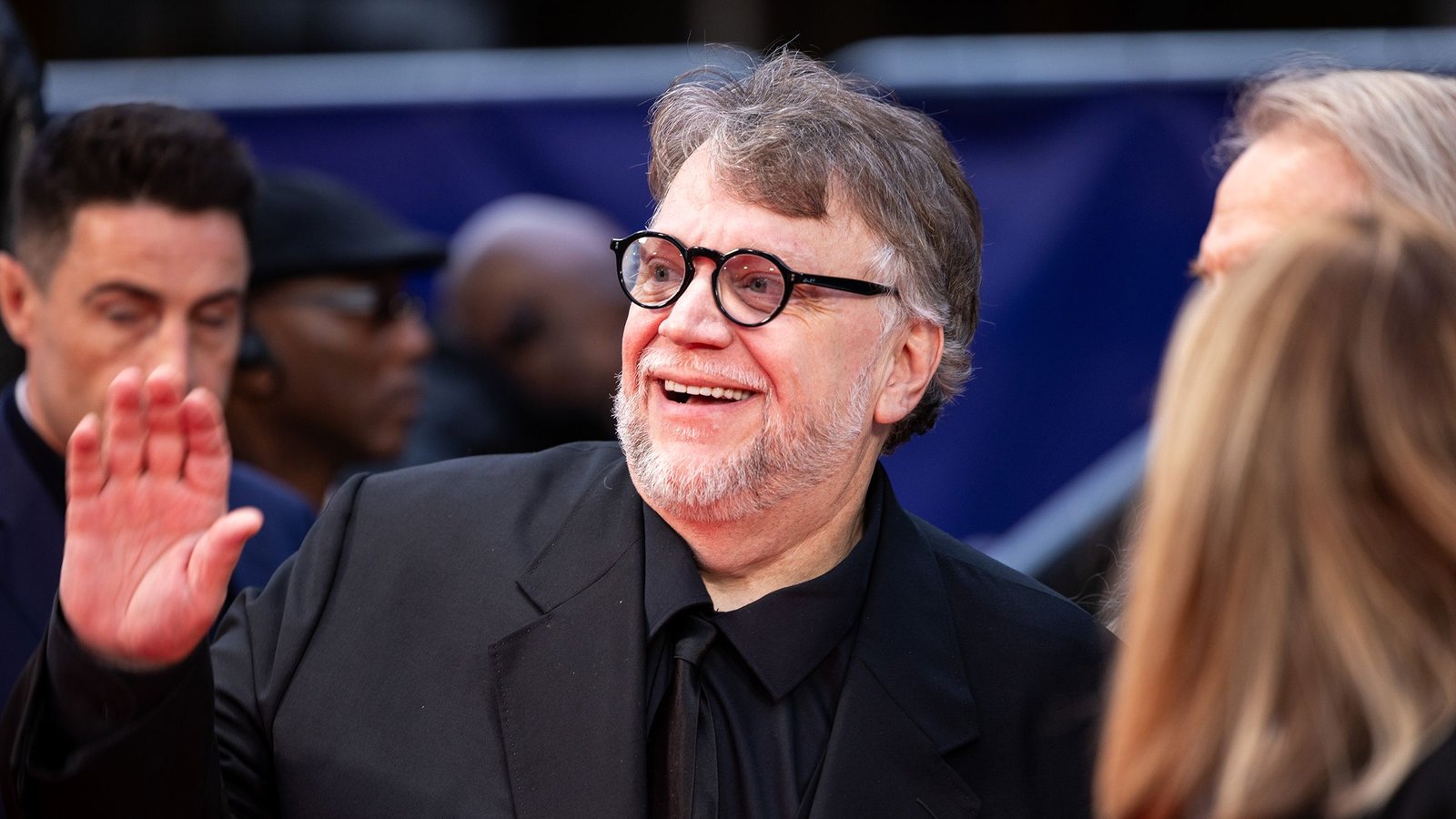
Academy Award-winning director Guillermo del Toro is bringing a deeply personal and extravagant adaptation of Mary Shelley’s 1818 novel, Frankenstein, to Netflix this November. The filmmaker, who has spent decades developing the project, utilizes his signature creature-centric storytelling to bridge the gap between 19th-century Romanticism and modern anxieties regarding technology and human arrogance.
A Personal Messiah: Reimagining Shelley’s Classic
For del Toro, the story of Victor Frankenstein and his creation is more than just a gothic horror tale; it is a “personal messiah” that has shaped his career. Having first encountered the 1931 film at age seven, the director has built a legacy by transforming “monsters” into protagonists, most notably in The Shape of Water and Pacific Rim. His new adaptation, arriving on Netflix on November 7, promises to be a faithful exploration of the novel’s epistolary structure and philosophical depth.
The film incorporates elements of Mary Shelley’s own biography and the historical context of the Romantic movement. Del Toro emphasizes that the narrative captures the essence of the Napoleonic Wars and the “lineage of pain” that defines parental relationships. He also addresses the macabre historical fact that Mary Shelley kept her husband Percy Bysshe Shelley’s calcified heart on her desk after his death, a detail that mirrors the film’s themes of enduring devotion and tragic loss.
The Arrogance of Modern Tyranny
While many view Frankenstein as a cautionary tale against science, del Toro argues the novel is actually closer to Milton’s Paradise Lost. He interprets Victor Frankenstein’s actions not as a failure of science, but as a manifestation of extreme arrogance. “The arrogance of Victor is very common now,” del Toro told WIRED, drawing parallels between the fictional scientist and modern political figures and “Silicon Valley tech bros” who frame their own tyranny as a form of victimhood.
Defying the Machine: Del Toro’s Stance on AI Art
The director remains one of the most vocal critics of generative artificial intelligence in the creative arts. Del Toro dismisses the necessity of AI in artistic expression, stating that while the technology may have applications in engineering or mathematics, “in art, I don’t think anyone asked for it.”
Expressing a grim outlook on the future of the industry, the 61-year-old filmmaker noted that the true danger lies in the consumption of AI-generated content. He challenged the market value of machine-made art, questioning who would pay for AI creations when human-led masterpieces are available. “With a little bit of luck, I’ll die before that takes root,” he remarked regarding the potential mainstream takeover of AI art.
Beyond the Horizon: Stop-Motion and Future Crime Projects
Del Toro is currently pushing the boundaries of animation with his next project, an adaptation of Kazuo Ishiguro’s The Buried Giant. Moving away from traditional family-friendly animation, he intends to elevate stop-motion into an art form capable of handling R-rated themes, drawing inspiration from European models rather than American standards. The production has already spent nine months researching mechanical facial movements and miniaturized textiles, with shooting expected to begin next year.
Looking further ahead, the director revealed a desire to step outside his established wheelhouse of fantasy and horror. He is currently writing a crime film titled Fury, specifically for actor Oscar Isaac. Del Toro views the crime genre as a vital tool for investigating human nature, noting that his personal library’s second-largest collection consists of crime literature. “I just don’t want to look backwards,” he concluded. “I want to look forward to seeing what else is out there I can do.”