Global astrophysicists are deploying advanced detection protocols to identify physical alien artifacts within the solar system, transitioning from theoretical speculation to a data-driven search for extraterrestrial technology. While the scientific consensus currently classifies recent interstellar visitors as natural phenomena, the discovery of these objects has catalyzed a rigorous movement to establish the “search for extraterrestrial artifacts” (SETA) as a primary pillar of modern astronomy.
Establishing the Gold Standard for Technosignature Evidence
The possibility of encountering non-human technology in our cosmic backyard has moved from the fringes of science to the center of academic inquiry. Adam Frank, a professor of astrophysics at the University of Rochester, emphasizes that while the concept has existed for decades, the current era demands unprecedented empirical rigor. Frank asserts that being responsible scientists requires holding to the highest standards of evidence to avoid “crying wolf” regarding potential alien remnants.
Researchers now face the complex challenge of identifying objects that could range from microscopic alloy fragments to massive, derelict spacecraft. To meet this, the scientific community is developing a diverse array of techniques to scan the solar system, including Earth’s immediate orbital environment, for materials that defy natural explanation.
Scouring Pre-Sputnik Archives for Anomalous Satellites
Beatriz Villarroel, an assistant professor at the Nordic Institute for Theoretical Physics, leads a pioneering effort to identify artifacts by analyzing historical sky imagery. Through the Vanishing & Appearing Sources during a Century of Observations (VASCO) project, Villarroel examines photographic plates captured before the 1957 launch of Sputnik. This method provides a “pristine” portrait of the sky before human-made satellites began cluttering Earth’s orbit.
In 2021, Villarroel’s team reported the discovery of inexplicable “transients” that resemble artificial satellites in orbit long before human spaceflight began. While critics suggest these flashes could result from instrumental errors, meteors, or nuclear test debris, Villarroel argues that these archives are a premier resource for artifact hunting. Despite the potential for discovery in geosynchronous orbit—approximately 22,000 miles above Earth—she notes that the scientific “taboo” surrounding the subject often hinders the funding of dedicated retrieval missions.
The Era of Interstellar Visitors: From ‘Oumuamua to 3I/ATLAS
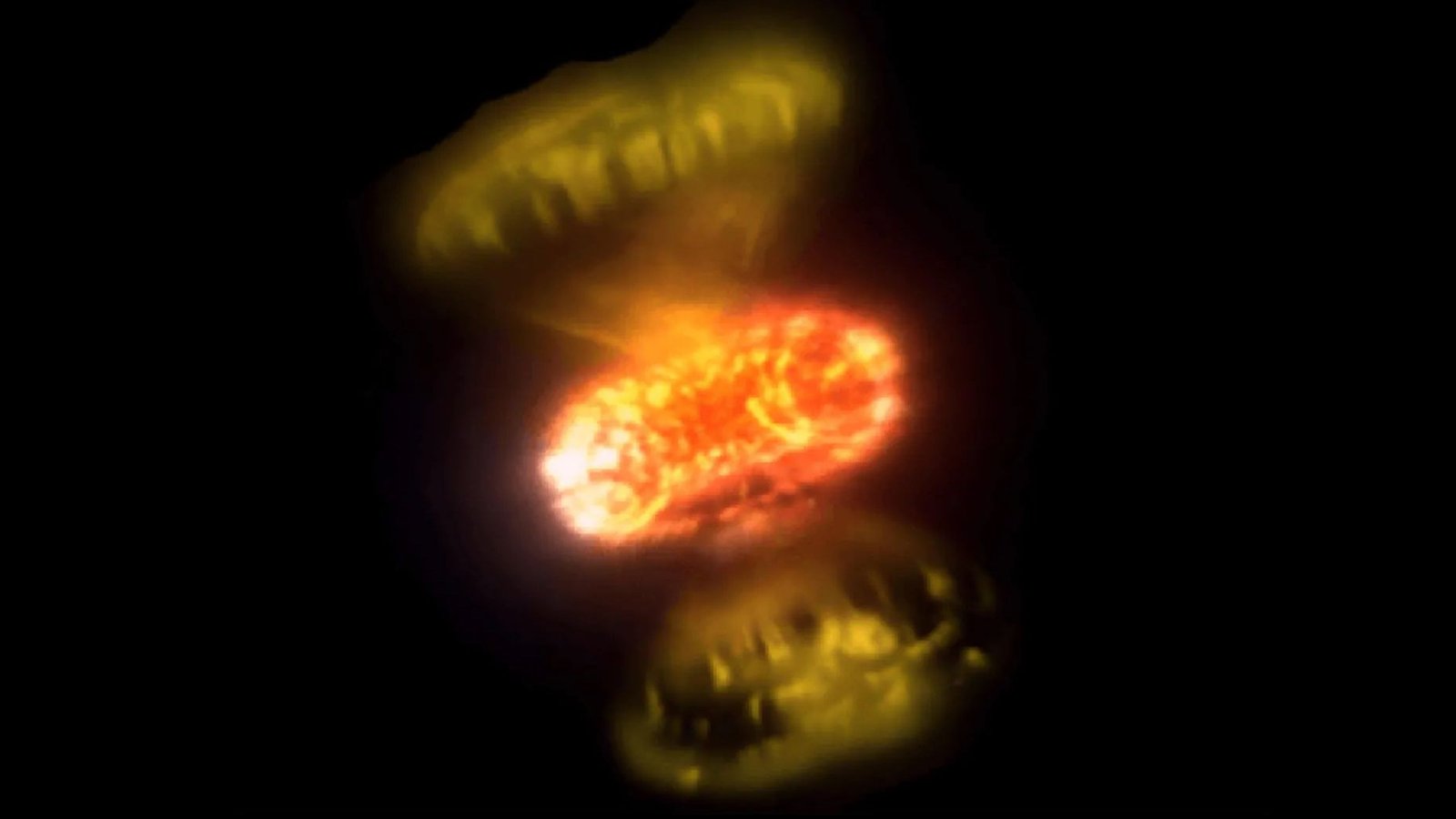
The search for physical technosignatures gained momentum with the arrival of 1I/‘Oumuamua in 2017, followed by 2I/Borisov in 2019 and the 2025 discovery of 3I/ATLAS. These objects provide tangible material from distant solar systems, fueling the debate over their origins. Avi Loeb, a Harvard astronomer and founder of the Galileo Project, has been a vocal proponent of investigating these objects as potential technosignatures, a stance that remains controversial among his peers who favor natural explanations.
To standardize these investigations, researchers like Sofia Shiekh of the SETI Institute have published comprehensive guides for assessing artificiality. Shiekh recently led an effort to detect artificial radio signals from the interstellar comet 3I/ATLAS. Although no technosignatures were found in that instance, the methodology provides a blueprint for future encounters.
Next-Generation Observatories and the Bracewell Probe Theory
The search for extraterrestrial artifacts is rooted in the “Bracewell probe” theory, proposed by physicist Ronald N. Bracewell in 1960. Bracewell suggested that advanced civilizations might deploy autonomous robotic scouts for interstellar contact. This concept was further refined in 1985 by Robert A. Freitas Jr. and Francisco Valdes, who argued that physical probes offer a “richer, deeper interaction” than fragile radio signals.
The operational launch of the Vera C. Rubin Observatory in the Chilean desert in 2025 marks a turning point for SETA. This facility allows scientists to monitor the sky for anomalies such as:
- Highly reflective or non-natural materials.
- Unusual orbital trajectories and propulsion-like motions.
- Active or passive communication signals.
James Davenport, an astronomer at the University of Washington, recently synthesized decades of SETA research into a unified strategy to screen incoming interstellar objects. Adam Frank, a co-author of the study, notes that while scientists expect anomalies from other star systems, they must define clear thresholds for when an object transitions from “weird” to “freaky”—the technical tipping point for artifact confirmation.
Geopolitical Risks and the Future of Human Contact
The discovery of a confirmed alien artifact would present significant risks and ethical dilemmas. Villarroel warns that an active probe might not cooperate with retrieval efforts, necessitating strict risk mitigation protocols. Beyond the technical challenges, Michael Bohlander, chair in global law and SETI policy at Durham University, highlights the social and geopolitical ramifications.
Bohlander suggests that the discovery of a spacecraft or advanced artifact could trigger mass panic and hysterical reactions. He argues that humanity must prepare for the cultural dimensions of such a find, not just the technological ones. However, Frank remains optimistic, suggesting that such a monumental discovery would likely unite the global scientific community in a collaborative effort unprecedented in human history. “This would be the greatest thing that had ever happened in the history of humanity for scientists,” Frank concludes.