
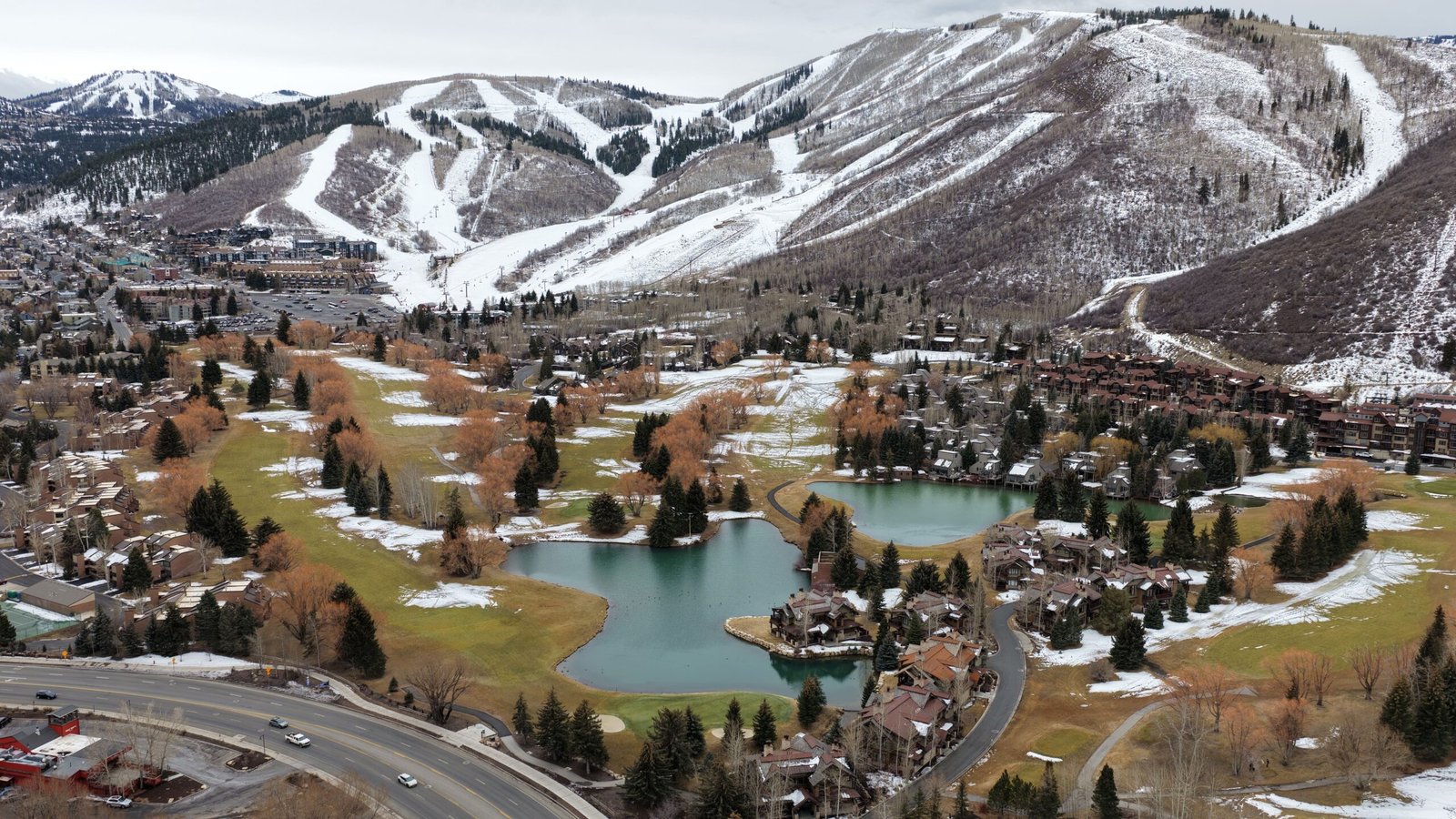
Climate scientist Daniel Swain warns that record-low snowpack across nine Western states as of mid-February is precipitating a dual ecological and political crisis for the Colorado River Basin, as unprecedented warmth decimates the region’s primary water reserves. Unless a “genuinely miraculous turnaround” occurs during the remainder of the winter, the lack of frozen precipitation will likely trigger severe wildfire conditions and intensify legal battles over water rights across the American West.
A Widespread “Snow Drought” Grips the Region
Data from the US Department of Agriculture reveals a grim reality: as of February 12, snowpack levels in critical areas across nine states have plummeted to less than half of their historical averages. While localized deficits are common, Swain, a researcher at the University of California Agriculture and Natural Resources, emphasizes that the current “snow drought” is alarmingly widespread. The shortage spans a massive geographical swath from the southern border of Washington through Arizona, New Mexico, and as far east as Colorado.
The timing of this deficit is particularly concerning. “The numbers are really, really bad,” Swain notes, explaining that while low numbers in November are manageable, a 50% deficit in mid-February represents a massive absolute loss that is difficult to recover. While the East Coast faced freezing temperatures, the West experienced record warmth, with parts of Colorado reaching nearly 80 degrees Fahrenheit. This temperature spike has shifted the precipitation profile; even when moisture falls, it arrives as rain rather than snow, even at elevations between 7,000 and 9,000 feet.
The Long-Term Decline of Winter Reserves
This immediate crisis aligns with broader climatic shifts. A Dartmouth University study published last year confirmed a 40-year downward trend in Northern Hemisphere snowpack levels attributed to anthropogenic climate change. This trend creates a dangerous feedback loop: forests with insufficient snowpack dry out earlier, becoming highly susceptible to catastrophic wildfires. Furthermore, research indicates that wildfire-ravaged landscapes are less efficient at retaining future snowpack, as charred terrain accelerates the melting process.
The implications for the Colorado River Basin—the lifeblood of the West—are severe. The region relies on winter snowpack to “set” its water supply, which then melts in the spring to feed streams and reservoirs. Without this frozen storage, the traditional hydrological dynamic is failing. Swain describes this phenomenon as a “snow drought,” where precipitation might be near average, but record warmth prevents it from being stored as ice.
Political Deadlines and Depleted “Bank Accounts”
The environmental emergency coincides with a high-stakes political showdown. Seven Western states are currently attempting to renegotiate the century-old Colorado River Compact. The original 1922 agreement was built on an overestimation of the river’s flow, a mistake now magnified by industrial agricultural expansion and climate-driven megadroughts. Critical reservoirs, including Lake Mead and Lake Powell, have been tapped to their limits during successive dry years.
Jack Schmidt, director of the Center for Colorado River Studies at Utah State University, argues that the region has “limped along” using rules based on a false perception of abundance. A report co-authored by Schmidt in September projected “grim” outcomes, suggesting that current water use will significantly outpace natural flow by 2026. This year’s record-low snowpack makes those projections even more dire.
The seven basin states missed a previous federal deadline in November to establish a new water-sharing framework. Their next critical deadline arrives at midnight on Valentine’s Day. Schmidt likens the current management of the Colorado River to a financial collapse. “We keep deficit-spending, we keep writing checks for more than our income,” Schmidt says. While the region survived the early 21st century on its “savings,” Schmidt warns that the metaphorical bank account is now drained, leaving no margin for error as a fire-prone summer looms.