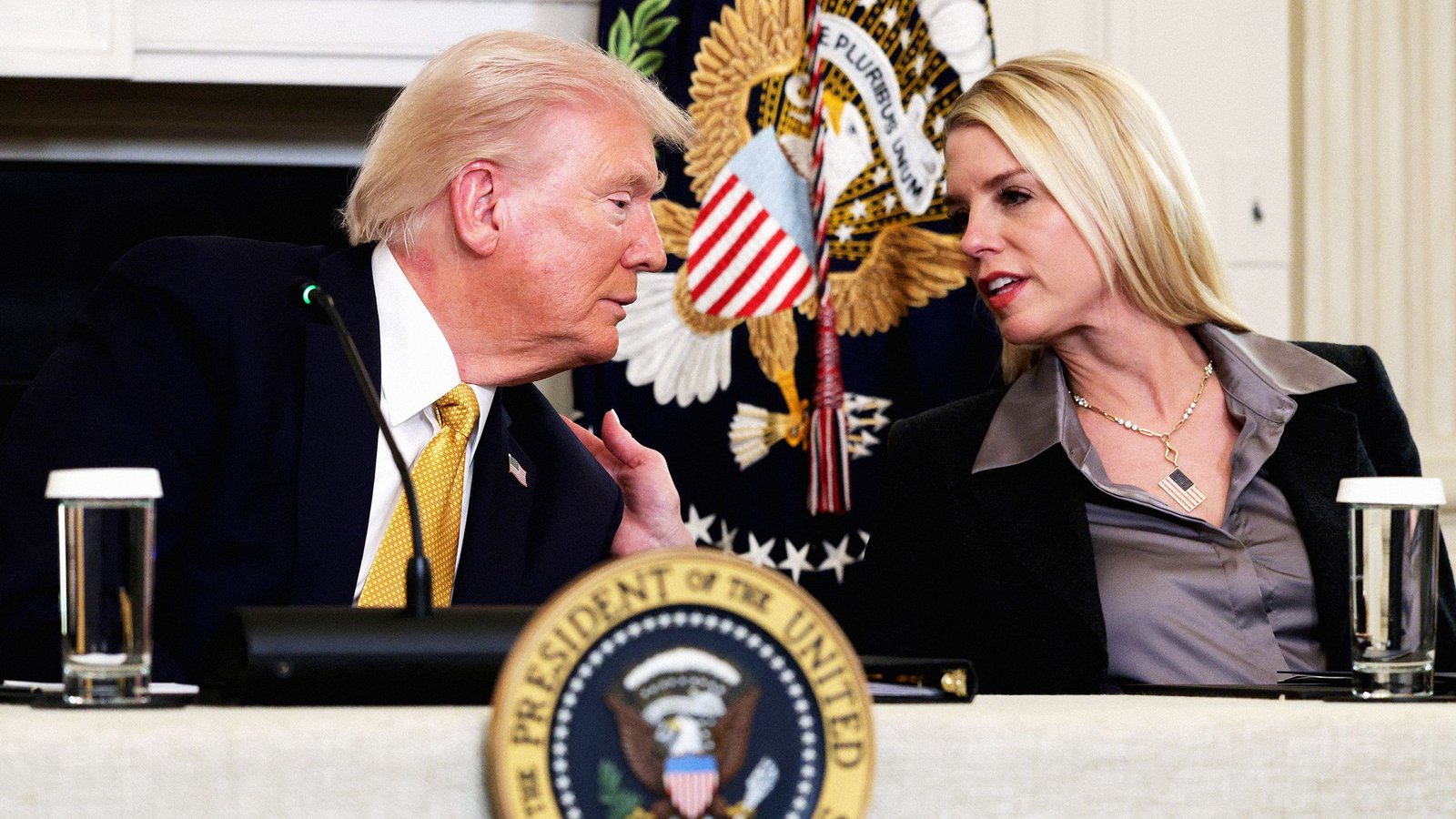
President Donald Trump is poised to sign an executive order as early as this week that would empower the Department of Justice to challenge state-level artificial intelligence regulations in court. The draft directive, titled “Eliminating State Law Obstruction of National AI Policy,” mandates U.S. Attorney General Pam Bondi to establish an “AI Litigation Task Force” specifically designed to sue states whose local mandates allegedly conflict with federal authority, free speech, or interstate commerce.
The Rise of the AI Litigation Task Force
According to four sources familiar with the matter, the proposed task force will collaborate with high-level White House technology advisors, including David Sacks, the special adviser for AI and crypto. Their primary objective is to identify state regulations that the administration deems unconstitutional or obstructive to a unified national AI strategy. The draft order specifically targets rules that compel AI developers to “report information in a manner that would violate the First Amendment” or force models to “alter their truthful outputs.”
Challenging California and Colorado Safety Laws
The executive order explicitly names recently enacted safety frameworks in California and Colorado as primary targets. These state laws currently require AI developers to provide transparency reports detailing model training processes—provisions that have faced intense opposition from Silicon Valley. Trade groups like the Chamber of Progress, which receives backing from industry titans such as Google, OpenAI, and Andreessen Horowitz, argue that a “patchwork” of 50 different state laws stifles American innovation and creates unnecessary compliance hurdles.
Constitutional and Economic Leverage
The White House plans to utilize the Commerce Clause of the Constitution as a legal weapon, asserting that only Congress and the federal government have the authority to regulate trade across state lines. This legal theory aligns with arguments published by Andreessen Horowitz’s policy leadership earlier this year. Beyond litigation, the draft order introduces a significant financial deterrent: it instructs the Department of Commerce to develop guidelines that could disqualify states from receiving federal high-speed internet grants. At risk is the $42 billion Broadband Equity Access and Deployment (BEAD) Program.
The Battle Against ‘Woke AI’ and Ideological Regulation
The move follows a recent statement by President Trump on Truth Social, where he criticized “overregulation” and accused specific states of forcing “DEI ideology into AI models,” resulting in what he termed “Woke AI.” The draft order seeks to curb these perceived biases by calling on the Federal Trade Commission (FTC) to prevent states from passing laws that manipulate AI outputs. “American AI companies must be free to innovate without cumbersome regulation,” the draft states, noting that state legislatures have introduced over 1,000 AI-related bills that threaten a “minimally burdensome national standard.”
Civil Liberties Concerns and Industry Pushback
While the administration views the order as a necessity for maintaining a competitive edge in the global AI race, civil rights advocates express alarm. Cody Venzke, senior policy counsel at the American Civil Liberties Union (ACLU), warned that the draft undermines public trust in AI safety. Venzke further challenged the administration’s legal authority, stating that the President cannot unilaterally attach strings to federal funds. Meanwhile, Silicon Valley’s political influence is intensifying; a super PAC funded by tech leaders like Greg Brockman and Joe Lonsdale has already begun campaigning against state lawmakers who propose restrictive AI safety legislation.