
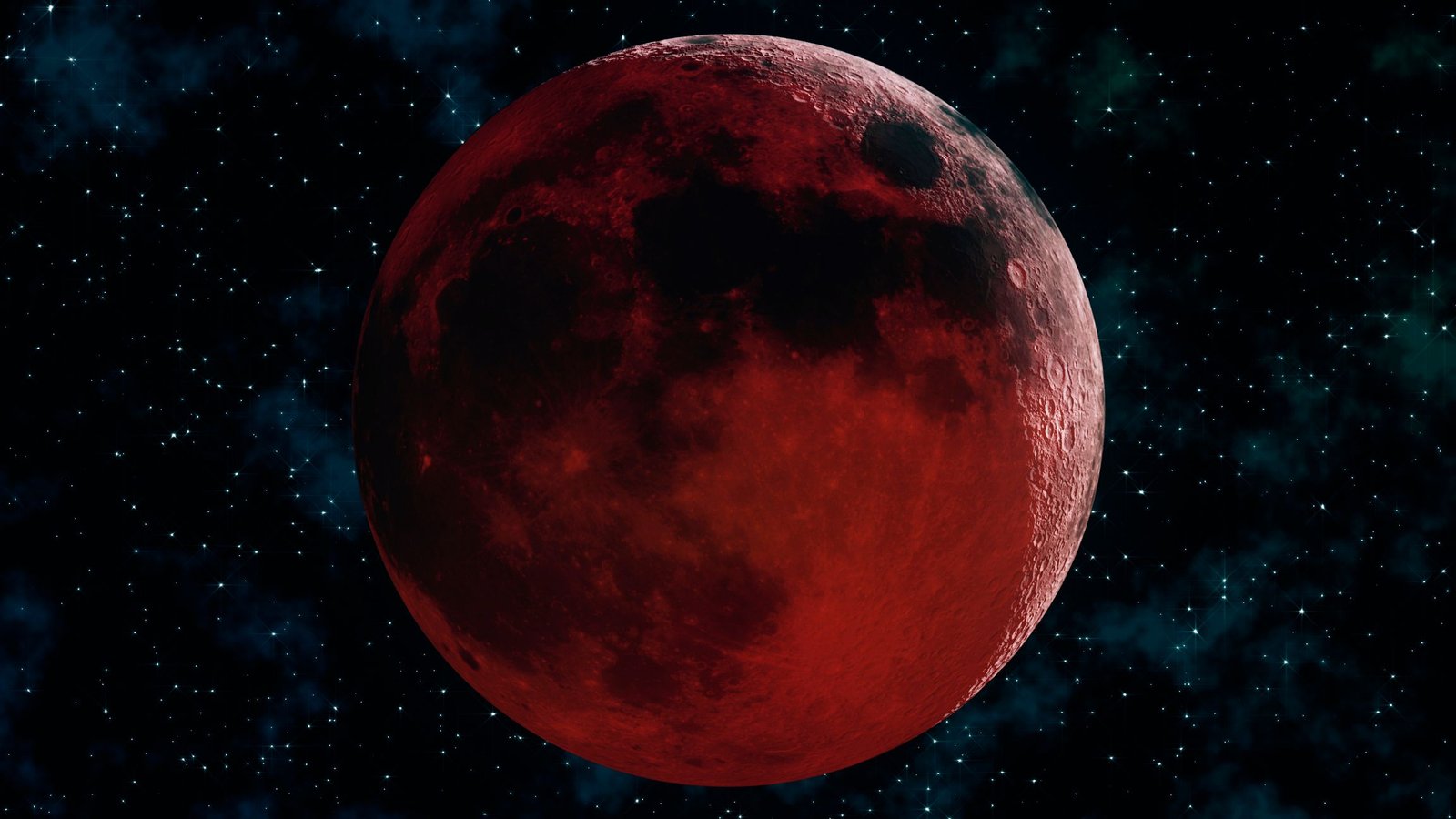
Skywatchers across North and Central America will witness a rare celestial spectacle on March 3 as a total lunar eclipse—often called a “Blood Moon”—briefly paints the lunar surface in a deep crimson hue just before dawn. This atmospheric phenomenon, lasting a precise 12 minutes during its total phase, offers a unique viewing opportunity for those in the Western Hemisphere, while observers in Central and South Asia will experience only a partial eclipse.
Optimal Viewing Times and Regional Visibility
The timing of the eclipse is critical for observers, as totality occurs in the early morning hours as the moon approaches the horizon. While Europe and Africa will miss the event entirely, North American residents should prepare for a pre-dawn viewing. Because the moon will be positioned extremely low in the sky during totality, securing a high vantage point free from architectural or natural obstructions is essential for a clear view.
U.S. City Schedule for Totality
Observers should synchronize their schedules according to these local peak times for the total phase:
- Los Angeles: 3:04 am
- Denver: 4:04 am
- Chicago / St. Louis: 5:04 am
- New York / Washington, DC: 6:04 am
Rayleigh Scattering: Why the Moon Turns Red
During a total lunar eclipse, the Earth aligns directly between the sun and the moon, casting its shadow across the lunar landscape. However, the moon does not vanish into total darkness. Instead, it assumes a dull, reddish glow caused by the Earth’s atmosphere filtering and refracting sunlight.
As sunlight passes through our atmosphere, shorter blue wavelengths are scattered, while longer red wavelengths are bent toward the moon. NASA describes this visual effect as the projection of “all the world’s sunrises and sunsets” onto the lunar surface simultaneously. This specific coloration is highly dependent on atmospheric conditions, including dust and cloud cover on Earth at the time of the event.
The Rarity of the Blood Moon Phenomenon
While total solar eclipses occur approximately every 18 months, total lunar eclipses are statistically rarer, occurring on average once every 2.5 years. Despite their lower frequency, lunar eclipses are more widely observed because they are visible from any location on Earth where the moon is above the horizon during the event. In contrast, a total solar eclipse is only visible from a narrow geographic path; an observer in a specific city might wait 375 years to see one, whereas a lunar eclipse is visible from the same spot every few years.
Preparation and Safety Guidelines
Unlike solar eclipses, which require specialized eye protection to prevent permanent damage, viewing a total lunar eclipse is completely safe for the naked eye. No telescopes or filters are necessary, though binoculars can enhance the detail of the Earth’s shadow as it creeps across the craters. Given the early morning timing and the moon’s proximity to the horizon, experts recommend dressing warmly and finding an elevated location with an unobstructed western view to capture the final moments before the moon sets and the sun rises.