
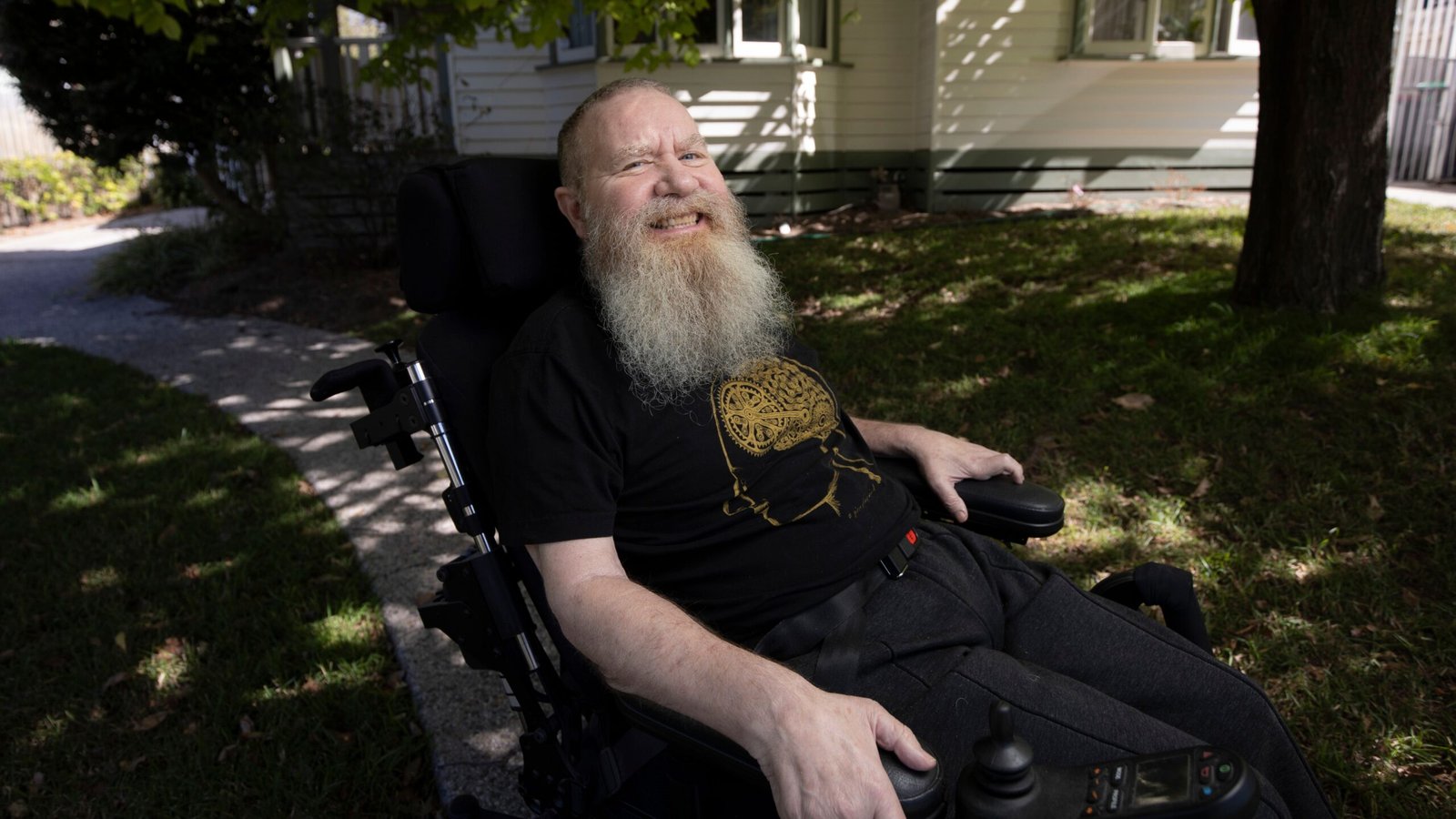
Rodney Gorham, a 65-year-old former software salesman living with amyotrophic lateral sclerosis (ALS) in Melbourne, Australia, has spent the last five years pioneering Synchron’s brain-computer interface (BCI) technology, transforming his thoughts into digital commands to reclaim independence despite near-total paralysis. Since receiving the experimental implant in December 2020, Gorham has become the longest-running user of Synchron’s system, providing critical data that is currently shaping the future of neurotechnology and human-computer interaction.
The Stentrode: A Minimally Invasive Neural Bridge
Unlike more invasive brain implants that require open-skull surgery, Synchron’s flagship product, the Stentrode, utilizes a tiny mesh tube designed to sit within a blood vessel. Surgeons insert the device through the jugular vein in the neck and thread it through the vascular system until it reaches the motor cortex—the specific region of the brain responsible for voluntary movement. Once positioned, it captures neural signals and transmits them to a unit placed in the chest, which then beams the data to an external receiver.
This hardware acts as a lifeline for patients like Gorham, who can no longer walk, talk, or use their hands. By decoding the unique firing patterns of neurons—even when the physical body cannot move—the system allows users to execute digital tasks simply by “thinking” about actions like tapping a foot or making a fist.
From Single Clicks to Smart Home Mastery
Gorham’s journey has mirrored the evolution of the technology itself. In the early stages of the Australian trial, his capabilities were limited to basic single clicks. However, through persistent iteration and testing of new decoders, Gorham graduated to multi-click functions, sliding controls, and eventually full 2D cursor movement. This progression enabled him to navigate complex computer interfaces with horizontal and vertical precision.
His contributions reached a milestone when he assisted in the development of “Switch Control,” an accessibility feature announced by Apple. This integration allows BCI users to operate iPhones, iPads, and even the Vision Pro headset through thought alone. Demonstrations of Gorham’s daily life show him using his implant to activate smart speakers, manage household lighting, operate a robotic vacuum, and even trigger an automatic pet feeder.
The Human Architecture of Software Development
Synchron CEO Tom Oxley emphasizes that Gorham’s 30-year background in IT has made him a “pivotal” collaborator. Gorham’s wife, Caroline, notes that his role has come full circle: after decades of translating customer needs for tech developers at IBM, he is now the ultimate end-user providing the feedback necessary to refine the software. This partnership with field clinical engineer Zafar Faraz involves bi-weekly sessions to troubleshoot performance and push the boundaries of what the hardware can achieve.
One notable experiment involved Gorham controlling a robotic arm located at the University of Melbourne, six miles away from his home. By playing a digital game, he successfully manipulated physical blocks in a lab setting, proving the potential for BCI to bridge the gap between digital thought and physical robotics.
Engineering Lessons from the Field
Real-world usage has forced Synchron to redesign its hardware. Observation of Gorham’s daily routine revealed that the first-generation wearable components—specifically a wired paddle on the chest—created a dependency on caregivers for setup and maintenance. Synchron is now transitioning to a second-generation wireless system to eliminate these delicate communication layers, ensuring the technology remains functional for paralyzed users without constant external intervention.
Clinical Hurdles and the Path to FDA Approval
As Synchron prepares for a large-scale “pivotal trial” required for regulatory approval, the company remains in high-level discussions with the U.S. Food and Drug Administration (FDA). Defining a “clinical end point” for BCI is complex, as measuring the effectiveness of a thought-to-text device differs significantly from testing traditional pharmaceuticals. The industry must determine how to assess safety and utility over long durations, especially as neurodegenerative diseases like ALS progress.
While patients with stable paralysis from spinal cord injuries may use these devices indefinitely, patients with ALS face unique challenges. Gorham now experiences increased mental fatigue during sessions, as the intense concentration required to operate the BCI becomes more taxing. This reality forces developers to weigh the human component heavily, acknowledging that as a disease worsens, the window of utility for these expensive, surgically implanted devices may change.