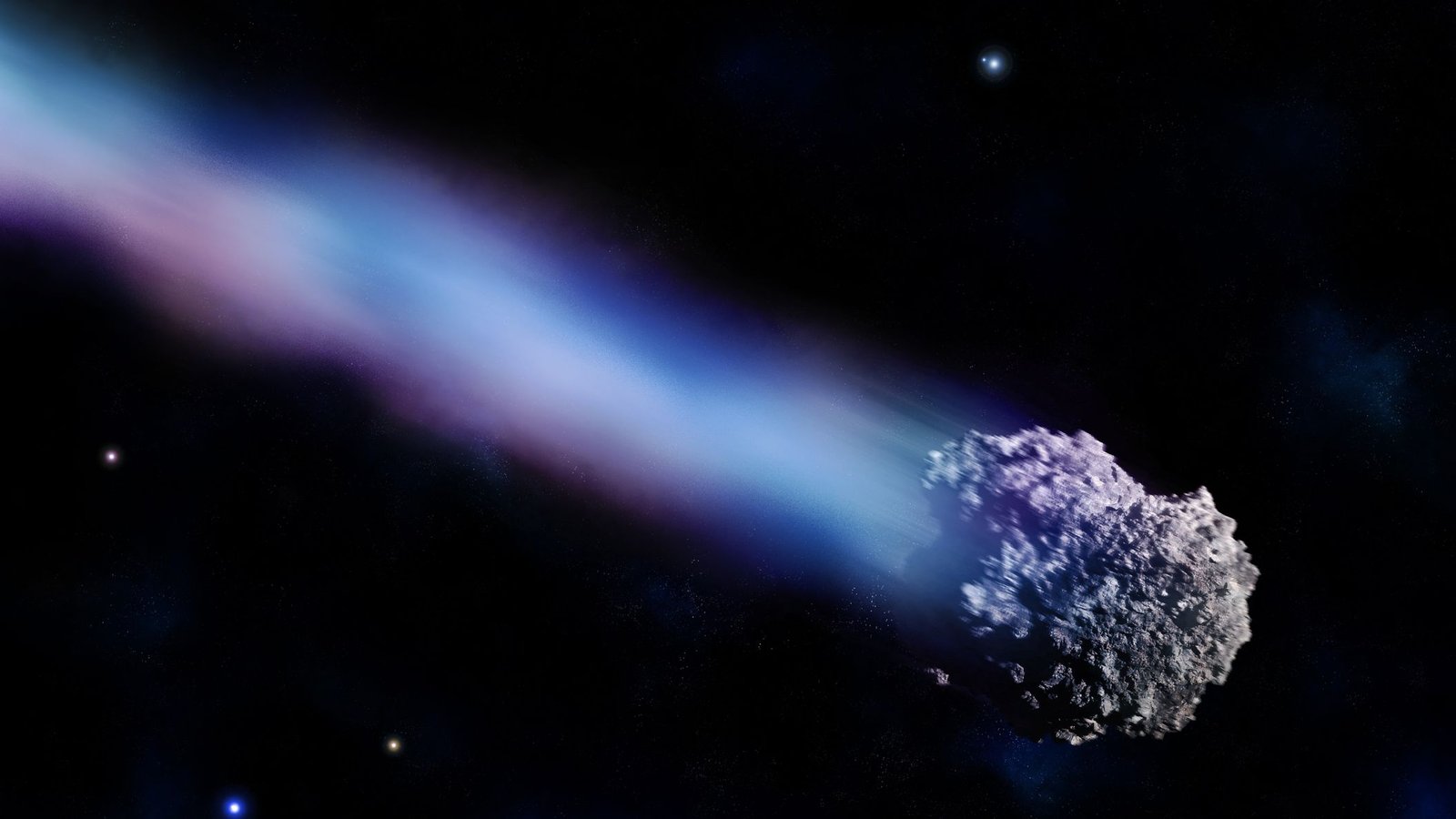
Recent data from the Atacama Large Millimeter/submillimeter Array (ALMA) in Chile reveals that the interstellar visitor 3I/Atlas contains an extraordinary concentration of methanol, challenging existing models of cometary formation. This celestial traveler, only the third confirmed interstellar object in history, possesses a coma heavily enriched with this organic compound at levels four times higher than those typically observed in comets originating within our solar system.
An Unprecedented Chemical Fingerprint
According to a detailed study available on arXiv, 3I/Atlas ranks as the second most methanol-rich comet ever measured by astronomers. It trails only the unusual C/2016 R2, discovered a decade ago. Parallel investigations into the object’s composition have also detected significant abundances of carbon dioxide, iron, and nitrogen, reinforcing the conclusion that this visitor possesses a highly irregular chemical makeup compared to local celestial bodies.
Origins Beyond the Solar System
The combination of excessive methanol and a carbon dioxide-dominated coma supports the scientific hypothesis that 3I/Atlas formed in a unique environment. Researchers suggest its birthplace was likely much colder, more heavily irradiated, or chemically distinct from the regions where solar system comets were born. These findings provide a rare glimpse into the diverse chemical conditions of distant planetary systems.
The Mechanics of Hyperactivity
The research classifies 3I/Atlas within the rare category of “hyperactive” comets. These bodies produce more water vapor than their nucleus surface area would normally justify. In this instance, the gas does not originate solely from the solid nucleus; instead, icy grains floating within the coma sublimate as the comet approaches the sun. This process releases a mixture of methanol, water, and carbon dioxide from both the core and the surrounding debris cloud.
A Natural Wonder Exiting Our Neighborhood
This complex sublimation behavior fits the profile of a natural, chemically intricate object, effectively dismissing any theories regarding an artificial origin. Currently, 3I/Atlas is traversing space at a staggering 60 kilometers per second as it moves away from the solar system. While it remains a rare find, astronomers anticipate that the next generation of advanced observation instruments will uncover many more of these interstellar messengers in the coming years.