Adult performers and industry executives gathered in Los Angeles last week for the seventh annual Pornhub Awards, transforming a high-glamour gala into a strategic frontline against a mounting wave of US censorship. As Republican lawmakers push for a federal ban and state-level age verification mandates proliferate, the adult entertainment giant is increasingly choosing to dark-out entire regions rather than comply with what it deems “risky” data privacy requirements.
A Defiant Gala Amidst a Legislative Storm
The event, hosted at the Sunset Marquis and the Saddle Ranch Chop House, featured a pointed “country” theme—a move widely interpreted as a satirical jab at the Southern states currently leading the charge against adult content. Performers walked a red carpet adorned with “Wanted” posters, a nod to their growing status as targets of conservative legislation. Despite the festive atmosphere, the underlying discourse focused heavily on the survival of the industry in a tightening political climate.
Industry veterans, including high-profile performer Asa Akira, highlighted the disconnect between political rhetoric and the reality of modern adult work. Akira, a mother of two who now focuses on self-published content through Pornhub and OnlyFans, represents a shift toward performer-controlled distribution—a model now threatened by sweeping legislative efforts to redefine “obscene” content.
The “Pull Out” Strategy: How Age Laws Are Redrawing the Digital Map
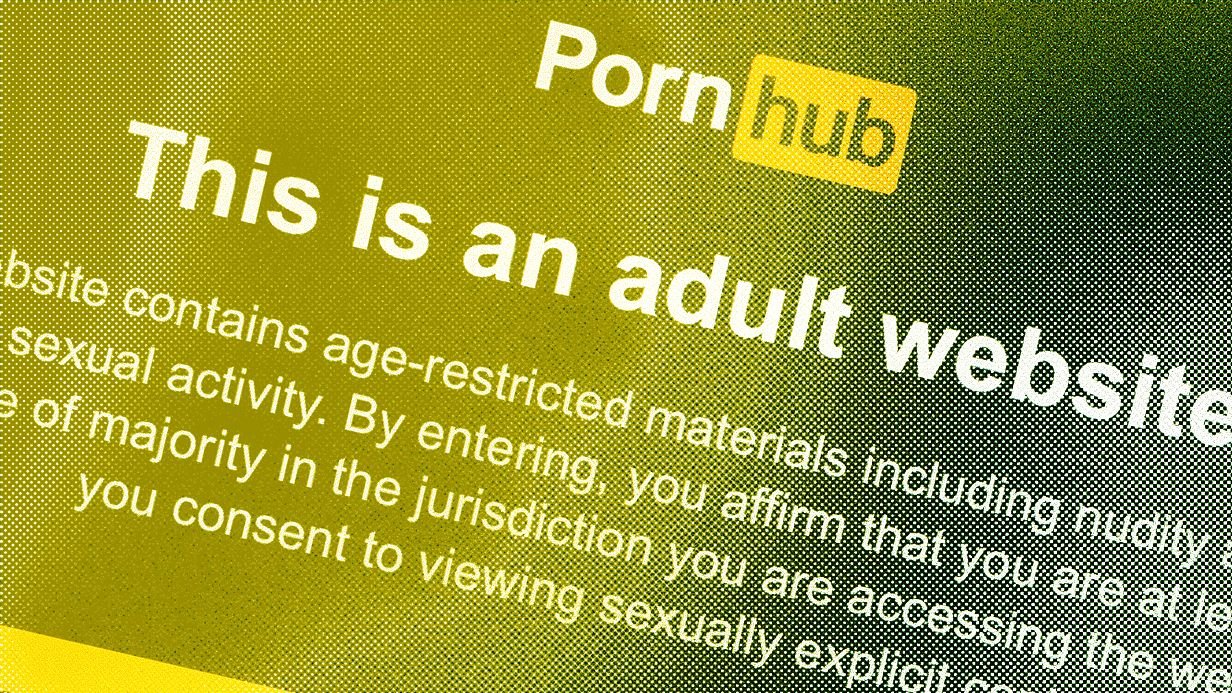
Since Louisiana passed the first age verification law in 2022, approximately 20 states have followed suit. These mandates shift the legal burden onto websites to verify that users are at least 18 years old, typically through third-party ID services. Pornhub’s response has been aggressive: the platform has completely withdrawn its services from 17 states, including Texas and much of the South.
The decision to exit these markets is fueled by a disastrous pilot program in Louisiana, where Pornhub reportedly lost 80% of its traffic after implementing verification. Users proved unwilling to share sensitive government ID data with adult platforms. Executives argue that these bans are counterproductive, driving consumers toward “sketchy” offshore sites that lack the rigorous content moderation and performer verification standards maintained by major platforms.
Redefining Obscenity: The Looming Threat of a Federal Ban
The industry now faces a existential threat at the federal level. Two Republican senators recently reintroduced a bill aiming to criminalize nearly all digital sexual content by tightening the legal definition of “obscenity.” This legislation seeks to replace current vague standards with a strict prohibition on any actual or simulated sexual acts online.
The future of this federal push likely hinges on the U.S. Supreme Court. The court is currently reviewing a challenge to Texas’s age verification law, with a decision expected later this year. This ruling will serve as a bellwether for whether adult content retains First Amendment protections or if the government can effectively mandate digital checkpoints for adult speech.
Project 2025 and the Ideological Shift in Tech Policy
The legislative “war on porn” is not an isolated movement; it is deeply rooted in the broader traditionalist agenda outlined in Project 2025. Russell Vought, a co-author of the mandate, has described age verification laws as a “backdoor way” to achieve a national porn ban. By forcing companies to pull out of states voluntarily, lawmakers achieve their goal of content removal without the immediate friction of a direct federal prohibition.
This movement is closely linked to “pronatalism”—a policy push encouraging higher birth rates and traditional family structures. From the perspective of these activists, the adult industry is an ideological obstacle to these societal goals. However, performers argue this ignores the reality of their lives; many, like Akira, maintain traditional family roles while managing successful careers in adult media.
The Search for a Technical Solution: OS-Level Verification
While Pornhub opposes third-party ID verification, the company is not inherently against age gates. Alex Kekesi, Pornhub’s VP of branding and community, suggests that the responsibility should fall on technology gatekeepers rather than individual websites. The platform advocates for age verification at the operating system level—via Apple’s iOS or Google’s Android—which would allow users to prove their age once through their device without sharing specific browsing habits with multiple third-party vendors.
To date, Apple and Google have resisted these calls, wary of the legal liability and privacy implications of becoming the web’s “age police.” As stakeholders continue to pass the buck, the adult industry is forced to innovate in smaller ways. Some performers have even begun using coded language, such as referring to male anatomy as a “meat missile,” to bypass automated social media censorship and maintain their digital presence.
As the Supreme Court prepares its ruling, the adult industry remains in a state of high-stakes limbo. While VPN usage spikes in “banned” states, the broader conflict between digital freedom and traditionalist legislation is only beginning to intensify.