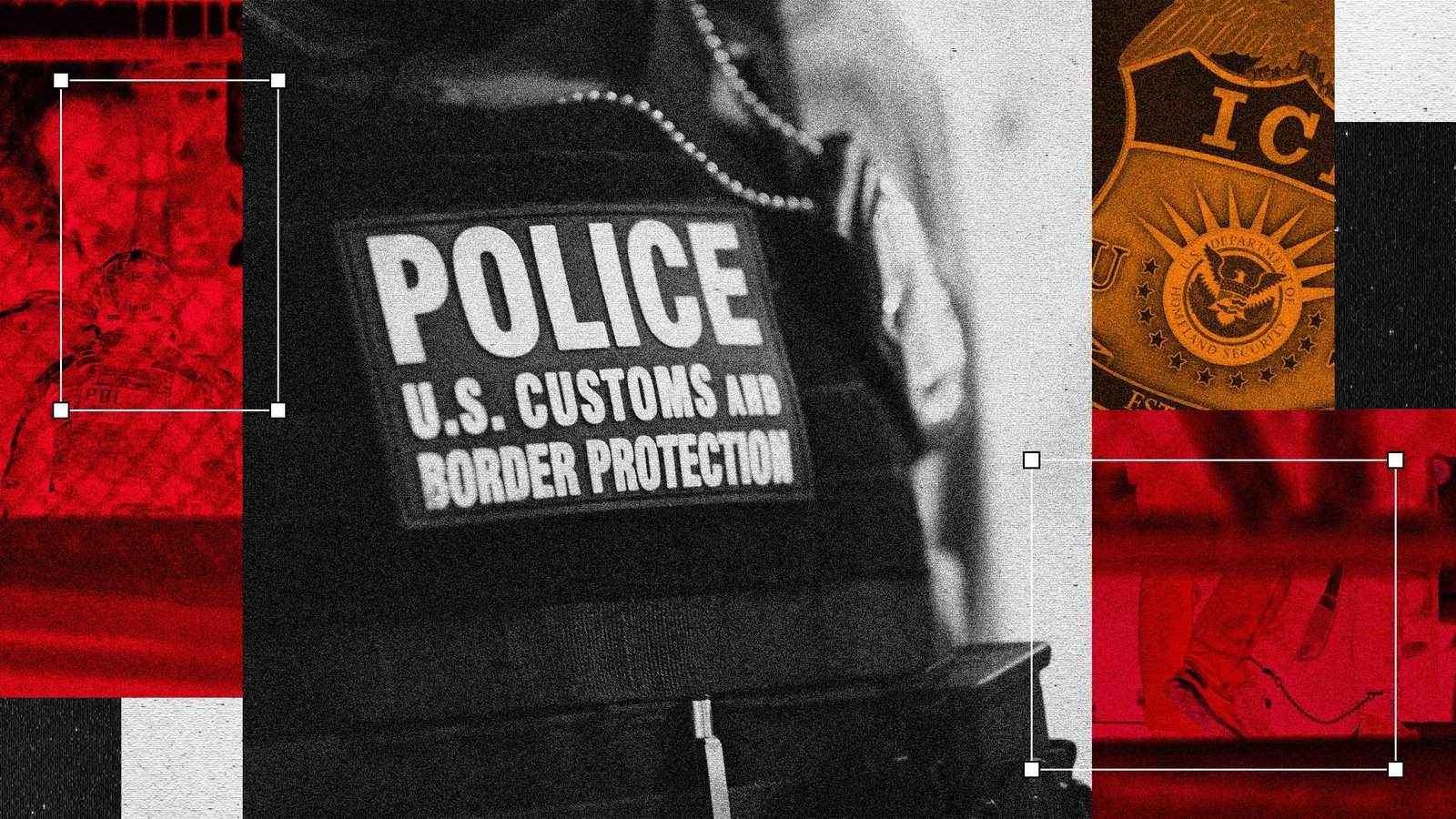
The Department of Homeland Security (DHS) systematically harvested DNA samples from nearly 2,000 U.S. citizens between 2020 and 2024, funneling sensitive genetic profiles into the FBI’s national criminal database (CODIS) often without legal justification or formal charges. Newly released government data, analyzed by Georgetown Law’s Center on Privacy & Technology, reveals that Customs and Border Protection (CBP) officers exploited broad discretionary powers to seize genetic material from travelers, including at least 95 minors—some as young as 14—and individuals facing only civil penalties.
A Massive Genetic Expansion Outside Legal Bounds
The findings expose a program operating far beyond its original statutory intent. While federal law typically reserves DNA collection for criminal arrests, records show CBP agents frequently left “charges” fields blank or cited civil infractions to justify forced cheek swabs. This practice effectively transforms CODIS, a system designed for investigating violent crimes and tracking convicted offenders, into a catch-all repository for individuals who have never committed a crime.
“Those spreadsheets tell a chilling story,” Stevie Glaberson, director of research and advocacy at Georgetown’s Center on Privacy & Technology, told WIRED. “They show DNA taken from people as young as 4 and as old as 93—and, as our new analysis found, they also show CBP flagrantly violating the law by taking DNA from citizens without justification.”
The Surveillance of Minors and Innocent Travelers
The scale of this biometric dragnet has reshaped the national forensic landscape. Since 2020, DHS has contributed approximately 2.6 million profiles to CODIS, a surge that accounts for a massive portion of the database’s recent growth. By April 2025, the “detainee” index alone surpassed 2.6 million entries, with an astounding 97 percent of these samples collected under civil rather than criminal authority. Projections suggest that by 2034, DHS-sourced files could constitute one-third of the entire FBI database.
This expansion targets vulnerable populations and ordinary travelers alike. Previous reports highlighted that children as young as 4 and elderly citizens in their nineties have had their genetic blueprints uploaded to the system. Critics warn that once an individual enters CODIS, they may face heightened scrutiny from law enforcement for the duration of their lives.
Policy Levers Driving the DNA Surge
Two major bureaucratic shifts accelerated this mass sampling. In April 2020, a Justice Department rule revoked a long-standing waiver that previously allowed DHS to bypass DNA collection for immigration detainees. Subsequently, the FBI authorized the use of “Rapid DNA” machines—automated devices capable of generating CODIS-ready profiles in under two hours at local booking stations.
The resulting influx of data created significant operational friction. In 2023 Senate testimony, former FBI Director Christopher Wray warned that the volume of DHS submissions had skyrocketed from a few thousand per month to over 92,000. This 10-fold increase resulted in a backlog of 650,000 unprocessed kits, complicating the bureau’s ability to generate timely investigative leads.
Executive Orders and the Future of Biometric Policing
The surveillance apparatus continues to grow under recent mandates. A January 2025 executive order on border enforcement instructed DHS agencies to deploy “any available technologies” for identity verification, explicitly including genetic testing. Furthermore, federal officials recently solicited bids totaling $3 million to install Rapid DNA technology in local booking facilities across the United States.
“The Department of Homeland Security has been piloting a secret DNA collection program of American citizens since 2020. Now, the training wheels have come off,” stated Anthony Enriquez, vice president of advocacy at Robert F. Kennedy Human Rights. Enriquez noted that while Congress provided DHS with a $178 billion budget in 2025, the administration simultaneously weakened civil rights oversight.
A Permanent Archive of Intimate Data
Lawmakers have expressed grave concerns regarding the lack of transparency. U.S. Senator Ron Wyden recently challenged the DHS and DOJ to explain why children’s DNA is being captured and permanently retained. Wyden warned that these minors could be “treated by law enforcement as suspects for every investigation of every future crime, indefinitely.”
The privacy implications are profound because the government retains physical DNA samples indefinitely once a CODIS profile is created. There is currently no established procedure to remove or revisit profiles, even when the legality of the original detention is successfully challenged in court. Georgetown Law and allied advocacy groups have filed lawsuits against DHS to force the disclosure of records detailing how this genetic data is utilized, stored, and shared, asserting that the public has a fundamental right to understand the scope of this domestic surveillance program.