The real estate industry is undergoing a rapid digital transformation as agents across the United States increasingly deploy generative AI to create synthetic property videos, virtual staging, and listing descriptions, sparking a fierce debate over transparency and consumer deception. While these tools promise to slash marketing costs and accelerate sales cycles, the rise of “AI slop” in property portals is making the search for a home—historically the largest investment in a consumer’s life—feel increasingly precarious.
The Automation Engine: Scaling Synthetic Property Marketing
Modern real estate marketing no longer requires a camera crew or expensive furniture rentals. Platforms like AutoReel, co-founded by former Facebook product manager Alok Gupta, now allow agents to transform static listing photos into high-definition videos in minutes. According to Gupta, the app generates between 500 and 1,000 new listing videos daily, serving realtors from the U.S. to New Zealand.
This surge in adoption is reflected in industry data. Dan Weisman, director of innovation strategy at the National Association of Realtors (NAR), notes that nearly 90% of professionals at recent industry conferences admit to utilizing AI tools. The incentive is purely financial: agents can bypass traditional videography costs of $500 to $1,000, opting instead for near-instant, AI-generated alternatives.
“Cartoonified” Listings: When Virtual Staging Crosses the Line
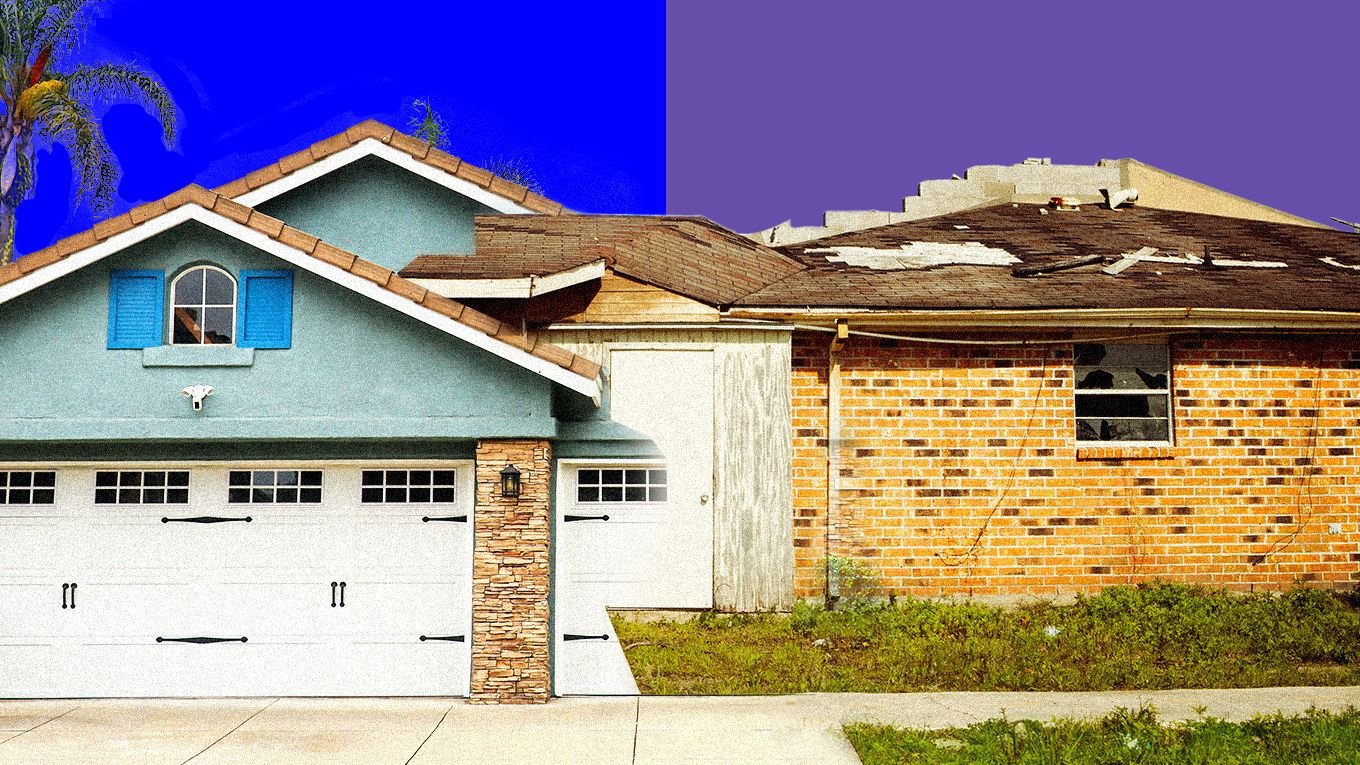
For consumers, the line between helpful visualization and outright deception is blurring. Elizabeth, a homeowner in rural Michigan, recently discovered a listing where AI-generated images exhibited a distinct yellowish hue—a common artifact of generative models—and impossible architectural features, such as stairways leading to nowhere. Her investigation revealed that the AI had not only added furniture but had also erased kitchen cabinets, resized windows, and replaced pavement with digital grass.
Social media platforms have become hubs for documenting these “hallucinations.” From New York City lofts masquerading as master bedrooms to Detroit facades with digitally replaced roofs, the shift from traditional fish-eye lenses to generative manipulation represents a new frontier in misleading advertising. While some agents claim these images are posted prematurely or created by third-party brokers, the impact on buyer trust remains significant.
The “Nestled” Epidemic and the Loss of Professionalism
Jason Haber, co-founder of the American Real Estate Association, warns of an “epidemic” of lazy AI usage. He points to the repetitive nature of AI-generated copy, noting that ChatGPT almost reflexively uses the word “nestled” to describe property locations. Haber argues that while technology is a tool, over-reliance on it strips agents of their creative edge and professional differentiation.
Legal Ambiguity and the Future of Disclosure
The National Association of Realtors maintains a code of ethics that prohibits the use of misleading imagery, yet the legal framework surrounding AI-generated content remains “murky.” While industry leaders like Haber advocate for mandatory disclosure of AI use—similar to traditional virtual staging—enforcement is inconsistent. Deceptive practices risk not only professional sanctions but also potential lawsuits from buyers who find the physical reality of a property fails to match its digital twin.
The Photographer’s Perspective: Authenticity as a Premium
Despite the efficiency of AI, some industry veterans remain skeptical. Nathan Cool, a prominent real estate photographer, argues that high-stakes investments require high-fidelity honesty. Even as tools like AutoReel attempt to minimize “hallucinations” by training on millions of real property videos, the risk of adding fake elements—like a couch that doesn’t exist—persists. For many buyers, the discovery of AI manipulation before a viewing is enough to terminate their interest, suggesting that authenticity may soon become a premium commodity in a market flooded with synthetic content.