President Donald Trump has fundamentally transformed the American presidency into a digital laboratory for generative AI, weaponizing surreal and often bizarre deepfakes to dominate the national conversation. Despite his well-documented avoidance of personal computers, the 45th and 47th president has embraced “AI slop” as a primary tool for political trolling, marking a radical shift from the text-heavy “covfefe” era of his previous term.
The “King Trump” Aesthetic: From Top Gun to Surreal Propaganda
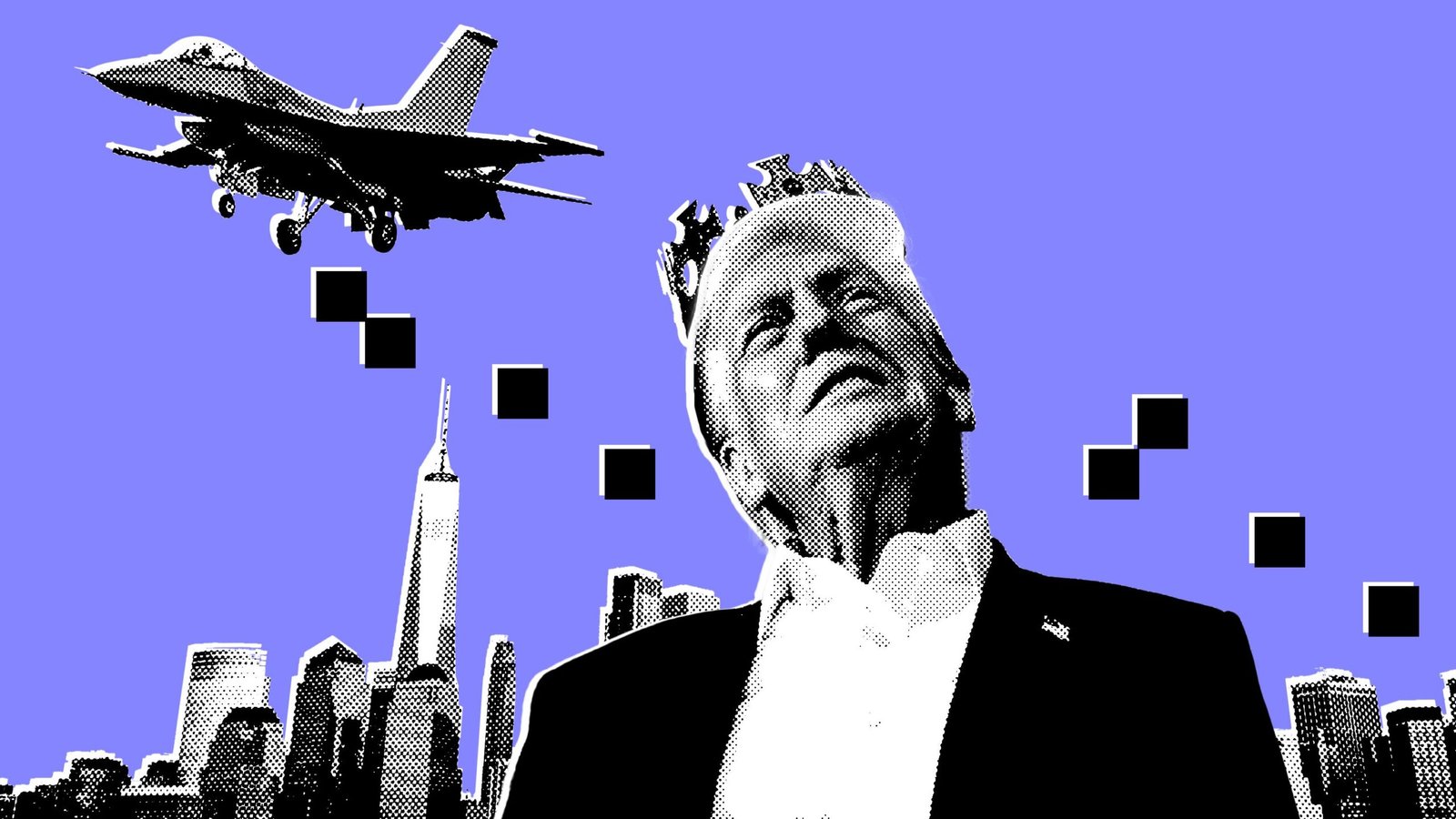
The most provocative evidence of this new digital strategy surfaced recently via a video depicting Trump in full Top Gun flight gear. In the AI-generated clip, the president pilots a fighter jet emblazoned with “KING TRUMP” while wearing a literal gold crown instead of a standard flight helmet. The sequence culminates with the aircraft dropping massive amounts of waste onto fictionalized “No Kings” protesters in New York’s Times Square—a heavy-handed metaphor for his dominance over political dissent.
This is not an isolated incident. Trump’s social media feeds have become a repository for high-octane, often controversial AI outputs, including a racially charged depiction of House Minority Leader Hakeem Jeffries and a dystopian “Trump Gaza” montage. These visuals represent a new frontier in political communication where the absurdity of the content is the point, designed to trigger both viral engagement and media outrage.
The Gatekeepers: Who Controls the President’s Camera Roll?
While the videos appear on Trump’s official accounts, the president himself is rarely the creator. According to senior White House officials, the process is a hybrid of personal whim and staff-driven curation. Trump frequently discovers content he finds “amusing” while browsing Truth Social or other channels, saves the files directly to his iPhone’s camera roll, and orders their release. However, the bulk of the operation falls to a specialized digital rapid-response team.
The Rise of the “Human Printer”
The social media hierarchy within the Trump White House has evolved into a streamlined duopoly. Dan Scavino, a long-time confidant and the newly minted director of the White House Presidential Personnel Office, remains the primary architect of Trump’s digital voice. As Scavino’s administrative responsibilities have grown, Natalie Harp—an aide frequently referred to as “the human printer”—has assumed a pivotal role in executing the daily posting schedule.
Laura Loomer, a prominent MAGA figure who maintains close ties to the administration, estimates that Scavino and Harp are responsible for approximately 95% of the physical posts on Truth Social. This marks a significant departure from Trump’s peak Twitter years, where his manual participation in “posting on main” was substantially higher. Today, the “slop” is a manufactured product of a professionalized digital war room.
A Strategy of Chaos: Blurring Truth and Fiction
The technical origins of these videos remain shrouded in mystery. It is currently unclear whether the administration utilizes xAI’s Grok, OpenAI’s Sora, or other proprietary tools to generate this content. What is clear, however, is the lack of a traditional communications strategy. Experts suggest the goal is not to deceive in the Machiavellian sense, but to engage in “trolling for its own sake,” creating a feedback loop that rewards the most outlandish visuals.
The danger lies in the erosion of objective reality. Trump has previously demonstrated a tendency to mistake edited footage or B-roll for live events, such as his confusion regarding 2020 Portland protest footage. By flooding the zone with AI-generated content that intentionally blurs the line between the serious and the absurd, the administration risks a scenario where the Commander-in-Chief can no longer distinguish between a digital hallucination and a national security crisis. In this “dumbest timeline” of AI development, the threat to democracy isn’t just the sophisticated deepfake—it’s the normalization of the fake itself.