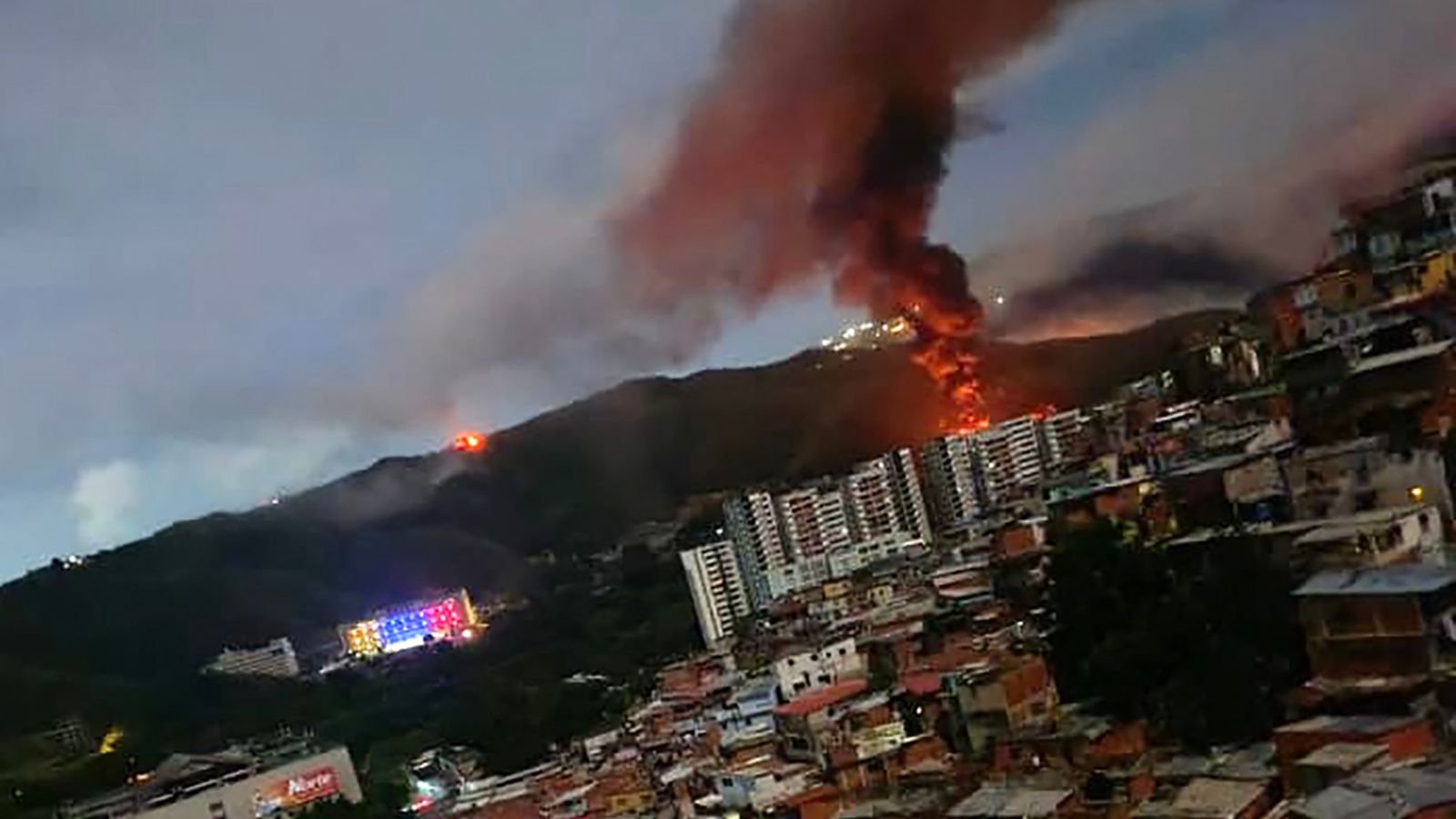
United States military forces executed a decisive strike against Venezuela on January 3, 2026, capturing President Nicolás Maduro and triggering a global geopolitical crisis that is currently being redefined by social media narratives. The pre-dawn operation in Caracas resulted in significant casualties, including 32 Cuban soldiers and at least 80 other military and civilian personnel, according to reports from The New York Times. Following his capture, Maduro was immediately extradited to the United States and is currently held at the Metropolitan Detention Center in Brooklyn, facing charges of narcoterrorism conspiracy.
The Kinetic Strike: Casualties and the Fall of Caracas
The military intervention effectively dismantled the Maduro administration’s immediate control over the capital. While the sky over Caracas thundered with explosions, the human cost began to mount. Cuban President Miguel Díaz-Canel confirmed the loss of his nation’s elite troops in combat, marking a direct military confrontation between U.S. forces and Cuban assets on South American soil. In the aftermath, U.S. President Donald Trump announced his intention to oversee a “satisfactory transition” for the nation, explicitly stating that American oil corporations would lead the revitalization of the Venezuelan petroleum industry.
From the heart of Caracas, Vice President Delcy Rodríguez issued a defiant response, asserting that Venezuela would refuse to exist as a “slave or colony” of any foreign empire. However, the reality on the ground remains starkly different from the rhetoric, as the U.S. military presence signals a return to an era of direct interventionism that many analysts believed was a relic of the 20th century.
The TikTok War: How Social Media Distorts Geopolitics
The conflict is not only being fought in the streets of Caracas but also across digital platforms where 60-second videos often supersede nuanced reporting. Julio Juárez, a psychological researcher at the National Autonomous University of Mexico (UNAM), warns that the speed of social media has effectively “devoured” traditional fact-checking. Juárez argues that platforms like TikTok and Instagram do not merely report reality—they construct it. He notes that Donald Trump’s narrative on Truth Social was a calculated exercise in legitimization, designed to polarize public opinion through immediate emotional reactions rather than critical reflection.
Satire vs. Sovereignty: The ‘History for Dummies’ Controversy
A viral video from the Spanish-language account Historia Para Tontos (History for Dummies) encapsulated this digital tension. Using maps and satire, the creator, Tecayahuatzin Mancilla, critiqued American exceptionalism. Mancilla, an international relations expert, highlighted that the lack of an international arrest warrant against Maduro calls the legal legitimacy of the U.S. action into question. “The United States violates international law whenever it’s in their interest to do so,” Mancilla told WIRED, noting that this intervention ends a 32-year hiatus of direct U.S. military involvement in the region.
A Nation Divided: Venezuelan Reactions and the Human Rights Paradox
Public reaction to the invasion remains fiercely polarized. While some Venezuelans celebrate the removal of a leader they view as a dictator, others condemn the violation of national sovereignty. Rafael Uzcategui, co-director of Laboratorio de Paz in Caracas, expressed frustration with the “double standards” of the international community. He noted that while human rights reports have long documented the deterioration of life under Maduro, the sudden military intervention creates a new set of ethical and legal dilemmas.
Dayani López, a Venezuelan citizen, articulated the desperation felt by many in a viral comment: “Where was the concern for international law when Maduro violated our human and civil rights year after year? Stupid international laws have watched us bleed to death for almost three decades.” This sentiment highlights a growing segment of the population that views foreign intervention as the only remaining avenue for political change after years of failed domestic efforts.
Digital Blackouts and the Architecture of Polarization
Inside Venezuela, the conflict is exacerbated by systemic digital oppression. Anonymous sources report that “digital blackouts” are used to suppress dissent, forcing citizens to rely on encrypted WhatsApp groups and underground media collectives like Alianza Rebelde—comprising El Pitazo, Runrunes, and TalCual—to access reliable information. These “information archipelagos” represent the final frontier of political discourse in a country where public debate has been effectively criminalized.
The Psychology of Information Overload
The Digital News Report 2025 underscores a massive shift in how news is consumed: 16% of users now turn to TikTok for news, while YouTube (30%) and Facebook (36%) remain dominant. This migration to algorithm-driven platforms creates a feedback loop of toxicity. Researcher Petter Törnberg suggests that the architecture of these networks—likes, shares, and forwards—rewards impulsive, partisan reactions over measured analysis. This “disintermediation” allows users to exist in bubbles that only confirm their existing biases, whether they support the invasion or oppose it.
The End of Agency: Attention as a Finite Resource
As the situation in Venezuela evolves, the sheer volume of information has led to what Julio Juárez calls a “shutdown” of the collective attention span. To combat saturation, citizens use psychological shortcuts, accepting prefabricated stories that fit their worldview. “If we lose the ability to discern between what is false and what is true, we also lose our agency,” Juárez warns. The capture of Nicolás Maduro and the subsequent U.S. occupation are not the conclusion of a historical chapter, but the beginning of a volatile new dynamic in global power politics.