In a quiet home office in Los Angeles, filmmaker Kerrigan is dismantling the “slop” narrative of generative AI by crafting Neural Viz, a sophisticated sci-fi cinematic universe that leverages cutting-edge tools to produce high-narrative digital content. By synthesizing software like FLUX Kontext, Midjourney, and Runway, Kerrigan has transitioned from a traditional Hollywood striver to an independent digital pioneer, proving that the future of artificial intelligence in film lies in human-led intentionality rather than automated prompts.
Beyond the Slop: The Rise of the Monoverse
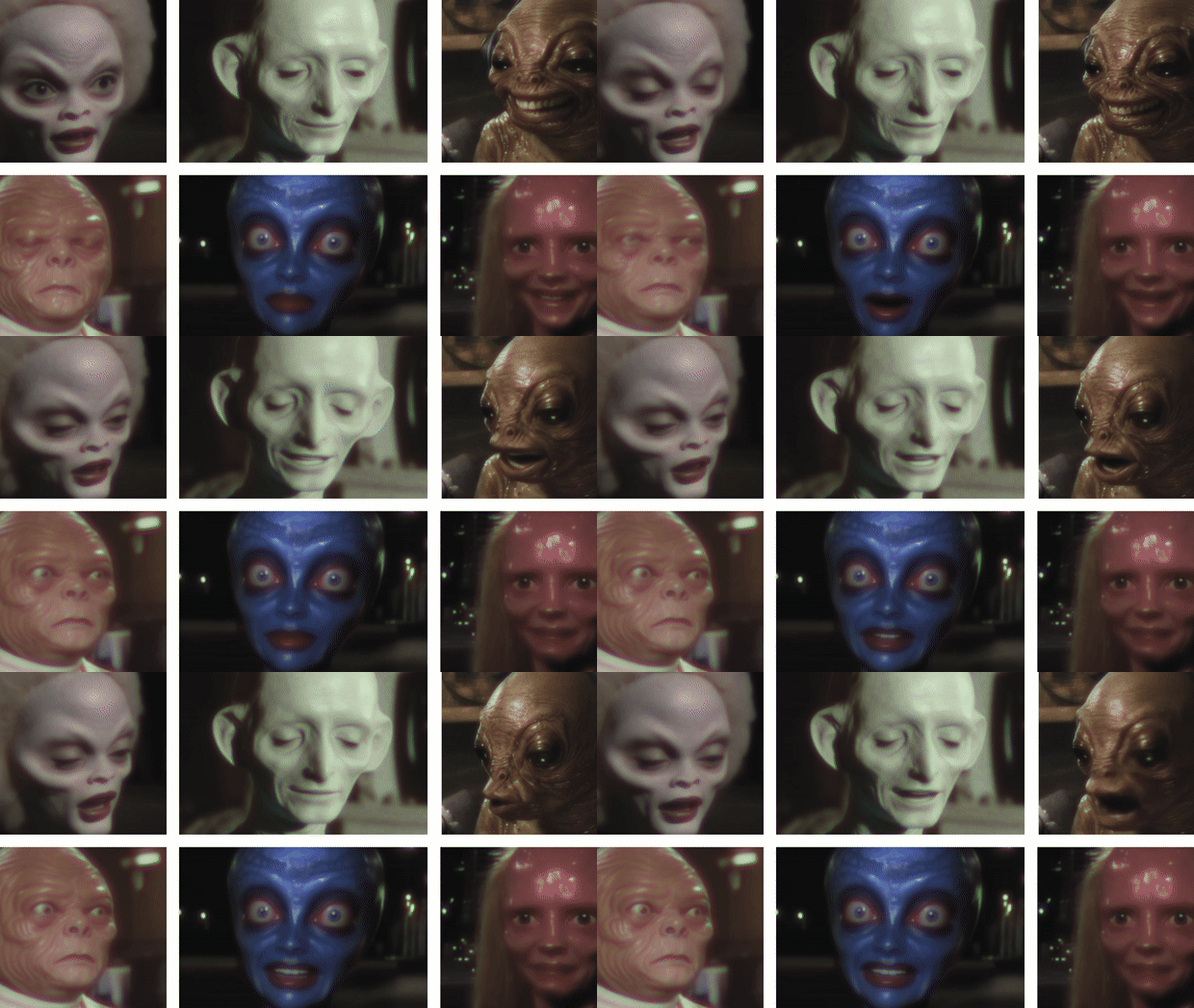
For most audiences, the term “AI video” evokes grotesque imagery of distorted celebrities or surreal glitches—content often dismissed as low-effort “slop.” Kerrigan’s Neural Viz project represents a radical departure from this aesthetic. What began in 2024 as Unanswered Oddities, a mockumentary series about alien “glurons” speculating on human history, has expanded into the “Monoverse.” This sprawling digital landscape now includes police procedurals, combat sports parodies, and intricate lore that has captured a cult following on Reddit and millions of views across TikTok and Instagram.
The success of Neural Viz stems from its commitment to traditional storytelling. Unlike creators who rely on one-click generation, Kerrigan writes scripts using classic industry standards, storyboards every sequence, and maintains strict lighting and continuity controls. This methodical approach ensures that the technology serves the vision, rather than the vision being limited by the software’s current capabilities.
Mastering the Machine: A New Digital Workflow
Kerrigan’s production process mirrors a high-tech version of performance capture. To bring his lead character, the conspiracy theorist Tiggy Skibbles, to life, he utilizes Runway’s Act-One motion capture tool. This allows Kerrigan to perform lines in front of a webcam, mapping his facial nuances and vocal delivery onto the alien model—a method reminiscent of Andy Serkis’s work as Gollum, albeit executed from a swivel chair. The technical stack is diverse:
- Visual Generation: Midjourney and FLUX for character design and environmental consistency.
- Voice Synthesis: ElevenLabs, used to overlay Kerrigan’s voice with synthetic timbres and pitch-shifting.
- Motion Capture: Runway Act-One for mapping human performance to digital avatars.
- Cinematography: Using iPhones to film monitors to simulate realistic handheld camera movement.
From Hollywood Hustle to Independent Creator
Kerrigan’s journey to becoming an AI auteur was forged through years of industry experience. His resume includes stints as a barista, an assistant to major comedy directors, and a producer for promotional content for blockbusters like Mufasa: The Lion King. Despite selling a pilot to Disney and directing horror features, the traditional studio system proved increasingly volatile following the pandemic and subsequent industry strikes.
The pivot to AI was born out of a desire for creative autonomy. By mastering 3D modeling and generative tools, Kerrigan bypassed the gatekeepers that previously dictated his career trajectory. Today, the revenue generated from Neural Viz and new independent pilot contracts has allowed him to leave his day job, signaling a shift in power from centralized studios to individual creators who possess both the technical skill and the narrative vision to utilize AI effectively.
Turning Glitches into Narrative Lore
A hallmark of Kerrigan’s genius is his ability to incorporate AI’s technical limitations into the story itself. When the Sora video generator struggled with character consistency, Kerrigan introduced “morph inhibitors” into the plot—medical devices the characters use to prevent their bodies from shifting shape. Similarly, a software glitch that caused a character to elongate their vowels became a signature personality trait for a gluron rancher named Reester Pruckett. This strategy transforms technological flaws into world-building assets, further distancing his work from generic AI outputs.
The New Power Dynamics: Creators vs. The Studio System
The entertainment industry currently stands at a crossroads. While major studios like Disney and directors such as James Cameron and Darren Aronofsky are integrating AI into their workflows, Kerrigan’s success highlights a more disruptive trend: the democratization of high-end production. During meetings with major studio executives, Kerrigan was told that the power has shifted toward independent creators who own their intellectual property.
While critics argue that AI threatens the livelihoods of technical craftspeople, Kerrigan views the technology as a tool for the “idea people”—writers and directors who can now execute studio-caliber visions with minimal overhead. As tools like Google’s Veo and OpenAI’s Sora continue to evolve, the distinction between “slop” and “cinema” will be defined not by the software used, but by the human hand guiding the prompt. For Kerrigan, the goal remains unchanged: telling compelling stories, regardless of the medium.