Internal intelligence documents obtained exclusively by WIRED reveal that U.S. domestic intelligence centers are actively monitoring citizen-led ICE tracking maps and “No Kings” protest movements, classifying these transparency tools as potential security risks to law enforcement. These bulletins, circulated among federal, state, and local agencies, highlight a growing friction between grassroots immigrant advocacy and the national security apparatus.
Fusion Centers Flag Interactive Mapping Tools
A late-February alert issued by a Vermont-based regional fusion center identified several websites and interactive platforms, including Reddit and Padlet, where users collaborate to pin the locations of Immigration and Customs Enforcement (ICE) agents. The intelligence brief originated from the U.S. Army’s Intelligence and Security Command through its threat monitoring hub, known as ARTIC (Army Counter-Postures and Threat Intelligence Center).
While the ARTIC report concedes that the vast majority of participants use these maps to avoid federal contact, it warns that “malicious actors” could exploit this open-source data to target officers physically. This assessment prompted the Wisconsin Statewide Intelligence Center (WSIC) to issue a separate “OPSEC” warning, designating the tracking sites as a “strategic threat” currently under surveillance by a specialized operations division.
Transparency vs. Terrorism: The Privacy Debate
The classification of these tools has drawn sharp criticism from civil liberties advocates. Property of the People, a nonprofit organization specializing in national security transparency, sought further clarification on these monitoring activities through public records requests. However, the Northern California Regional Intelligence Center (NCRIC) denied the request, stating the information is tied to “active law enforcement investigations.”
Ryan Shapiro, executive director of Property of the People, challenged the government’s narrative. “Law enforcement is sounding the alarm over implausible, hypothetical risks allegedly posed by these ICE raid tracking platforms,” Shapiro told WIRED. “But transparency is not terrorism, and the real security threat is militarized secret police invading our communities and abducting our neighbors.”
Monitoring the “No Kings” Nationwide Protests
The surveillance extends beyond digital mapping to physical demonstrations. A mid-May report from the Central California Intelligence Center (CCIC) confirms the monitoring of the “No Kings” protests scheduled for Sacramento, Fresno, Stockton, and dozens of other locations. Although the CCIC acknowledges the protests are marketed as “nonviolent action” protected by the First Amendment, the agency continues to generate intelligence reports for “threat liaison officers” under the guise of public safety.
These demonstrations coincide with a massive military parade in Washington, D.C., set to feature 6,600 U.S. Army soldiers and heavy weaponry, including M1 Abrams tanks and rocket launchers. The “No Kings” organizers have framed their movement as a “nationwide day of defiance” against what they describe as an authoritarian shift in American governance.
Escalating Tensions and Military Involvement
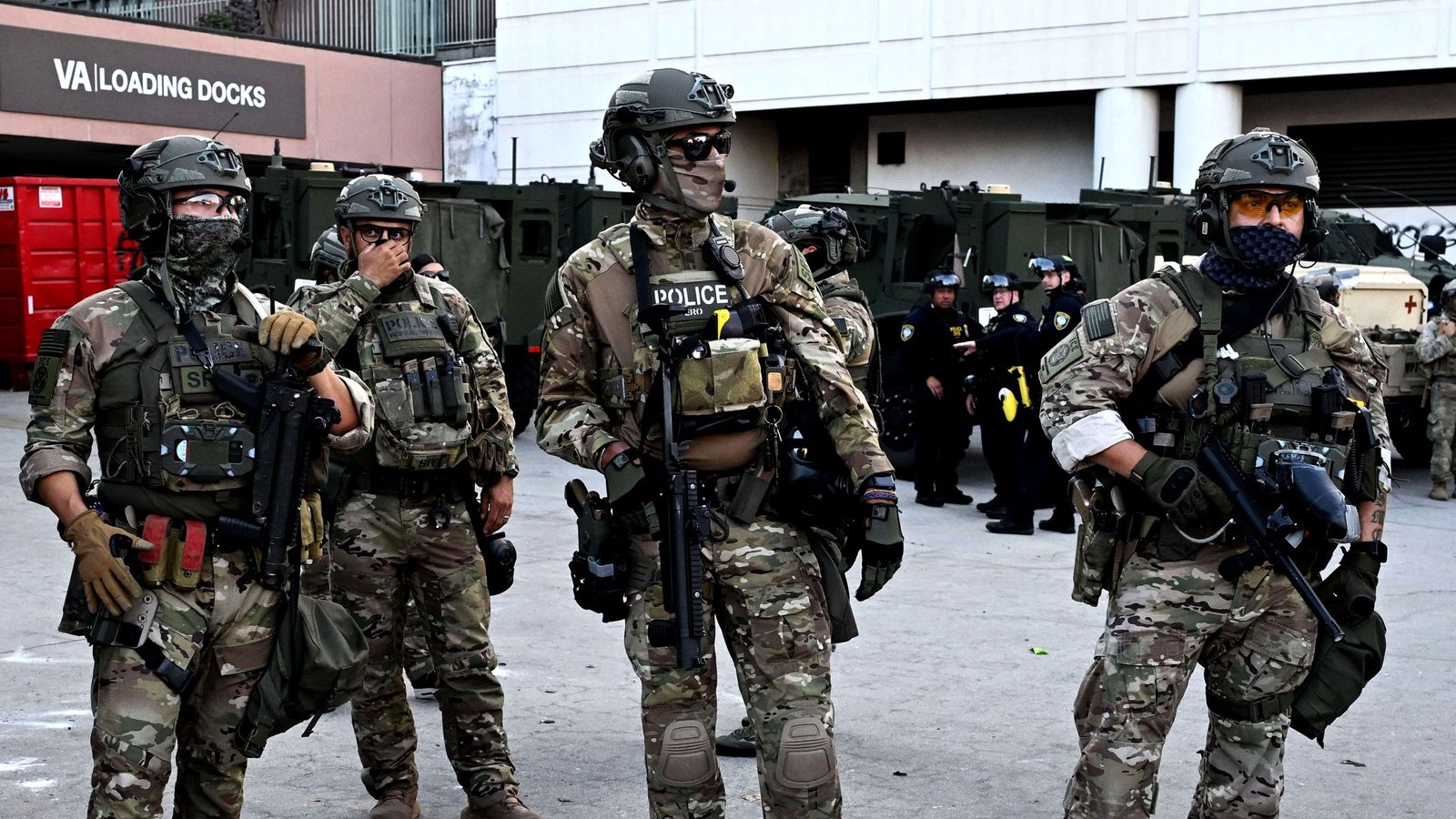
The surge in protests follows a Trump-ordered immigration crackdown and the controversial deployment of Marines and National Guard units to assist domestic law enforcement. In cities like Los Angeles, the presence of surveillance drones and armored vehicles in residential neighborhoods has exacerbated tensions between the public and police.
Intelligence analysts monitoring social media platforms like X (formerly Twitter) and TikTok noted a high volume of “cathartic outrage” regarding these enforcement tactics. While some reports flagged messages calling for armed resistance, analysts admitted many users were merely discussing “hypothetical scenarios.” Nevertheless, the sheer intensity of the online discourse remains a primary safety concern for the agencies involved, further blurring the line between monitoring criminal intent and policing political dissent.