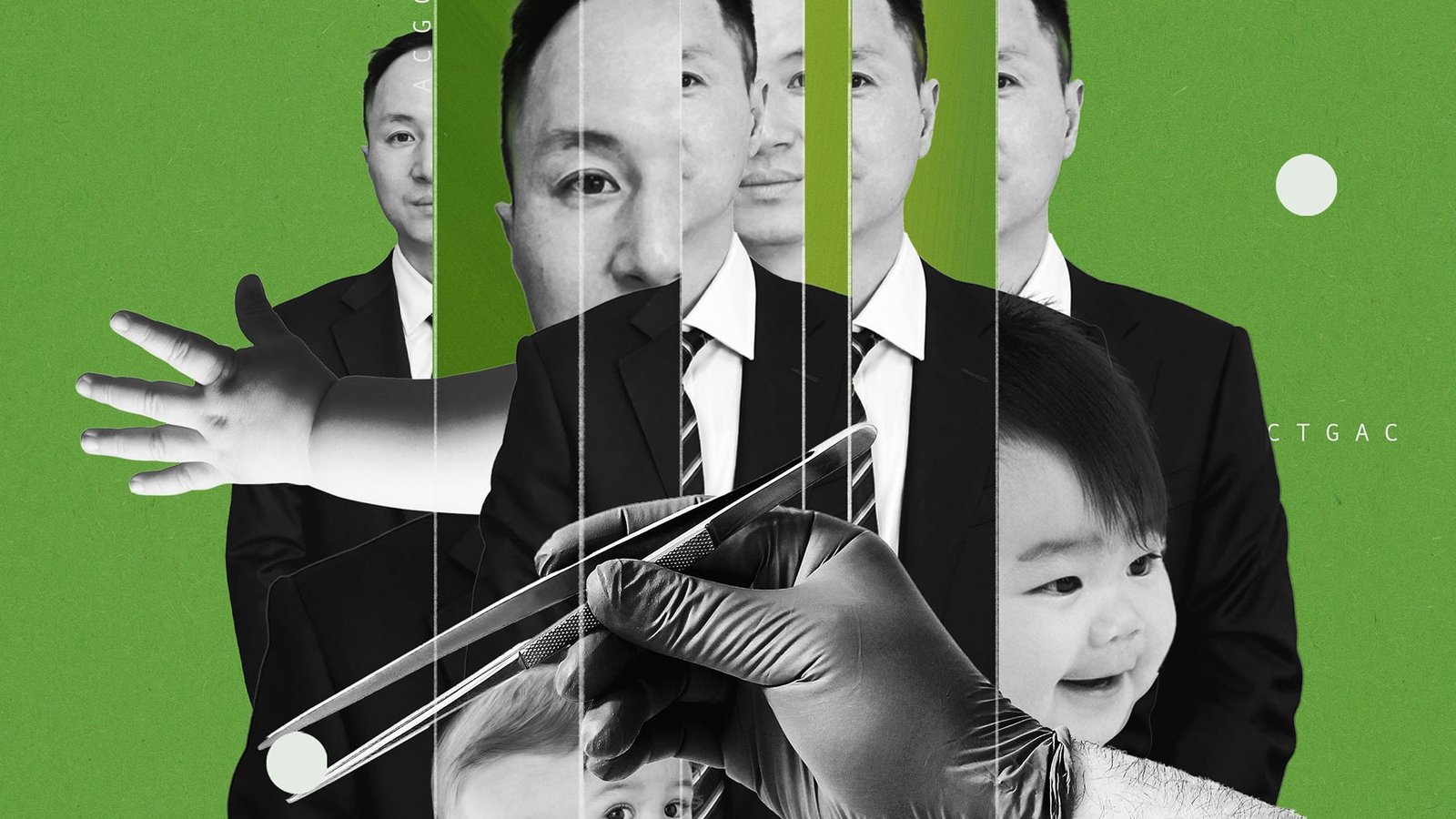
Chinese biophysicist He Jiankui, infamous for creating the world’s first CRISPR-modified infants, has re-emerged from prison with a multimillion-dollar private lab and a controversial roadmap to eliminate Alzheimer’s disease through permanent germline modifications. Following his 2022 release after serving a three-year sentence, He is now leveraging private funding to bypass international regulatory bans and scale human embryo editing to unprecedented levels.
Targeting the Alzheimer’s Code: The APP-A673T Mutation
He’s current scientific focus centers on the APP-A673T mutation, a rare genetic variant identified in Icelandic populations that appears to provide natural immunity against Alzheimer’s disease while promoting longevity. His Beijing-based laboratory is currently conducting experiments on human cell lines, mice, and monkeys to test the feasibility of introducing this mutation into the next generation of human embryos.
While the scientist claims his work is strictly for disease prevention, the technical implications are vast. He aims to perfect a method capable of performing 12 simultaneous genetic edits in a single embryo. This “panel” of modifications would theoretically shield future children from a spectrum of conditions, including cancer, cardiovascular disease, and HIV.
Private Funding and Global Regulatory Arbitrage
Operating outside the scope of government grants, He Jiankui has reportedly raised 50 million yuan (approximately $7 million) from private donors and wealthy entrepreneurs. He is currently seeking an additional $10 million to transition his research from animal models to human clinical trials. Because germline editing remains strictly prohibited in China and the United States, He is eyeing international jurisdictions with more permissive legal frameworks.
The scientist specifically identified South Africa as a potential hub for his clinical trials, citing recent shifts in the country’s national ethics guidelines. “I already talked to people from South Africa. They showed great interest,” He stated, noting that while his preliminary research occurs in Beijing, the birth of the next generation of edited infants will likely take place abroad.
The Legacy of Lulu and Nana
Despite the global outcry that followed his 2018 announcement, He maintains that the three original gene-edited children—Lulu, Nana, and a third girl—are living normal, healthy lives and attending primary school. He remains in regular contact with their families, though the children have not yet been informed of their unique genetic status. He views these initial cases not as a cautionary tale, but as a proof of concept that justifies a trial involving 300 additional gene-edited babies.
Redefining Ethics in the CRISPR Era
The scientist’s public persona has shifted toward a blend of scientific martyrdom and radical ambition. On social media platforms, he has referred to himself as the “Chinese Darwin” and “China’s Frankenstein,” occasionally posting provocative imagery of himself on a throne adorned with double-helix motifs. He dismisses traditional bioethical concerns as secondary to the goal of improving human health.
“You don’t worry about ethics, national geopolitics, or anything,” He remarked regarding his philosophy. While he condemns the use of CRISPR for IQ enhancement—labeling such efforts as “Nazi eugenic experiments”—he argues that preventing terminal illness justifies the permanent alteration of the human genome. As he moves toward human embryo studies over the next two years, the scientific community remains divided on whether his return represents a medical breakthrough or a looming regulatory disaster.