

Converge Bio, a pioneer in biological generative AI, secured $25 million in a new funding round backed by Bessemer Venture Partners and high-profile executives from OpenAI, Meta, and Wiz to replace traditional pharmaceutical trial-and-error with high-precision molecular design. The investment fuels the company’s mission to transition the life sciences industry toward a data-driven computational model, significantly reducing the time and cost of bringing new therapies to market.
Scaling Talent and Quantifiable Biological Breakthroughs
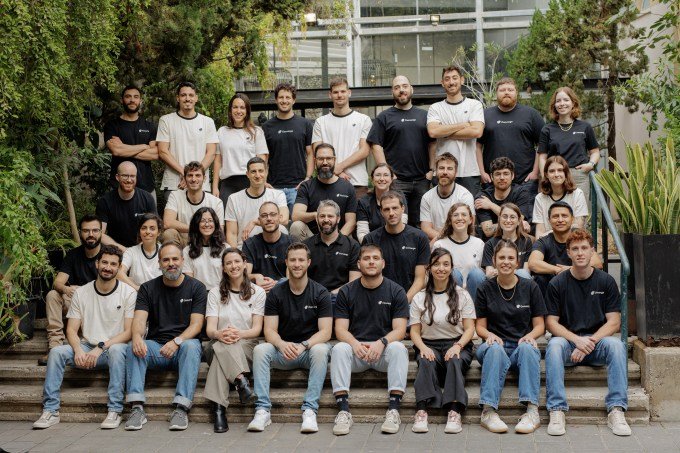
The startup’s workforce surged from nine to 34 employees since November 2024, reflecting the rapid commercial traction of its platform. Converge Bio’s computational iterations have already demonstrated significant industrial impact. In recent case studies, the platform delivered a 4.5X boost in protein yield for partners and engineered antibodies with extremely high binding affinity, reaching the single-nanomolar range.
Capitalizing on the AI Shift in Life Sciences
The funding arrives as the pharmaceutical industry undergoes a massive transition toward AI-driven discovery. Recent milestones, such as the Eli Lilly and Nvidia partnership and the Nobel Prize-winning AlphaFold project, underscore a market that CEO Gertz describes as the largest financial opportunity in the history of life sciences. Initial skepticism regarding AI’s role in biology has vanished, replaced by aggressive adoption of generative technologies.
Eliminating Molecular Hallucinations Through Hybrid Models
While Large Language Models (LLMs) offer immense potential for biological sequence analysis, they face critical accuracy challenges known as “hallucinations.” Unlike text-based AI where errors are easily identified, validating a faulty molecule in a laboratory can take weeks and cost thousands of dollars. To mitigate this, Converge Bio employs a dual-model strategy: generative models propose new molecules, while predictive models act as a rigorous filter to validate outcomes and reduce risk for pharmaceutical partners.
A Specialized Architecture for DNA and Protein Design
Addressing industry skepticism from figures like Yann LeCun, Converge Bio clarifies that its core scientific engine does not rely on generic text-based LLMs. Instead, the company trains its models specifically on DNA, RNA, proteins, and small molecules. Text-based tools serve only as auxiliary interfaces for literature navigation, while the primary technology utilizes a versatile mix of diffusion models, traditional machine learning, and advanced statistical methods.
The Future of the Generative AI Lab
Converge Bio aims to become the foundational generative AI lab for the global life sciences sector. The company’s vision involves a hybrid future where traditional wet labs are paired with computational “generative labs” that create and test hypotheses digitally. By providing this infrastructure, Converge Bio seeks to empower every biological organization to design complex molecules with unprecedented speed and accuracy.