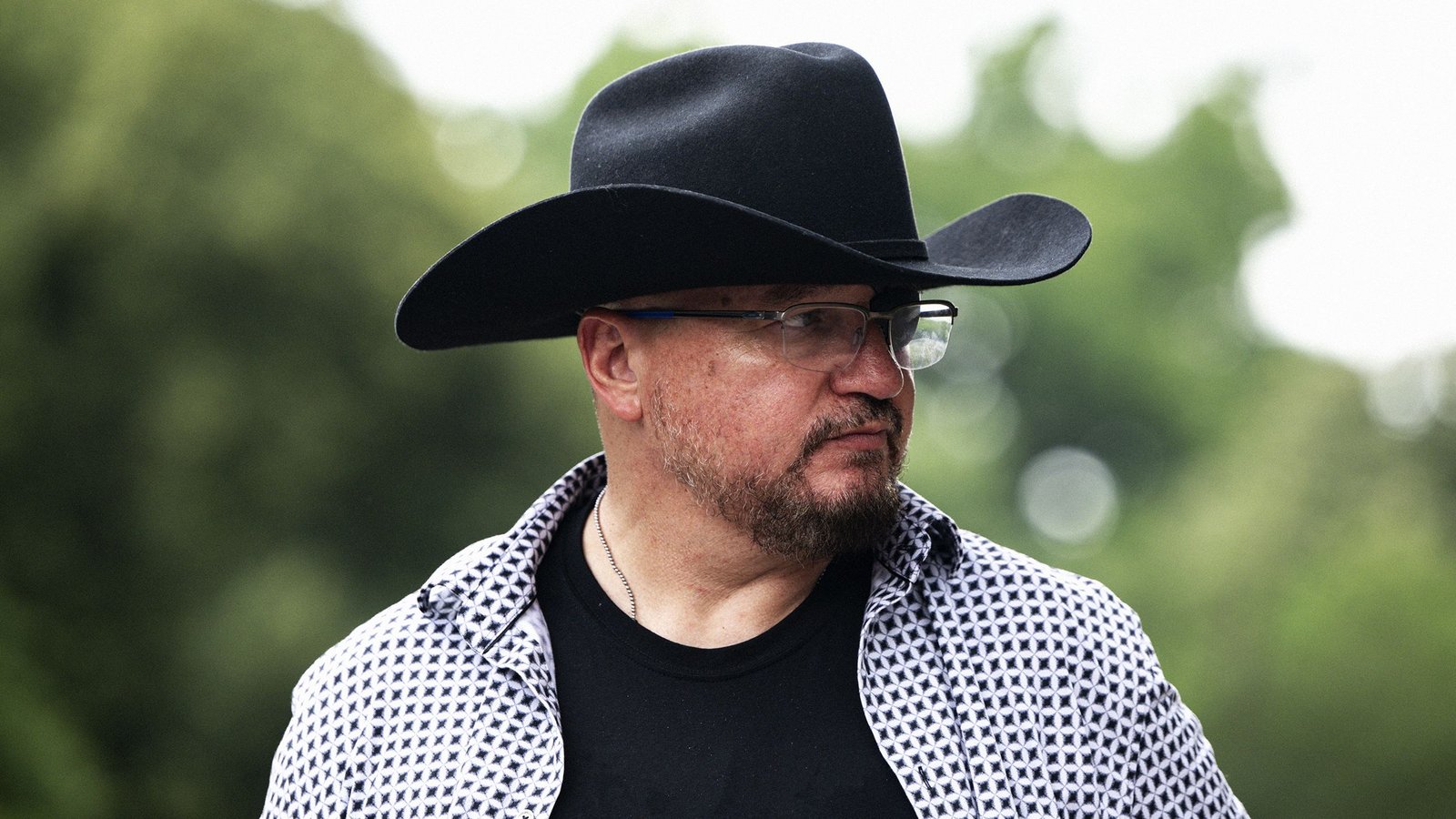
Elmer Stewart Rhodes, the convicted founder of the Oath Keepers, has officially initiated a relaunch of his extremist militia from his base in Texas, aiming to position the organization as a pro-government auxiliary force despite widespread rejection from his former high-ranking lieutenants. Rhodes, whose 18-year sentence for seditious conspiracy was recently commuted to “time served” by President Donald Trump, intends to mobilize the group to combat what he characterizes as “left-wing insurrections” on American streets.
Ideological Pivot: From Anti-Government to Pro-State Force
In a recent interview with the Gateway Pundit, Rhodes detailed a significant shift in the group’s operational philosophy. While the Oath Keepers were founded in 2009 on the basis of anti-government conspiracy theories involving martial law, Rhodes now advocates for the expansion of executive power. He asserted that under federal statutes, the presidency can legally activate the militia to repel invasions, suppress domestic uprisings, and enforce federal law.
“The National Guard is part of the militia,” Rhodes stated, endorsing the use of military forces against domestic citizens—a stark departure from the group’s founding rhetoric. He signaled that the newly reformed Oath Keepers would serve as a voluntary force ready to be “called up” by Trump to maintain order in U.S. cities.
The “J6 Effect”: Former Leaders Reject the New Banner
Despite Rhodes’ ambitions, the infrastructure of the original organization—which once boasted a database of 38,000 members—appears permanently fractured. Interviews with former chapter leaders and prominent January 6 defendants reveal a deep-seated reluctance to return to the fold. Fear of future prosecution and a lack of trust in Rhodes’ leadership have turned former allies into vocal skeptics.
Legal Risks and Burned Bridges
Janet Arroyo, who previously managed the Chino Valley, Arizona chapter, confirmed she has had no contact with Rhodes in six years. She dismissed the relaunch as unlikely to succeed, noting that the “stunt” at the Capitol on January 6, 2021, effectively drove “patriots into hiding.”
The legal reality for many former members also presents an insurmountable barrier. Jessica Watkins, an Army veteran serving an eight-and-a-half-year sentence for her role in the Capitol attack, noted that her status as a felon legally precludes her from participating. “Most J6ers I know are trying to rebuild their lives,” Watkins said, highlighting the disconnect between Rhodes’ political theater and the personal consequences faced by his followers.
Fears of Future Prosecution
Kelly Meggs, the former head of the Florida chapter convicted of seditious conspiracy, expressed profound concern regarding the cyclical nature of political power. Meggs stated he would not rejoin the active militia, fearing that a future Democratic administration would once again target members of such organizations. While open to disaster relief efforts, Meggs explicitly refused to participate in street-level confrontations with groups like Antifa.
Financial Struggles and a “Classified” Membership
The relaunch appears to be struggling with both logistics and funding. Rhodes established a new website on November 3, charging $100 for annual memberships. Notably, applicants are directed to send checks or money orders directly to Rhodes’ legal name, Elmer Stewart Rhodes, rather than a corporate or non-profit entity.
The financial metrics suggest minimal public interest:
- Crowdfunding Goal: $75,000
- Current Total: Approximately $1,000
- Donor Count: 16 individuals
The digital presence of the new group remains skeletal. The organization’s “About” page is currently blank, and scheduled events, such as a “Never Surrender” rally in Texas, appear to be organized by the Young Republicans of Houston rather than the Oath Keepers themselves. When questioned about the size of his new force, Rhodes declined to provide specifics, labeling the membership numbers “classified.”
A Desperate Search for Relevance
Experts in domestic extremism view the move as a bid for personal survival rather than a genuine grassroots resurgence. Jon Lewis, a research fellow at George Washington University’s Program on Extremism, characterized the relaunch as a “desperate attempt by Rhodes to cling to relevance.” Lewis questioned why any modern extremist would align themselves with a leader whose previous tactical failures resulted in mass incarcerations for his followers.
While Rhodes maintains his conviction—as his commutation did not include a full pardon—he continues to operate in a landscape vastly different from the one he dominated in 2009. Without the support of his original base and facing severe financial headwinds, the “reborn” Oath Keepers currently exist more as a digital storefront than a functional militia.