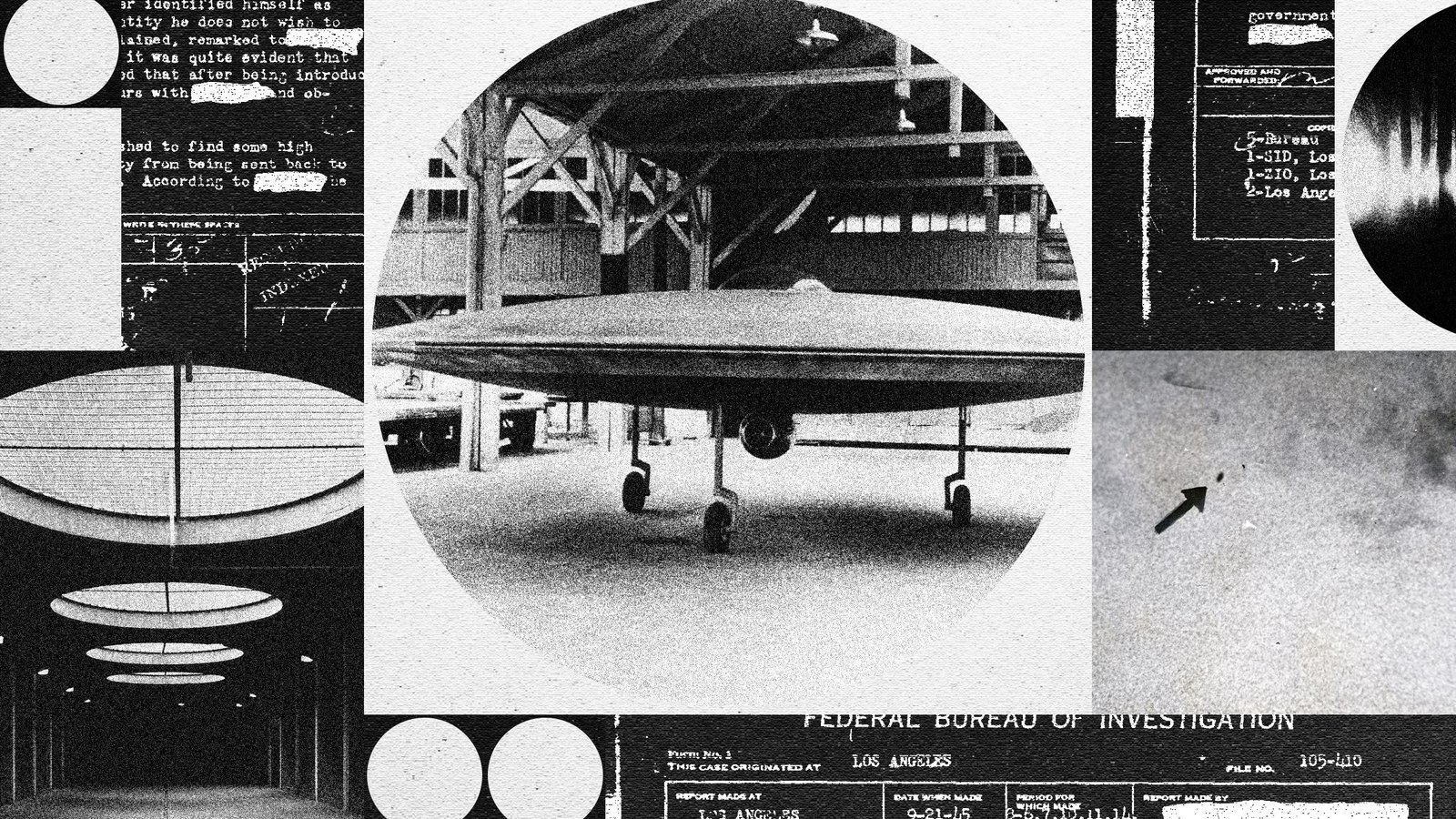
The Trump administration has ordered the Pentagon to consolidate and release never-before-seen records on unidentified aerial phenomena (UAP), triggering a massive coordination effort between the White House and federal agencies to address decades of extraterrestrial speculation. This executive push aims to “supercharge” the declassification process, with the Pentagon’s All-domain Anomaly Resolution Office (AARO) leading the charge to provide the public with long-sought answers regarding unidentified flying objects.
The High Stakes of Public Expectation
Public fascination with extraterrestrial life has reached a fever pitch, fueled by recent comments from high-ranking officials and former presidents. While Barack Obama previously acknowledged the reality of unexplained objects in our skies, Donald Trump’s recent pledge to open the government’s “alien files” has intensified the demand for transparency. However, experts warn that the gap between public desire and bureaucratic reality remains vast.
For most enthusiasts, the only satisfactory disclosure involves physical evidence: non-human biological remains or intact spacecraft. Greg Eghigian, a professor of history and bioethics at Penn State University, notes that anything less than a “smoking gun” may lead to widespread disappointment. Without definitive proof of alien technology, the upcoming release risks being dismissed as another layer of government “smoke and mirrors” by a skeptical public.
Decoding the Likely Contents of the Archives
Historical precedent suggests that new disclosures will mirror past efforts like Project Blue Book or the 1994 Roswell Report. These archives typically consist of pilot testimonies, sensor data, and radar tracks of objects that defy immediate explanation. While these records often contain “eerie visuals,” they rarely point to a definitive extraterrestrial origin.
Anamaria Berea, an associate professor at George Mason University and former member of NASA’s UAP Independent Study Team, emphasizes that most sightings eventually find mundane explanations, such as weather balloons, commercial drones, or atmospheric anomalies. While a small percentage of cases remain “unexplained,” the government has consistently maintained that no evidence links these phenomena to life beyond Earth.
The National Security Bottleneck
The primary obstacle to full transparency is not a cosmic cover-up, but the protection of military intelligence. The Pentagon frequently classifies UAP data to safeguard sensitive technology and operational methods. Revealing exactly how a military sensor tracked an object can inadvertently expose the capabilities—and limitations—of U.S. defense systems to foreign adversaries.
“Classifying stuff is often not about the information itself,” Eghigian explains. Instead, the concern lies in revealing the “how” and “where” of data collection. Consequently, the public should expect heavily redacted documents that protect national security interests, likely leaving the most tantalizing details hidden from view.
Transparency and the Global Scientific Context
While the U.S. government holds significant data, the search for extraterrestrial life is a global, largely transparent scientific endeavor. Research into technosignatures and biosignatures occurs in the open, led by institutions like NASA and academic researchers worldwide. Adam Frank, an astrophysics professor at the University of Rochester, argues that if the government possessed revolutionary scientific findings, they would likely have emerged through these public channels already.
Furthermore, UAP sightings are not exclusive to American airspace. Governments in the United Kingdom, France, and Brazil have released their own records, suggesting that a decades-long, global conspiracy to hide alien contact would be nearly impossible to maintain. As the declassification process moves forward, the scientific community remains focused on empirical data. If the government files fail to produce a physical specimen or craft, the burden of proof will remain with the scientists scanning the stars for signs of life.