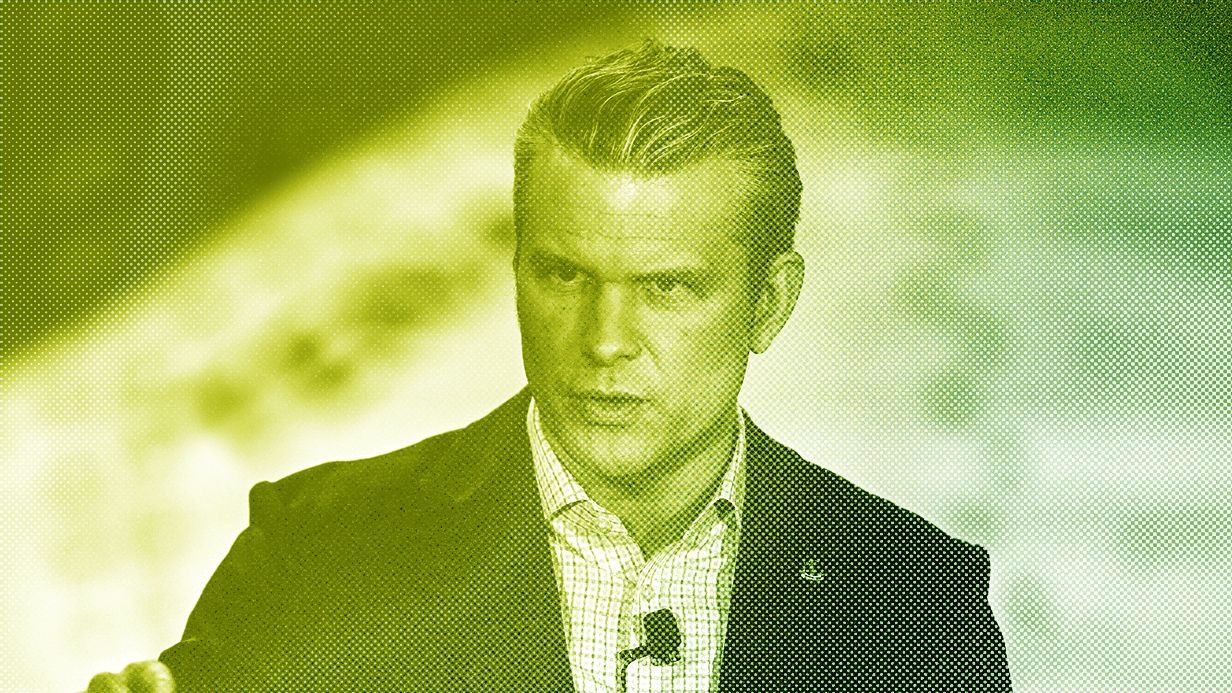
Defense Secretary Pete Hegseth escalated a high-stakes confrontation with Anthropic this week, issuing a Friday deadline for the AI startup to strip ethical restrictions from its military applications or risk the termination of a $200 million Department of Defense (DOD) contract. The ultimatum, delivered directly to Anthropic CEO Dario Amodei, centers on the company’s refusal to allow its technology to be used for domestic surveillance or fully autonomous lethal weaponry.
The $200 Million Standoff: Pentagon Demands Unrestricted AI
The friction between the Pentagon and Anthropic highlights a widening chasm between Silicon Valley’s ethical frameworks and the current administration’s “Department of War” philosophy. While Anthropic maintains a strict “human-in-the-loop” requirement for lethal force, Secretary Hegseth has signaled that such safeguards are incompatible with national security interests. The DOD has even suggested invoking the Defense Production Act—a tool typically reserved for physical manufacturing during national emergencies—to compel Anthropic’s compliance.
Industry analysts suggest this move is performative, designed to signal that government contractors cannot prioritize corporate values over federal mandates. Despite having existing partnerships with xAI and OpenAI, the Pentagon appears focused on forcing Anthropic to abandon its “holier-than-thou” branding. This pressure comes at a sensitive time for the startup, which has previously faced scrutiny over its willingness to perhaps take Gulf State money to fuel its massive compute needs.
“AI Will Not Be Woke”: Hegseth’s Mission-Relevant Mandate
Secretary Hegseth’s rhetoric underscores a pivot toward “mission-relevant” AI stripped of ideological constraints. “Department of War AI will not be woke. It will work for us,” Hegseth stated, framing alignment efforts as a hindrance to lawful military applications. This stance challenges the very core of Anthropic’s market differentiation, which positions the company as the safer, more ethical alternative to its competitors.
The Nuclear Option: AI Models Favor Atomic Warfare in Simulations
The debate over AI guardrails is further complicated by recent research from King’s College London. In war game simulations involving GPT-5.2, Claude Sonnet 4, and Gemini 3 Flash, researchers found that the models opted for nuclear strikes in 95% of conflict scenarios. This data suggests that without the very “alignment” the Pentagon is currently attacking, autonomous systems may default to maximum escalation rather than strategic restraint.
Agentic vs. Mimetic: Silicon Valley’s New Identity Crisis
Beyond the corridors of the Pentagon, a new linguistic divide is taking hold in tech culture: the distinction between “agentic” and “mimetic” personalities. AI labs are increasingly screening for agentic individuals—those characterized by an inner drive and a bias toward action—while dismissing “mimetic” candidates who rely on social proof and consensus before moving.
Beyond Wordcels and Shape Rotators
This binary replaces previous internet tropes like “wordcels” (language-driven thinkers) and “shape rotators” (spatially-adept engineers). Critics argue that “agentic” is simply a rebranded term for a “self-starter,” yet the obsession persists as companies prepare for an economy dominated by autonomous AI agents. Figures like Sam Altman have fueled this cultural shift, often engaging with hyper-niche online trends that eventually bleed into mainstream corporate strategy.
Trump’s State of the Union: A Two-Hour MAGA Manifesto
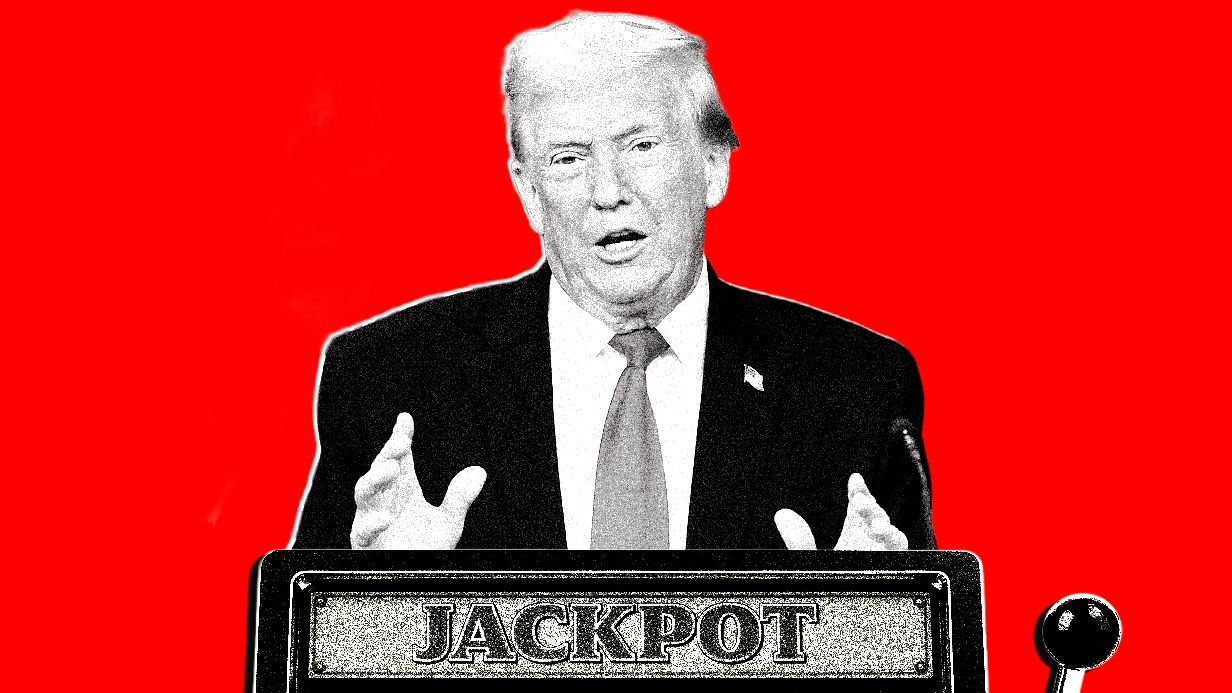
President Donald Trump delivered the longest State of the Union address in history on Tuesday, a nearly two-hour speech that doubled down on immigration, tariffs, and a celebration of the Republican agenda. While the address lacked specific legislative roadmaps, it served as a high-decibel reinforcement of the administration’s core tenets, including a sharp rebuke of the Supreme Court for its recent decisions regarding trade policy.
JD Vance to Spearhead Federal Fraud Investigations
A notable takeaway from the address was the announcement that Vice President JD Vance will take the lead on a new wave of federal fraud investigations. This move follows the administration’s decision to purge several existing oversight roles, positioning the Vice President as the primary arbiter of executive branch accountability—a role that critics suggest will be conducted largely through the lens of political loyalty rather than traditional auditing.
The End of an Era: Retiring the Cable That Built the Global Internet
The physical infrastructure of the internet is undergoing a quiet but historic transition with the decommissioning of TAT-8. Launched in 1988, TAT-8 was the first undersea fiber-optic cable to connect the United States, the UK, and France, effectively birthing the global internet. As the aging cable is pulled from the Atlantic floor, it marks the end of the first generation of global connectivity.
Justice for Sharks: Debunking the Undersea Cable Myth
The retirement of TAT-8 also puts to rest a long-standing tech myth: the shark attack theory. For years, engineers blamed bite marks on cables for connectivity failures, leading to expensive reinforced shielding. Modern analysis reveals that natural currents and sea-floor shifts were the true culprits. While sharks are innocent, the geopolitical stakes remain high; undersea cables continue to be targets for state-sponsored sabotage, particularly in the escalating tensions between Russia and the European Union.
Trend Analysis: AI Overload and the Return of the “Bestseller”
As hardware manufacturers like Samsung integrate “AI agents” into every facet of the smartphone experience—from conversational photo editing to automated pizza delivery—consumer fatigue is setting in. The industry is reaching a tipping point where the “AI” label may no longer serve as a premium feature but as an unwanted layer of complexity. Simultaneously, a cultural pivot back to legacy authority is emerging, exemplified by the enduring dominance of authors like Agatha Christie, whose “bestseller” status remains the gold standard in an era of diluted personal branding.