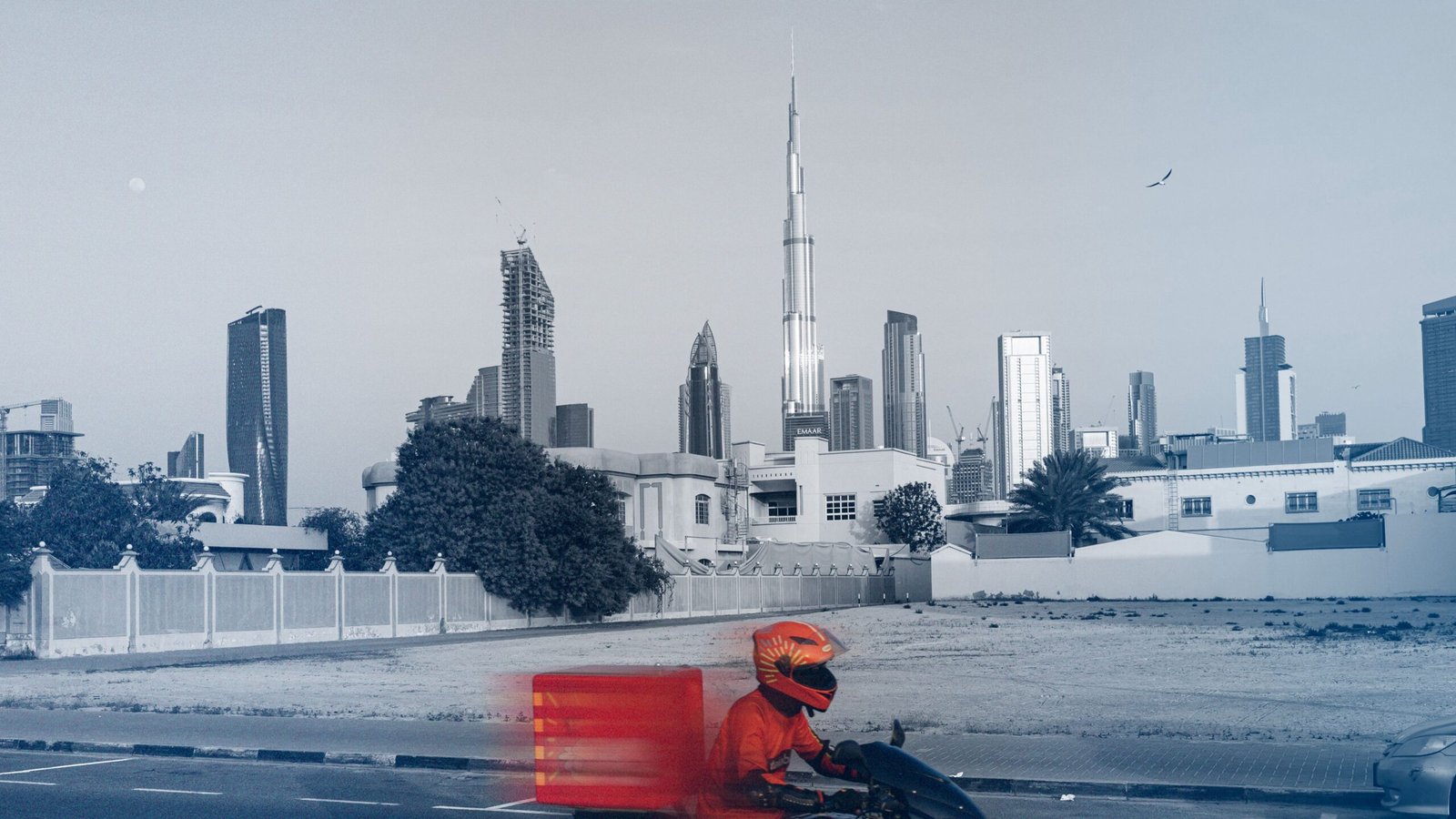
Major delivery platforms in the United Arab Emirates, including Careem, Uber, and Deliveroo, are maintaining operations despite escalating missile and drone strikes that have caused three deaths and 58 injuries since February 28. While these tech giants cite the necessity of providing essential goods and maintaining social normalcy, delivery personnel face a perilous environment characterized by falling debris, rigid performance quotas, and potential financial penalties for prioritizing their own safety.
Corporate Strategy: Maintaining Normalcy Amidst Interceptions
Following the initial wave of attacks on Saturday, several UAE-based delivery interfaces experienced temporary outages before rapidly restoring services. Companies argue that their continued presence on the road ensures residents retain access to vital supplies, effectively preventing panic and stabilizing the local economy. Careem, a dominant player in the region, confirmed it is “assessing the safety of our operations area by area and in real time.” The company utilizes WhatsApp groups and SMS to relay immediate safety updates to its drivers, whom it refers to as “captains.”
Careem’s official statement emphasized that partners and captains are not obligated to remain online if they harbor safety concerns. Similarly, an Uber spokesperson reaffirmed that ride-hailing services remain fully operational, stating, “The safety and wellbeing of our riders and partner drivers is our core priority; we are monitoring the situation in real-time and will continue to operate in strict alignment with all local government recommendations.” Deliveroo echoed this sentiment, asserting that its operations adhere strictly to official government guidance and continuous internal safety assessments.
The Hidden Hazards of Missile Interception
Despite the high success rate of missile defense systems in the region, the threat to ground-level workers remains significant. Intercepted projectiles often result in hazardous falling debris and unpredictable road conditions. Since the onset of the conflict in late February, the Ministry of Defense has documented a growing casualty list, highlighting the physical danger inherent in outdoor labor during active strikes. Critics of the platforms argue that keeping services active incentivizes workers to ignore these lethal risks in favor of meeting financial targets.
The Quota Trap: Financial Coercion in the Gig Economy
For many drivers, the choice to stay home is a luxury they cannot afford. A Deliveroo driver, speaking on the condition of anonymity, revealed that third-party logistics agencies—which supply the workforce for major apps—frequently impose fines on those who refuse to work or fail to meet daily delivery quotas. Most platforms utilize a payment structure involving a base salary supplemented by per-delivery fees. In other models, such as Uber’s global standard, earnings are tied to every pickup, drop-off, and mile traveled. This “pay-per-action” system creates a powerful financial incentive to remain on the road, even when sirens sound.
While Deliveroo claims to be in “regular communication” with its fleet and promises to compensate for earnings lost during official service suspensions, some drivers report a disconnect. The aforementioned driver claimed he had received no specific safety guidelines or advice regarding the ongoing drone and missile threats from the platform itself.
From Pandemic to Proving Grounds: The “Essential Worker” Label
The decision to keep delivery apps running relies heavily on the “essential worker” classification, a designation that gained global traction during the 2020 COVID-19 pandemic. According to the United Nations’ International Labour Organization (ILO), delivery drivers provide a critical service by ensuring access to food, medicine, and pantry staples during crises. Careem has already noted a significant spike in demand for items like water, rice, and fresh produce as residents opt to stay indoors.
The concept of essential labor has historical roots, dating back to grave diggers during the plague and rice farmers during the Spanish Flu. In the modern Gulf context, this labor is primarily performed by migrant workers. While their presence on the streets prevents empty shelves and public panic, it underscores a stark divide: the safety of the digital consumer often rests on the physical vulnerability of the delivery rider.