
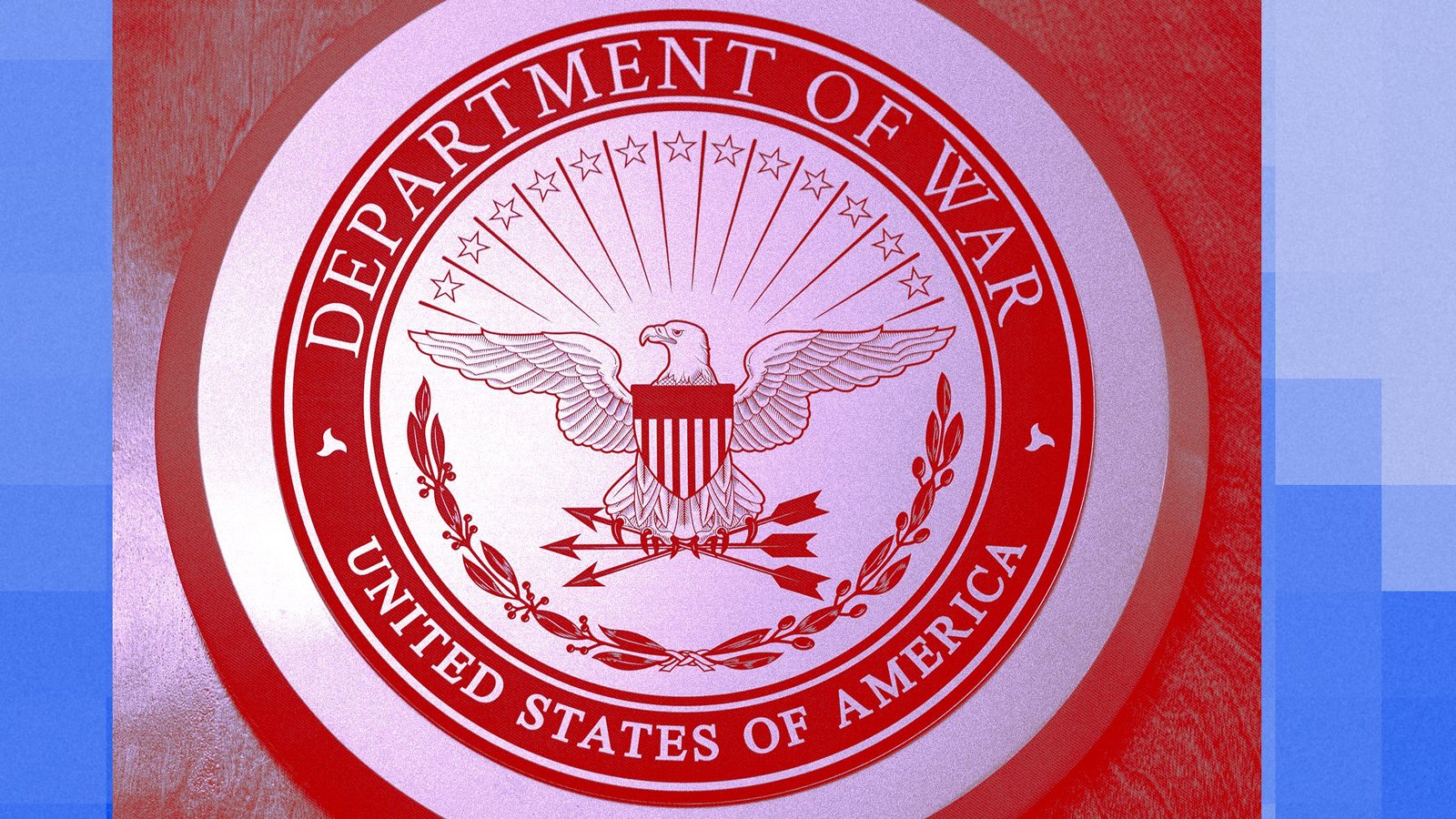
The Department of Defense effectively blacklisted AI startup Anthropic after the company refused to allow its Claude models to power autonomous weaponry or mass surveillance systems. Secretary of Defense Pete Hegseth designated Anthropic a “supply-chain risk,” a move that bars government agencies from utilizing the company’s technology following a breakdown in contract negotiations over ethical guardrails. This rift highlights a growing chasm between Silicon Valley’s safety-first ethos and a military establishment determined to weaponize artificial intelligence without restriction.
National Security vs. Ethical Guardrails
The conflict escalated when the Pentagon demanded the removal of specific “red lines” from its contract with Anthropic. These provisions, originally included at the company’s insistence, strictly prohibited the use of Claude for lethal autonomous operations or the surveillance of American citizens. Anthropic CEO Dario Amodei’s refusal to compromise led to the termination of the partnership and triggered Hegseth’s retaliatory designation. By labeling a domestic AI leader as a security risk, the Pentagon signals its intent to bypass any private-sector limitations on how AI is deployed on the battlefield.
The Normalization of Autonomous Warfare
The current trajectory suggests that lethal autonomous drones and AI-driven target identification have moved from theoretical risks to active military requirements. Despite the absence of a formal international debate or treaty regarding “killer robots,” the U.S. military appears to be operating under the assumption that an AI arms race is already underway. Hegseth has publicly criticized private companies for attempting to throttle military capabilities, while critics argue that only the resistance of individual firms prevents the deployment of potentially uncontrollable technology in global conflict zones.
The Collapse of the ‘Race to the Top’
Anthropic’s recent revisions to its “Responsible Scaling Policy” (RSP) underscore the difficulty of maintaining safety standards in a hyper-competitive market. Originally designed to tie model releases to rigorous safety benchmarks, the RSP was intended to spark a “race to the top” among AI labs like OpenAI and DeepMind. However, Anthropic recently admitted that this framework has struggled to gain federal traction. As investment surges and global competition intensifies, the industry’s focus has shifted toward economic growth and national competitiveness, often at the expense of safety-oriented guardrails.
Corporate Rivalries and the OpenAI Pivot
As the Pentagon severed ties with Anthropic, OpenAI moved quickly to secure its own Department of Defense contracts. This maneuver sparked internal friction between the two AI giants. While OpenAI CEO Sam Altman characterized the move as a way to relieve pressure on the industry, Amodei accused Altman of attempting to undermine Anthropic’s position. In an internal memo, Amodei suggested that OpenAI’s willingness to cooperate with the Pentagon makes it easier for the administration to punish companies that maintain strict ethical boundaries.
The Future of AI Safety Research
Despite the geopolitical and corporate maneuvering, AI leaders insist that safety remains a core priority within the research lab environment. Anthropic’s Chief Science Officer, Jared Kaplan, argues that the “race to the top” persists among researchers who are dedicated to ensuring AI benefits humanity. Similarly, OpenAI’s Chief Strategy Officer, Jason Kwon, notes that while public attention has shifted toward labor impacts and economic growth, the technical work on safety continues to expand. OpenAI maintains that it has implemented safeguards to prevent its models from being used in autonomous weaponry, though questions remain regarding the government’s power to override these protections via the Defense Production Act.
The Inevitable Trap of Powerful Technology
The fundamental challenge remains the immense power and strategic value of advanced AI. Dario Amodei has described this situation as a “trap,” where the rewards of AI dominance are so significant that human civilization finds it nearly impossible to impose meaningful restraints. As the military and private sectors clash over the soul of the technology, the prospect of a regulated, safe AI future appears increasingly threatened by the realities of global military competition.